Cold Brew Makers in 2026: 5 Picks by Batch Yield
Compare the best cold brew maker options for 2026 by finished yield, filter type and fridge footprint — immersion pitchers vs slow-drip towers, ranked by real use.
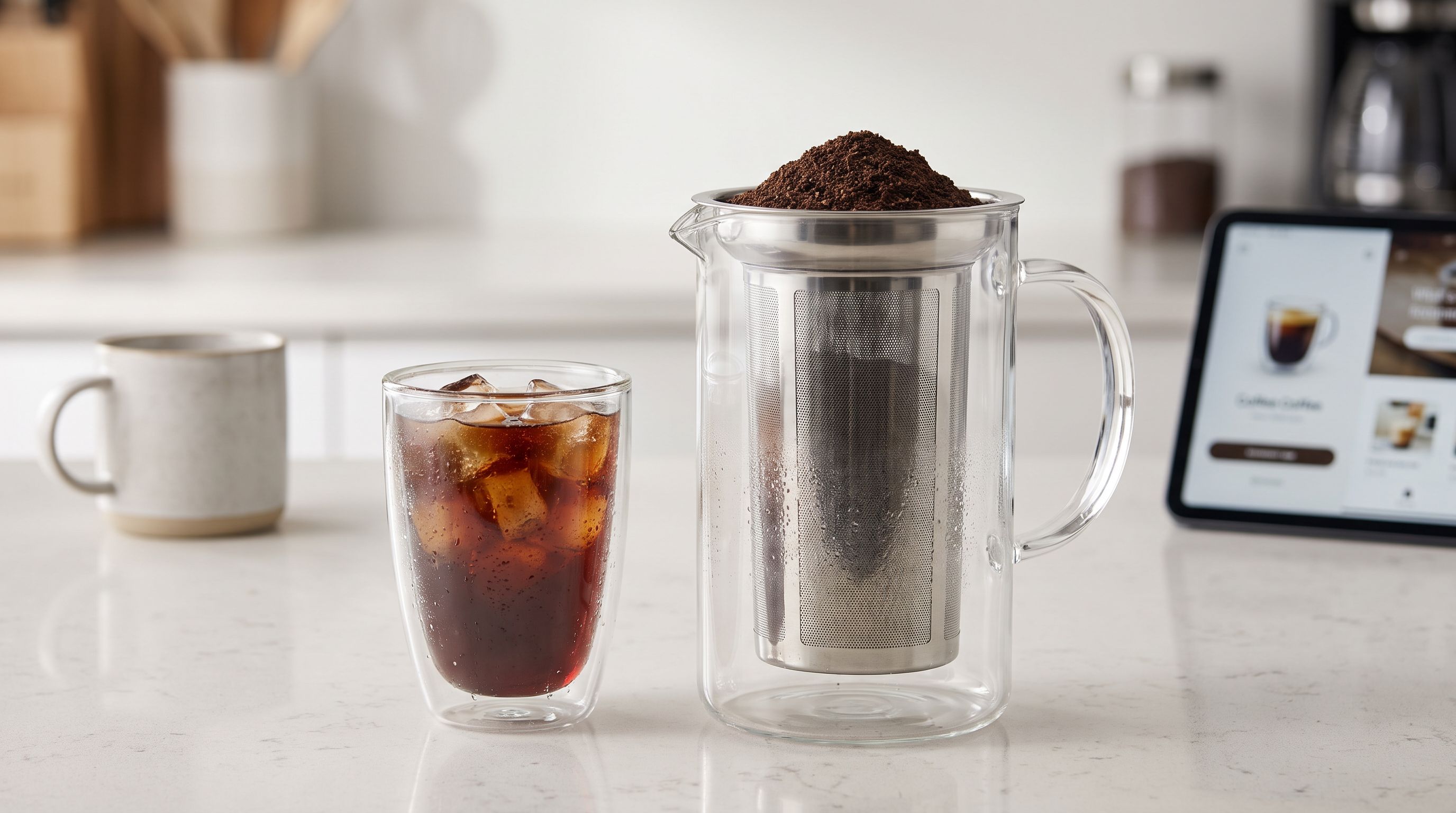
Reader-supported: we may earn a commission from links on this page, at no extra cost to you. It never affects our picks. Learn more.
Cold brew is one of the few coffee methods where the gear matters less than the math. Coffee-to-water ratio, grind size and steep time do most of the work. What a good cold brew maker actually buys you is repeatability, filtration and a container that fits in your fridge — which is exactly why most buying guides steer you wrong by ranking on "flavor" instead of finished yield.
So that's how we ranked these. We compared manufacturer spec sheets, independent reviews and verified owner feedback across immersion pitchers, brew-and-drain systems and slow-drip towers, focusing on three things: how much drinkable coffee you actually end up with, what the filter is made of, and whether the thing survives a crowded refrigerator shelf.
Concentrate vs. ready-to-drink: the number that matters
Here's the trap. A "32 oz" cold brew maker rarely gives you 32 oz of coffee you can drink straight.
- Concentrate brewers (OXO, Takeya, Toddy) brew at a strong ratio — roughly 1:4 to 1:8 by weight — and you dilute 1:1 or 1:2 with water, milk or ice. A 32 oz brew chamber loses volume to saturated grounds (coffee absorbs roughly twice its weight in water), so you might net around 20–24 oz of concentrate — which becomes 40–70 oz of finished drink.
- Ready-to-drink brewers (Hario Mizudashi) brew at a weaker ratio, around 1:10 to 1:12, and pour straight over ice. The labeled capacity is much closer to what you drink.
- Slow-drip towers (Yama) drip cold water through a grounds bed over hours. Output is typically a light concentrate with a cleaner, more tea-like profile, and yields are modest for the counter space consumed.
If you drink two 16 oz iced lattes a day, a ready-to-drink 1 L pot means brewing every single day. A concentrate system means brewing twice a week. That's the real decision.
How we compared them
We weighted four criteria, in this order:
- Finished yield per brew cycle — concentrate volume plus realistic dilution, not just marketing capacity.
- Filter type — stainless mesh (keeps oils and body, passes some fines), felt plus paper (strips oils for a very clean cup), or paper alone.
- Fridge footprint and orientation — can it live on a door shelf, does it need to stand upright, does it leak when tipped.
- Cleanup friction — the single biggest reason cold brew makers end up in a cupboard. Dishwasher-safe parts and a grounds basket you can knock out in one motion matter more than people expect.
The picks, by batch yield
OXO Good Grips Cold Brew Coffee Maker (32 oz) — best overall
The OXO is the one we'd buy for most households, and it wins on process rather than specs. The "Rainmaker" lid distributes water across the grounds bed evenly instead of channeling, which is a real problem in flat-bottom steepers. When steeping is done, you set the brewer on the included borosilicate carafe and flip a switch valve; the concentrate drains through a stainless mesh filter without you having to lift a grounds-heavy basket over the sink.
Filtration is mesh, so you keep body and oils — expect a slightly fuller, rounder concentrate than a paper-filtered brew. Parts are dishwasher safe. The downside is footprint: the brewer and carafe are two separate pieces, and the carafe is glass, so it wants a stable shelf rather than a door rack. If counter space is tight, OXO also makes a compact version of the same system with a smaller yield.
Best for: anyone who wants concentrate on tap without a drip-and-drain mess.
Takeya Patented Deluxe Cold Brew Coffee Maker (2 Quart) — best fridge-door pitcher
The Takeya is the pragmatist's choice. It's a single BPA-free plastic pitcher with an airtight, leakproof lid and a tall fine-mesh filter core that holds the grounds. You brew and store in the same vessel, which is a genuine advantage when fridge real estate is scarce — the 2-quart version is narrow enough to stand on many fridge door shelves, and because the lid seals, you can shake it mid-steep to agitate the bed.
Mesh filtration means some sediment settles at the bottom over a few days; pour gently near the end of the pitcher. Owner feedback consistently flags the same two things: it's genuinely leakproof when the lid is seated correctly, and the plastic body can pick up stains from dark roasts over time. It's dishwasher safe (top rack) and there's no glass to break.
Best for: daily drinkers who want one vessel, no transfers, and no breakage risk.
Toddy Cold Brew System — best for big batches
 Best for big batches · Toddy Cold Brew System — Check price on Amazon →
The Toddy is the original commercial-lineage system and still the volume champion for home use. It uses a reusable felt filter plus an optional paper liner in a large brewing container, with a rubber stopper you pull to drain concentrate into a glass decanter. The felt-and-paper combination strips a lot of oils and fines, producing a notably clean, low-bitterness concentrate — the classic smooth cold brew profile that most café batch brew is chasing.
Two caveats. First, you're committing to a sizeable brewing bucket and a separate decanter, so this needs real cabinet and fridge space. Second, the felt filter must be rinsed and stored wet (in a sealed bag in the fridge) or it goes off; it's a consumable that needs replacing periodically. If you brew a week's worth at a time, those trade-offs are worth it.
Best for: households brewing for two-plus people, or anyone who prefers the clean, oil-free profile.
Hario Mizudashi Cold Brew Coffee Pot (1000 ml) — budget pick
 Budget pick · Hario Mizudashi Cold Brew Coffee Pot (1000 ml) — Check price on Amazon →
The Mizudashi is heatproof glass with a long plastic-framed mesh basket that runs nearly the full height of the pot. Fill the basket with coarse grounds, fill the pot, steep 8 hours in the fridge, lift the basket out. That's the whole product.
It's designed for ready-to-drink strength rather than concentrate, so a 1 L pot gives you roughly a liter of coffee you pour over ice — no dilution math. Glass means no staining and easy cleaning; it's also the one on this list most likely to break if it goes over in the fridge. It's narrow and upright, which helps it tuck into a door or a tight shelf. The small-batch cost of entry here is the lowest of anything we'd genuinely recommend.
Best for: solo drinkers, small fridges, and anyone testing whether they'll stick with cold brew at all.
Yama Glass 8-Cup Cold Drip Coffee Maker Tower — premium slow-drip pick
 Premium slow-drip pick · Yama Glass 8-Cup Cold Drip Coffee Maker Tower — Check price on Amazon →
Slow drip is a different beverage. Cold water drips through a grounds bed at a controlled rate — typically a drop or two per second via an adjustable valve — over several hours. The resulting coffee is noticeably more delicate and aromatic than immersion cold brew, with the florals and acidity of a light roast preserved rather than muted.
The Yama tower is beautiful borosilicate glass, which is also its problem: it's fragile, has many parts, needs a stable spot where nothing will knock it, and you cannot put it in the fridge mid-brew. Yield is modest relative to the counter and cabinet space it eats. Buy it because you want slow-drip specifically and enjoy the ritual — not because you need volume.
Best for: enthusiasts with light-roast single origins and patience.
Comparison table
| Model | Type | Filter | Output style | Fridge footprint | Best for |
|---|---|---|---|---|---|
| OXO Good Grips Cold Brew Coffee Maker (32 oz) | Immersion, brew-and-drain | Stainless mesh | Concentrate (dilute 1:1–1:2) | Glass carafe, needs a flat shelf | Most households |
| Takeya Patented Deluxe (2 Quart) | Immersion, brew-and-store | Fine mesh core | Concentrate | Narrow, airtight, door-friendly | One-vessel convenience |
| Toddy Cold Brew System | Immersion, drain-to-decanter | Reusable felt + paper liner | Concentrate, very clean | Large; bucket + decanter | Weekly big batches |
| Hario Mizudashi (1000 ml) | Immersion, steep-and-lift | Mesh basket | Ready to drink | Tall, slim glass pot | Solo drinkers, small fridges |
| Yama 8-Cup Cold Drip Tower | Slow drip | Paper/mesh at base | Light concentrate | Counter only, not fridge | Aroma-forward enthusiasts |
Getting good results, whatever you buy
- Grind coarse — coarser than French press. Fine grounds pass through mesh and make the cup muddy and over-extracted.
- Start at 1:5 by weight for concentrate (e.g. 200 g coffee to 1,000 g water), or 1:11 for ready-to-drink. Adjust from there.
- Steep 12–18 hours in the fridge, or 8–12 at room temperature. Longer is not automatically better; past about 24 hours you pick up woody, drying notes.
- Filter twice if you're sensitive to sediment. A paper pour-over filter or a reusable cloth strainer after mesh brewing makes a big difference.
- Use concentrate within 7–10 days refrigerated in a sealed container. Diluted cold brew fades faster — mix to order.
FAQ
How much coffee do I actually get from a "32 oz" cold brew maker? Less than 32 oz of concentrate, because the grounds absorb roughly twice their weight in water. Expect somewhere around 20–24 oz of concentrate from a 32 oz chamber — which, diluted 1:1, becomes about 40–48 oz of finished drink.
Is mesh or paper filtration better? Neither is objectively better. Stainless mesh passes oils and fine particles, giving a fuller, heavier body. Felt and paper (as in the Toddy) remove most oils and fines for a cleaner, lighter, less bitter cup. Pick based on whether you drink it black or with milk — oils carry nicely in milk drinks.
Can I use a French press instead? Yes, and it works fine for a single batch. The limits are capacity, a mesh screen that passes a lot of fines, and the fact that your press is then occupied for 16 hours. A dedicated brewer mostly buys you volume and a sealed storage vessel.
Does slow drip actually taste different? Yes. Because water contacts the grounds continuously but briefly rather than soaking for hours, slow-drip coffee tends to be brighter and more aromatic, with less of the heavy, chocolatey flatness that long immersion can produce. It's a stylistic preference, not an upgrade.
Do I need a special roast? No, but medium and medium-dark roasts are the forgiving default for immersion — they give the chocolate-and-caramel profile most people expect from cold brew. Save light-roast single origins for slow drip, where their acidity survives.
Our picks
OXO Good Grips Cold Brew Coffee Maker (32 oz)
Rainmaker lid wets grounds evenly and the switch valve drains into a sealed carafe with no mess.

Takeya Deluxe Cold Brew Coffee Maker - BPA-Free Tritan Pitcher with Airtight Leakproof Lid, Silicone Grip Handle, Fine-Mesh Filter - Shatter-Proof, Dishwasher Safe, Made in USA - 2 Quart/Black
Airtight, leakproof BPA-free pitcher with a fine-mesh basket that fits most fridge doors upright.
Toddy Commercial Brew System + Lift
Brews a large concentrate batch through a felt filter and paper liner for an exceptionally clean cup.
HARIO "Mizudashi" Cold Brew Coffee Maker, 1000ml, Black
Simple heatproof glass pot with a long mesh basket — cheap, dishwasher-safe, ready-to-drink strength.
Yama Cold Brew Maker I Ice Coffee Machine With Slow Drip Technology I Makes 6-8 cups (32oz), Large Capacity Cold Brew Coffee Tower, Black Wood Straight Frame
Adjustable drip valve and glass tower for slow-drip cold brew with a lighter, tea-like clarity.
Get the best kitchen gear deals in your inbox
Join the PrepDeck newsletter for hand-picked kitchen gear deals and new buying guides. No spam, unsubscribe anytime.
Related reads
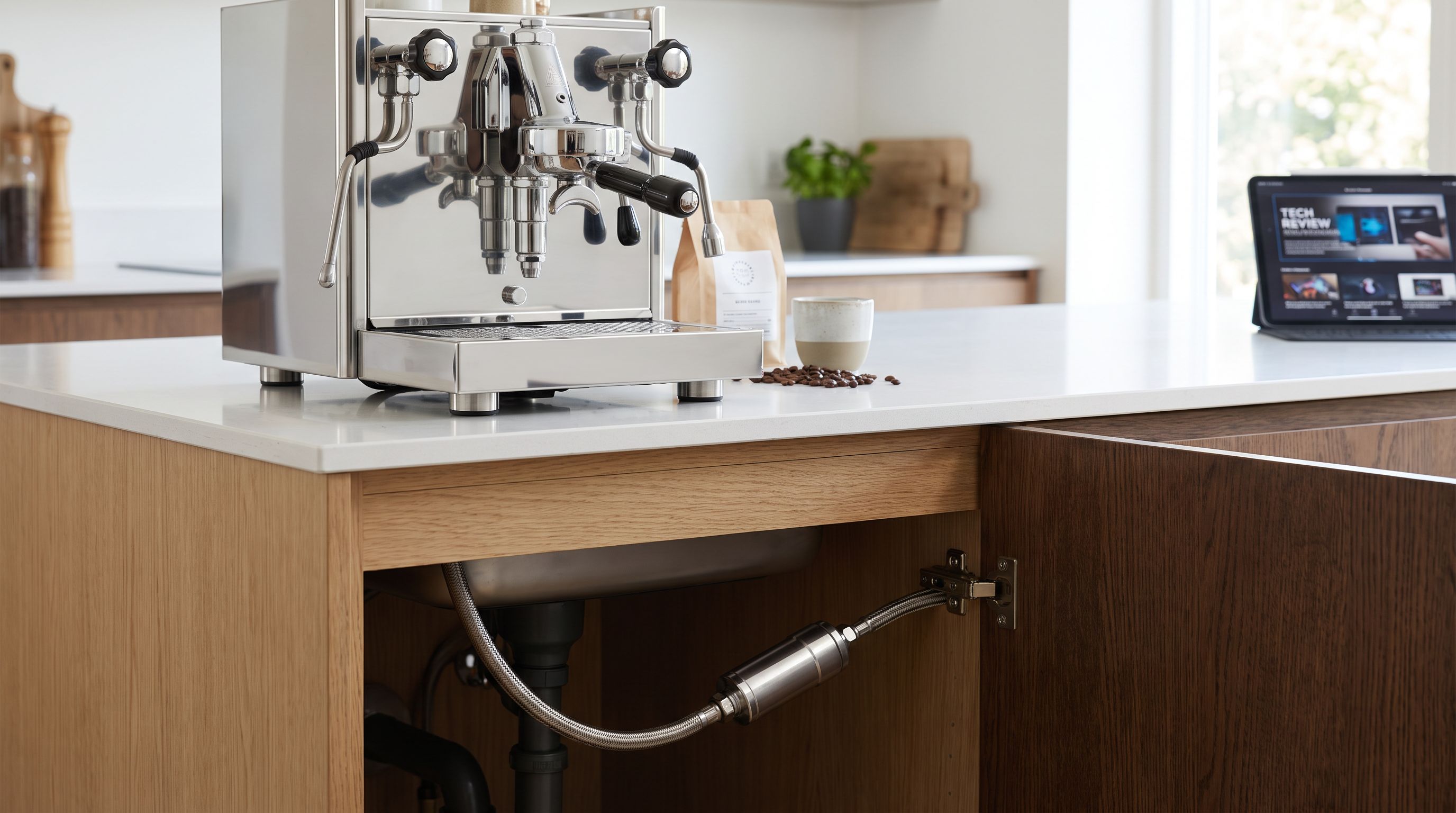
Plumbed In Espresso Machine 2026: What Your Sink Needs
Thinking of plumbing in your espresso machine in 2026? Here's the line pressure, regulator, filtration and machine compatibility you actually need under the counter.
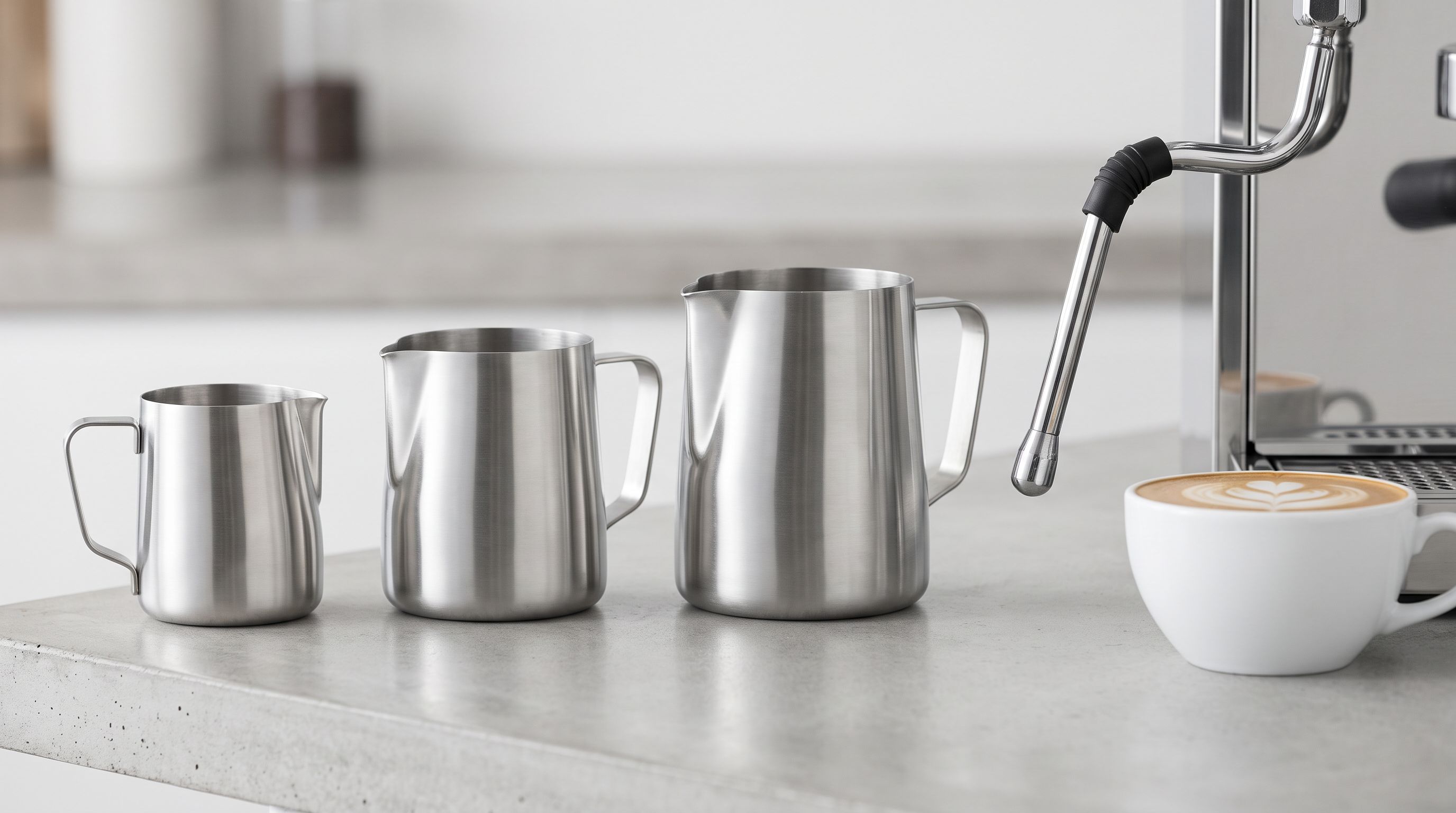
Milk Frothing Pitcher Guide 2026: Match Spout to Steam Power
How to choose a milk frothing pitcher in 2026: spout shape, 12 vs 20 oz volume, stainless gauge and interior fill lines, matched to your machine's steam wand.
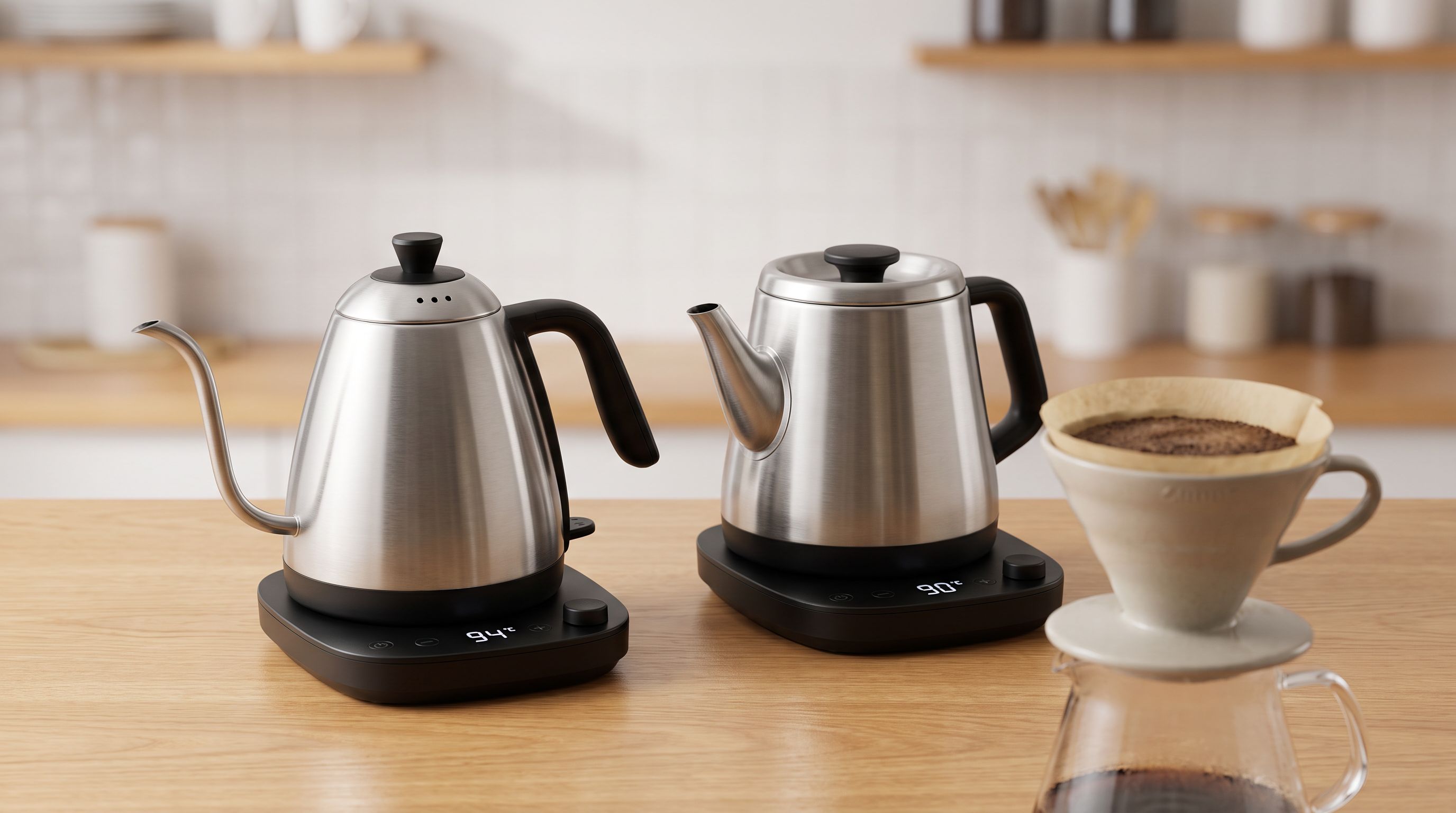
Electric Kettle vs Gooseneck Kettle: Buy by Spout in 2026
Electric kettle vs gooseneck kettle for a tea-and-coffee household in 2026: how spout shape, capacity and hold-temp settings decide which single kettle you need.