Saucier vs Saucepan in 2026: Which Shape Earns the Burner
Saucier vs saucepan in 2026: how curved walls change whisking, reduction, and cleanup — plus picks by quart size, cladding, and induction compatibility.
Reader-supported: we may earn a commission from links on this page, at no extra cost to you. It never affects our picks. Learn more.
Two pots, nearly the same volume, nearly the same price bracket, and a surprisingly different experience at the stove. A saucepan has straight vertical walls meeting the base at a sharp right angle. A saucier has walls that flare outward in a continuous curve, so there's no corner for a whisk to miss. That single geometric difference changes how fast liquid reduces, how evenly a custard thickens, and how long you spend scrubbing.
Here's how to decide which one deserves the burner — and which sizes actually get used.
What the curve actually does
Whisks reach everything
The practical argument for a saucier is simple: a balloon whisk is round, and a saucier's interior is round. In a straight-sided saucepan, the seam where the wall meets the base is a dead zone. Flour, egg yolk, and starch collect there, cook longer than everything else, and show up later as lumps or scorched flecks. Béchamel, hollandaise, pastry cream, polenta, risotto, and gravy all benefit from a pan with no corners.
A silicone spatula can clear a saucepan's corners, but it requires attention. A saucier makes it automatic.
More surface area means faster reduction
Because the walls flare, a saucier of a given volume has a wider opening than a saucepan of the same volume. More exposed surface means faster evaporation. Reducing a cup of wine, a pan sauce, or a tomato sauce simply happens quicker in a saucier — and you can see the consistency change because the shallow pool is visible rather than hidden down a well.
The flip side is the same fact: a saucier is bad at anything you don't want to evaporate. Simmering a quart of stock for an hour will cost you more liquid than it would in a saucepan.
Straight walls still have real jobs
A saucepan's tall, narrow profile holds heat and liquid in. That's exactly what you want for boiling pasta water for one, steaming rice with an absorption ratio that depends on minimal evaporation, blanching green beans, cooking dried beans, reheating soup, or holding a bain-marie. The flat base also gives you more usable contact area for searing shallots or blooming spices before you add liquid — a saucier's curved bottom has a smaller true flat zone.
If you're keeping one pot, and your cooking skews toward grains, boiling, and hands-off simmering, the saucepan wins.
Saucier vs saucepan at a glance
| Saucier | Saucepan | |
|---|---|---|
| Wall shape | Flared, continuous curve, no corners | Straight and vertical, sharp base corner |
| Whisking | Excellent — whisk contacts the whole surface | Fair — corners need a spatula |
| Evaporation / reduction | Fast (wide mouth) | Slow (narrow mouth, tall walls) |
| Best for | Sauces, custards, risotto, polenta, caramel, gravy, scrambled eggs | Rice, grains, boiling, blanching, soups, reheating, stock |
| Flat searing surface | Smaller | Larger |
| Pouring | Very easy from a flared rim | Depends on rim design; more drips |
| Cleaning | Easier — nothing hides in a corner | Corner buildup, especially with starch |
| Lid storage efficiency | Takes more counter/cabinet width per quart | More compact footprint |
| Sweet-spot size | 2–3 qt | 1.5–2 qt small, 3–4 qt medium |
Sizes that actually earn space
1.5 to 2 quarts. Melting butter, warming milk, a half-cup pan sauce, oatmeal for one, reheating leftovers. Here the saucepan shape is often better — a small saucier reduces so fast that a two-tablespoon sauce can break before you're ready. The Cuisinart MultiClad Pro 1.5-Quart Saucepan is the classic version of this pot: fully clad, induction-ready, and tall enough that a quarter-cup of liquid still covers the base.
 Best small saucepan · Cuisinart MultiClad Pro 1.5-Quart Saucepan — Check price on Amazon →
2.5 to 3 quarts. This is the saucier's home turf. Enough room for a batch of risotto, a quart of béchamel, a double batch of caramel, or dinner-sized grits. The All-Clad D3 Stainless 3-Quart Saucier is the long-standing benchmark: bonded three-ply aluminum between stainless layers, no hot spots, a rolled rim that pours cleanly, and the thin, high-leverage handle All-Clad owners either love or tolerate. The Made In 3-Quart Saucier is the alternative for cooks who want a heavier five-ply body and a rounder, more comfortable handle; owner feedback consistently praises the pour and the balance when full.
 Best for everyday cooking · Made In 3-Quart Saucier — Check price on Amazon →
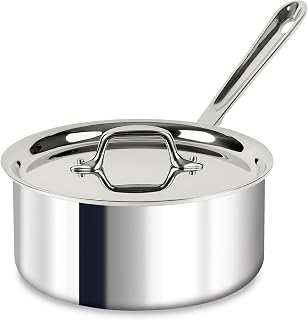 Best overall · All-Clad D3 Stainless 3-Quart Saucier — Check price on Amazon →
3 to 4 quarts, straight-sided. The all-purpose pot. Rice for four, pasta for two, a pot of soup, blanching. The Tramontina Tri-Ply Clad 3-Quart Saucepan is the value answer — genuine full cladding rather than a disc base, oven-safe, induction-compatible, and priced well below boutique brands. It's the pan to buy if you'd rather spend the savings on a good saucier.
 Budget pick · Tramontina Tri-Ply Clad 3-Quart Saucepan — Check price on Amazon →
Cladding, cores, and induction in 2026
Ignore marketing layer counts and ask two questions: is the aluminum (or copper) core bonded across the entire pan including the walls, and is the exterior magnetic?
Fully clad (tri-ply or five-ply) means the conductive core wraps up the sides. For a saucier this matters more than for most cookware, because the curved walls are where the food climbs and where scorching starts. Disc-bottom pans — a slab of aluminum welded to a stainless body — heat the base well but leave the walls to lag, which produces a ring of overcooked sauce at the liquid line.
Induction compatibility requires a magnetic stainless exterior, typically 430-series. All the fully clad stainless pans named here qualify; a magnet sticking firmly to the underside is the only test you need. If you're on induction, also favor a pan with a genuinely flat base — sauciers vary, and a pronounced curve reduces the coupling area, which can slow boil times a little.
Nonstick sauciers exist and are pleasant for scrambled eggs and sticky custards, but the coating limits you to moderate heat and takes high-heat caramel work off the table. For a single saucier, stainless is the more versatile buy.
Enameled cast iron and ceramic sauciers heat slowly and hold heat hard — good for long polenta, poor for anything you need to stop cooking quickly. The Le Creuset Signature Stainless Steel 2.5-Quart Saucier is the brand's answer to that problem: a heavy clad stainless build with the wide mouth and curve you want, and it finished at the top of recent independent saucier testing.
 Premium pick · Le Creuset Signature Stainless Steel 2.5-Quart Saucier — Check price on Amazon →
So which should you buy first?
- You own nothing: buy the 3-quart saucepan first. It does more jobs adequately.
- You own a saucepan already: buy a 2.5–3 quart saucier next. It's the bigger upgrade to your day-to-day cooking, especially if you make sauces, risotto, or anything thickened.
- You bake or make pastry: saucier, no debate. Pastry cream, curd, caramel, and ganache are all corner-hating preparations.
- You cook mostly rice, pasta, soup, beans: stay with saucepans and spend the money on a bigger one.
A saucier isn't a replacement for a saucepan; it's a specialist that happens to be a very good generalist. Owning both in the 2–3 quart range covers more real cooking than owning two saucepans ever will.
FAQ
Is a saucier worth it if I already have a good saucepan? If you regularly whisk — roux-based sauces, custards, gravy, polenta — yes. The improvement in texture and the reduction in scrubbing are immediate. If you mostly boil and simmer, it's a luxury.
Can I use a saucier for rice? You can, but expect faster evaporation than the package ratio assumes. Use a tight lid, lower heat, and check a few minutes early. A saucepan is the better rice pot.
What size saucier should I buy if I'm only getting one? Three quarts. It handles a family-sized sauce, a batch of risotto, and small-batch candy work, and it's still small enough for a single pan sauce.
Do sauciers work on induction? Fully clad stainless models do, provided the base is magnetic and reasonably flat. Check with a magnet; a weak pull means slow heating.
Is a disc-bottom pan ever acceptable? For boiling water, yes — it's cheap and heats fast. For sauces, no. Unclad walls scorch at the liquid line.
Why do sauciers clean up faster? There's no right-angle seam for starch and protein to pack into, so a sponge reaches every surface in one pass. It's a small thing that you notice every single time.
Our picks
All-Clad D3® Stainless Steel 3 Qt Saucepan with Lid, Made in the USA
Fully clad tri-ply with a wide curved bowl — the reference saucier for whisking and reduction.
Made In Cookware - 3 Quart Stainless Steel Saucier Pan - 5 Ply Stainless Clad - Professional Cookware - Crafted in USA - Induction Compatible
5-ply clad body, flared rim that pours cleanly, and a comfortable stay-cool handle.
Tramontina Signature Tri-Ply Clad Stainless Steel 3-Quart Sauce Pan
Fully clad straight-sided workhorse for rice, blanching, and reheating at a fraction of boutique prices.
Le Creuset Tri-Ply Stainless Steel 2 Quart Saucepan
Heavy tri-ply build and a wide mouth; a top finisher in independent saucier testing.
Cuisinart 1.5 Quart Multiclad Pro Triple Ply Saucepan w/Cover, MCP19-16N
Tight, tall profile for melting butter, warming milk, and small-batch sauces without scorching.
Get the best kitchen gear deals in your inbox
Join the PrepDeck newsletter for hand-picked kitchen gear deals and new buying guides. No spam, unsubscribe anytime.
Related reads
Cookware Sets Under $500 in 2026: The Piece-Count Math
The best cookware set under 500 in 2026, judged by usable pans — not padded lid counts. Cladding, oven limits, and induction compatibility compared.
Stockpot Buying Guide 2026: Base Diameter Beats Quarts
The best stockpot in 2026 isn't about quarts — it's about base diameter matching your burner. Picks for stock, pasta and canning from 8 to 20 qt.
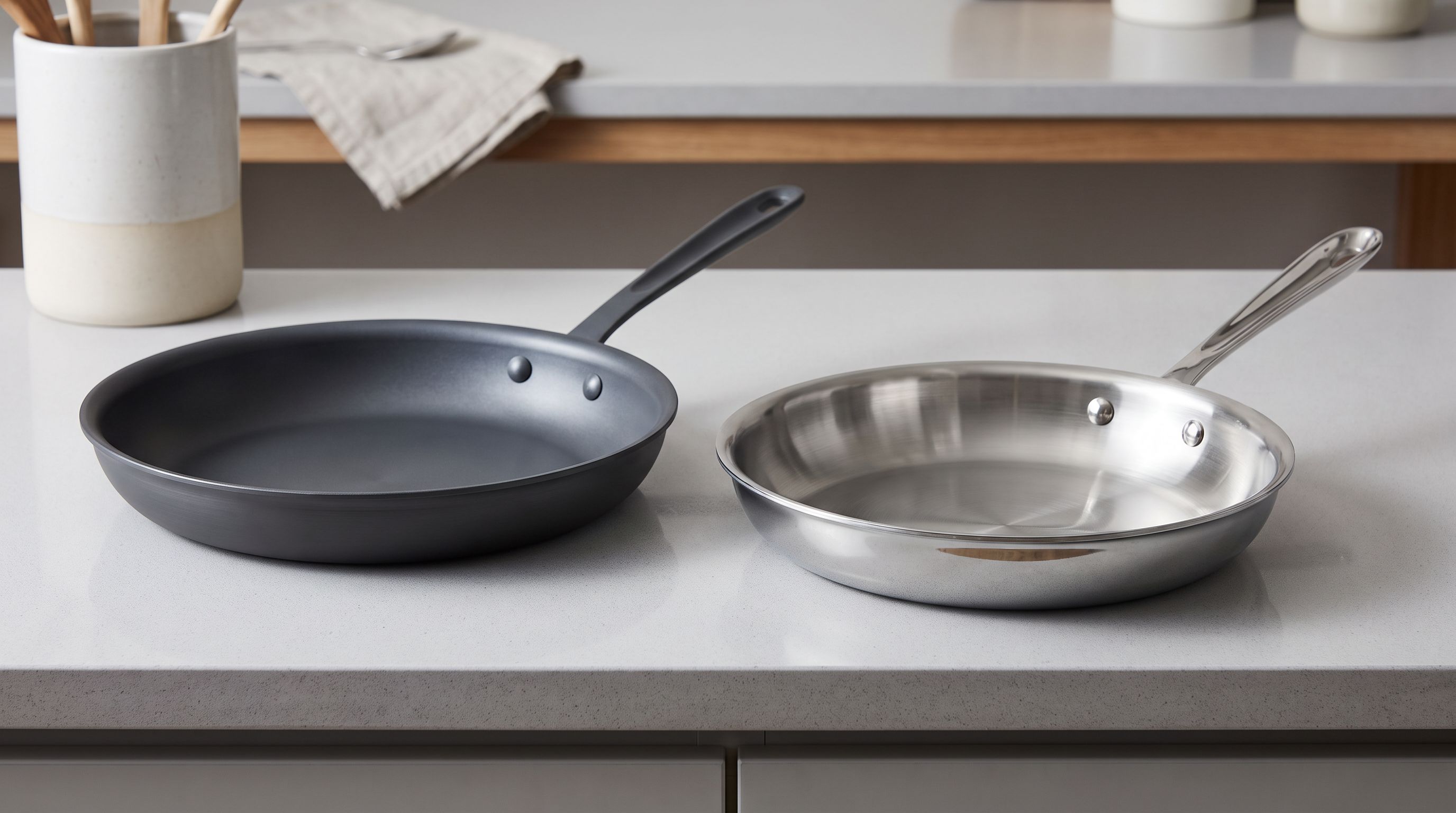
Hard Anodized vs Stainless Cookware in 2026: Who Wins?
Hard anodized vs stainless cookware in 2026: how each handles heat, oven limits, induction and years of wear — plus which sets are worth buying.