Hard Anodized vs Stainless Cookware in 2026: Who Wins?
Hard anodized vs stainless cookware in 2026: how each handles heat, oven limits, induction and years of wear — plus which sets are worth buying.
Reader-supported: we may earn a commission from links on this page, at no extra cost to you. It never affects our picks. Learn more.
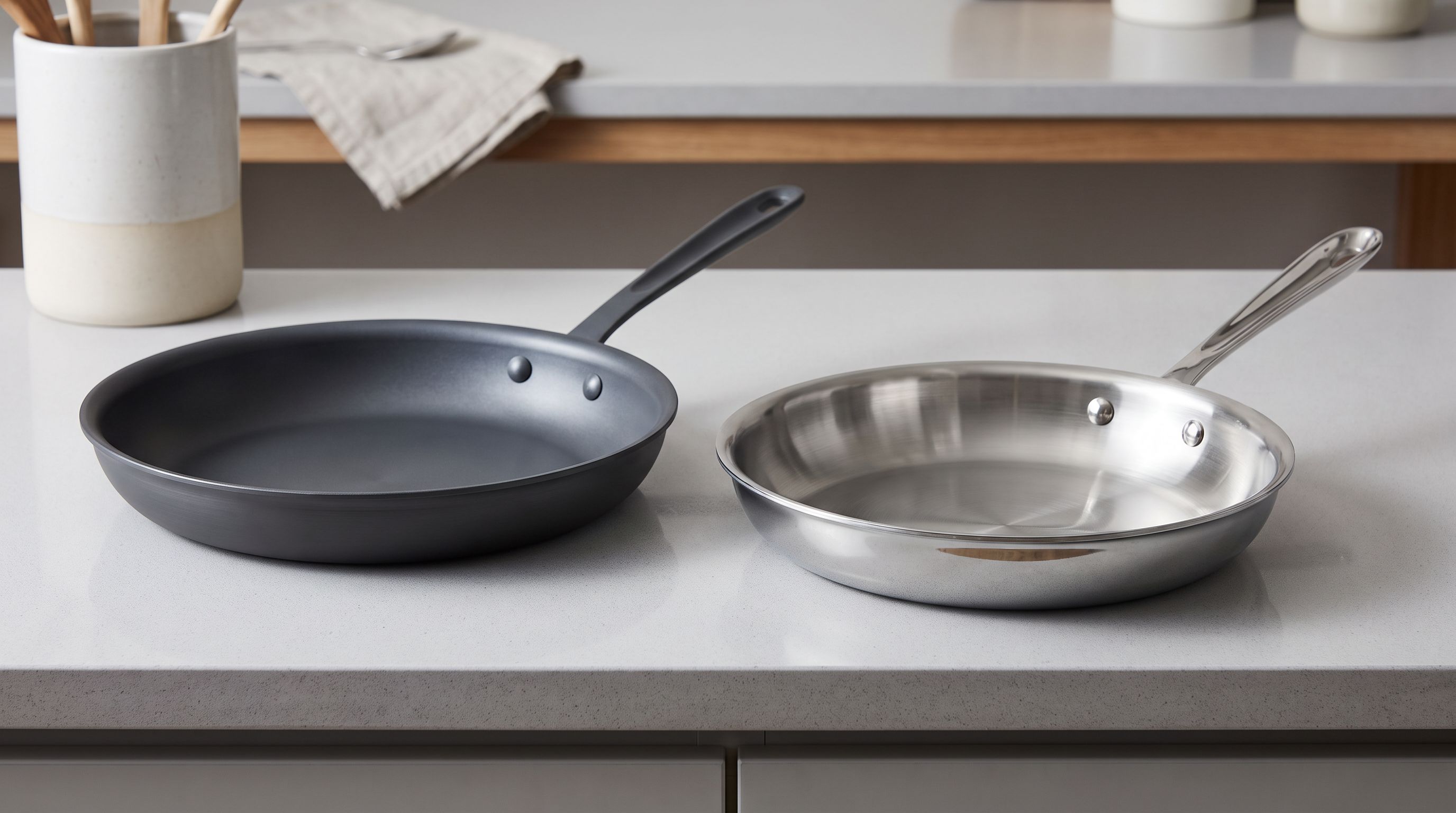
Walk down the cookware aisle and you'll hit the same fork in the road everyone hits: a stack of dark gray, slick-surfaced hard anodized sets on one side, and gleaming clad stainless on the other. They cost roughly the same at the mid-range. They both claim to last forever. They cook very differently.
We compared the two categories on the things that actually change your cooking — heat response, oven and broiler limits, induction compatibility, and how the cooking surface holds up over five to ten years of real use, based on manufacturer specs, independent testing and verified owner feedback.
Short version: stainless wins on longevity, heat ceiling and versatility; hard anodized wins on release, weight and day-one convenience. Most well-equipped kitchens end up owning both. Here's how to decide where your money goes first.
What each material actually is
Hard anodized aluminum is aluminum that's been run through an electrochemical bath that converts the outer layer into a very hard aluminum oxide. It's harder than the raw metal, non-reactive, and dark gray. Crucially, hard anodizing is a surface treatment on an aluminum body, not a cooking surface in itself. Almost every hard anodized set sold today adds a separate PTFE nonstick coating on the inside. That's the part that wears out.
Clad stainless is a sandwich: stainless steel on the outside, an aluminum (sometimes copper) core in the middle, stainless on the cooking surface. Tri-ply means three layers; five-ply adds more aluminum and a stainless divider. The stainless itself conducts heat poorly — the aluminum core is doing the work. That's why "fully clad" matters: a cheap pan with a disc bonded only to the bottom will scorch anything that climbs the sidewalls.
A common myth worth killing: people say "aluminum conducts better, so hard anodized heats more evenly." The aluminum core in clad stainless is doing exactly the same job. In practice both heat evenly; the difference is in mass, ceiling and surface.
Heat response and searing
Hard anodized pans are lighter and thinner, so they heat up fast and cool fast — good for anything where you want quick control, like eggs or a delicate pan sauce. But the nonstick coating caps you. Most manufacturers tell you to stay at medium or below, and PTFE coatings begin degrading in the 500°F/260°C range. You cannot get a hard crust on a ribeye or a deep fond for a pan sauce without abusing the pan.
Clad stainless has no such ceiling. You can rip it to smoking-hot, sear, deglaze, scrape up fond with a metal spatula, and finish under the broiler. Heavier five-ply pans hold temperature better when cold protein hits them; lighter tri-ply responds faster to burner changes. For browning, braising, reducing and anything where the brown bits are the point, stainless is simply the right tool — which is why we'd still add a Made In Stainless Clad Frying Pan 10-Inch to a hard anodized set rather than the reverse.
 Best single stainless skillet · Made In Stainless Clad Frying Pan 10-Inch — Check price on Amazon →
Oven limits, broilers and handles
This is where the spec sheets diverge sharply, and it's the most common source of ruined pans.
| Hard anodized (nonstick) | Clad stainless | |
|---|---|---|
| Typical oven limit | ~400–450°F; some lines lower | 500–600°F depending on handle |
| Broiler safe | Almost never | Usually yes (check lid/handle) |
| Induction | Only if a magnetic base is bonded on | Yes, if the exterior is magnetic steel |
| Metal utensils | Varies; a few lines allow it | Yes |
| Dishwasher | Often "safe," but hand-washing extends coating life | Safe, though hand-washing avoids dulling |
| Realistic surface lifespan | 3–7 years before release fades | 20+ years with care |
| Weight | Lighter | Heavier |
| Reactivity | Non-reactive | Non-reactive |
Hard anodized sets also tend to use silicone or phenolic handle inserts that stay cool on the stovetop — genuinely nice — but those are exactly the parts that limit oven temperature. Stainless sets with riveted all-metal handles, like the All-Clad D3 Stainless 10-Piece Cookware Set, get hot on the stovetop but go straight under the broiler.
 Premium pick · All-Clad D3 Stainless 10-Piece Cookware Set — Check price on Amazon →
Glass lids are another trap. Many sets ship with tempered glass lids rated well below the pan itself. If you roast in your pans, look for stainless lids or plan to finish uncovered.
Induction compatibility
Aluminum isn't magnetic. A hard anodized pan only works on induction if the manufacturer bonds a stainless steel disc to the base — some lines do, many don't, and it's often buried in the fine print. If you have induction (or might move to it), check with a fridge magnet or read the spec before you buy.
Clad stainless is usually induction-ready because the outer layer is magnetic 430-series steel. Usually, not always: some older or decorative lines use non-magnetic 18/10 on the exterior. Tramontina's tri-ply clad line and All-Clad D3 both work on induction, and the magnetic steel exterior means they heat quickly and efficiently on the hob.
How each ages — the part reviews skip
Owner reports converge on a clear pattern.
Hard anodized bodies hold up well — the anodized layer itself is tough and the pans stay flat if you don't thermal-shock them. What fails is the nonstick. Eggs start sticking somewhere between year three and year seven depending on heat discipline, utensil use and dishwasher habits. At that point the pan isn't dangerous, it's just mediocre, and you're buying again. The anodized finish can also dull or discolor in the dishwasher; detergents are harsh on it.
Stainless ages differently: it accumulates rainbow heat tint, hard-water spots and a hazy exterior, none of which affect performance. Bar Keepers Friend resets most of it. The failure modes that matter are warping from cold water on a hot pan, and loose rivets after a decade of heavy use. Otherwise a tri-ply set bought in 2026 is realistically still in service in 2046 — which changes the cost math considerably.
Which set to buy
Buy clad stainless as your core set if you sear, roast, braise, make pan sauces, or just want one purchase to outlive the kitchen. The Tramontina Gourmet Tri-Ply Clad 12-Piece Cookware Set is the value benchmark — genuine full-clad construction, flat bases, induction-ready — and it's the set most testing roundups land on when they weigh performance against price. If you want the heirloom version with the most proven long-term track record, the All-Clad D3 Stainless 10-Piece Cookware Set is still the reference point, with handles and rivets that owners report surviving decades.
Buy hard anodized if you cook a lot of eggs, fish, pancakes and quick weeknight food, want lighter pans, and accept that you'll replace them. The Calphalon Premier Hard-Anodized Nonstick 11-Piece Cookware Set is the strongest all-rounder here: thick anodized bodies, a durable coating rated for metal utensils, and stay-cool handles. On a tighter budget, the T-fal Ultimate Hard Anodized Nonstick 17-Piece Cookware Set delivers a surprisingly scratch-resistant surface and a lot of pieces for the money — just treat its heat limits seriously.
 Budget pick · T-fal Ultimate Hard Anodized Nonstick 17-Piece Cookware Set — Check price on Amazon →
The smartest build for most people: a clad stainless core set plus one or two hard anodized or nonstick skillets you expect to replace every few years. That combination covers every technique without asking either material to do a job it's bad at.
FAQ
Is hard anodized the same as nonstick? No. Hard anodizing is a hardened aluminum oxide surface on the pan body. Most hard anodized cookware adds a separate PTFE nonstick coating on top — that coating, not the anodizing, determines release and heat limits.
Does hard anodized cookware work on induction? Only if the maker bonds a magnetic stainless base to it. Test with a magnet or confirm in the specs; many hard anodized lines are not induction compatible.
Which is healthier? Both are non-reactive and safe used as directed. Hard anodized sealed aluminum won't leach into acidic food. The practical concern is overheating PTFE nonstick above roughly 500°F, which stainless avoids entirely.
Can I use metal utensils? On clad stainless, yes. On hard anodized nonstick, only if the manufacturer explicitly rates the coating for it — a few premium lines do, most don't.
Why does food stick to my new stainless pan? Heat the dry pan first, then add fat, then add food, and let protein release on its own rather than forcing it. Most "sticking" complaints are a preheat problem, not a pan problem.
Is a cookware set better than buying pieces individually? Sets are cheaper per piece and fine for a first kitchen. Experienced cooks often get more value buying a 10-inch and 12-inch skillet, a 3-quart saucier and a stockpot individually, skipping the small pans sets pad the count with.
Our picks

Tramontina Signature Tri-Ply Clad Stainless Steel 12-Pc Pots and Pans Set
Full tri-ply clad construction, oven- and induction-friendly, at a fraction of boutique stainless pricing.
All-Clad D3® Stainless Steel Cookware Set, 10-Piece, Made in the USA
The reference tri-ply set: flat bases, riveted handles, and decades of owner reports behind it.

Calphalon Premier Hard-Anodized Nonstick Cookware 11-Piece Pots and Pans Set Dishwasher and Oven Safe with MineralShield Nonstick Technology Durable and Versatile Kitchen Cookware
Thick anodized bodies, stay-cool handles and a nonstick layer rated for metal utensils.
T-Fal Ultimate Hard Anodized Nonstick Pots and Pans Set 17 Piece, Nonstick Cookware Set with Fry Pan, Saucepans, Saute-Pan, Griddle, Dishwasher Safe, Onyx
A scratch-resistant nonstick surface and a big piece count for not much money.
All-Clad D3® Stainless Steel Fry Pan Set, 10&12-inch, Made in the USA
A 5-ply searing pan worth adding to any hard anodized set that can't take real heat.
Get the best kitchen gear deals in your inbox
Join the PrepDeck newsletter for hand-picked kitchen gear deals and new buying guides. No spam, unsubscribe anytime.
Related reads
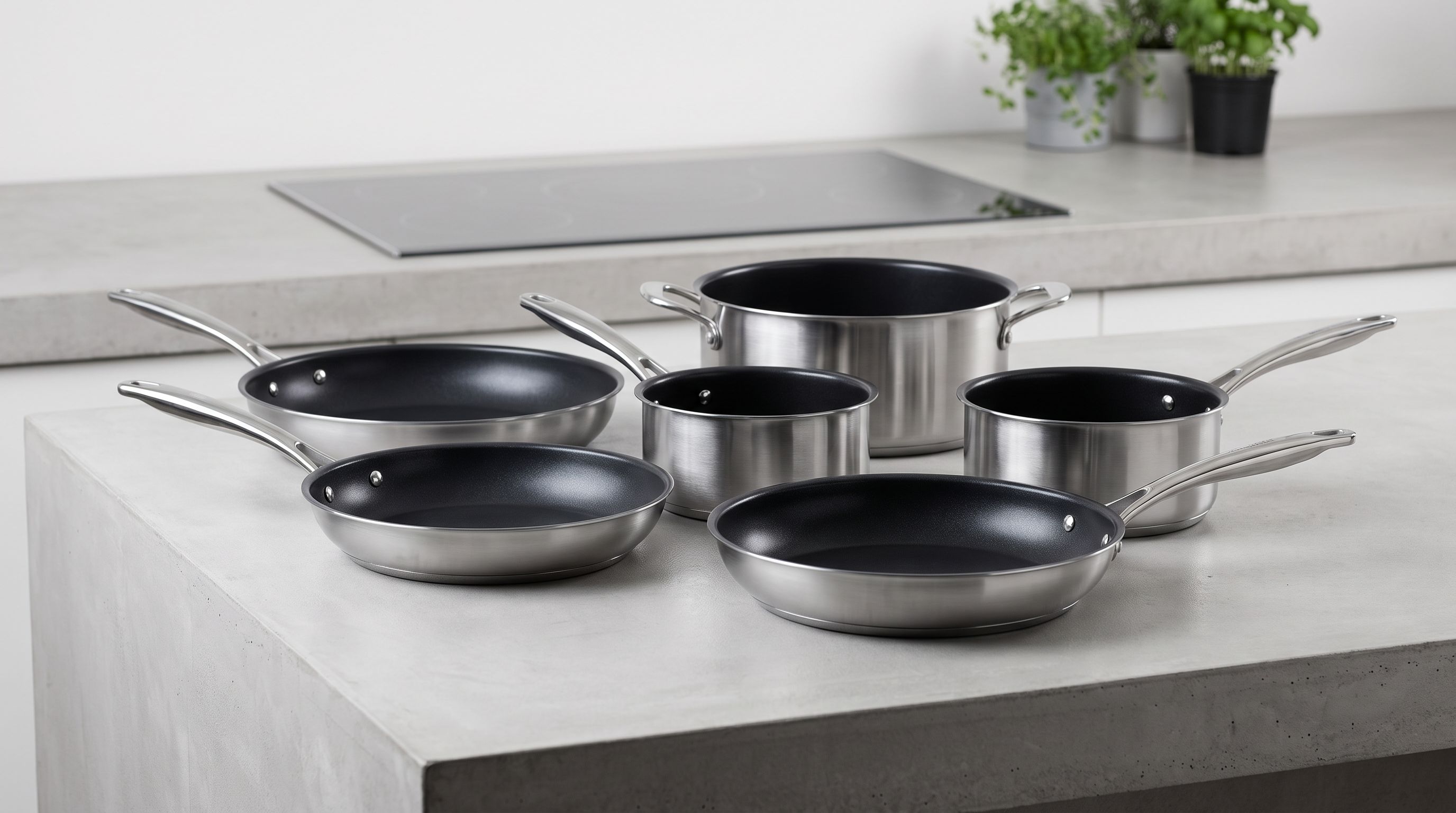
Cookware Sets Under $500 in 2026: The Piece-Count Math
The best cookware set under 500 in 2026, judged by usable pans — not padded lid counts. Cladding, oven limits, and induction compatibility compared.
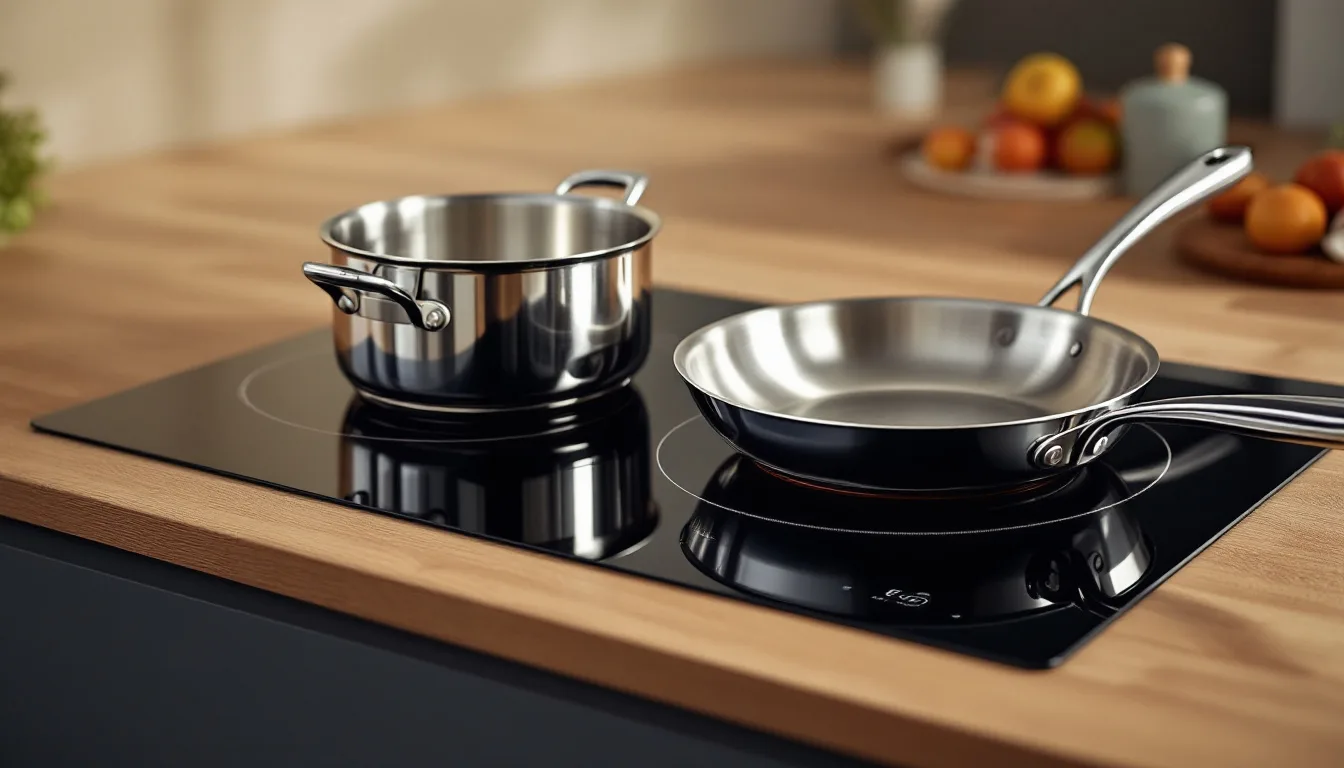
Induction Cookware Sets in 2026: What Passes the Magnet Test
The best induction cookware set for your hob depends on base construction, not marketing. How cladding, disc bases and warping work — plus 4 sets that qualify.
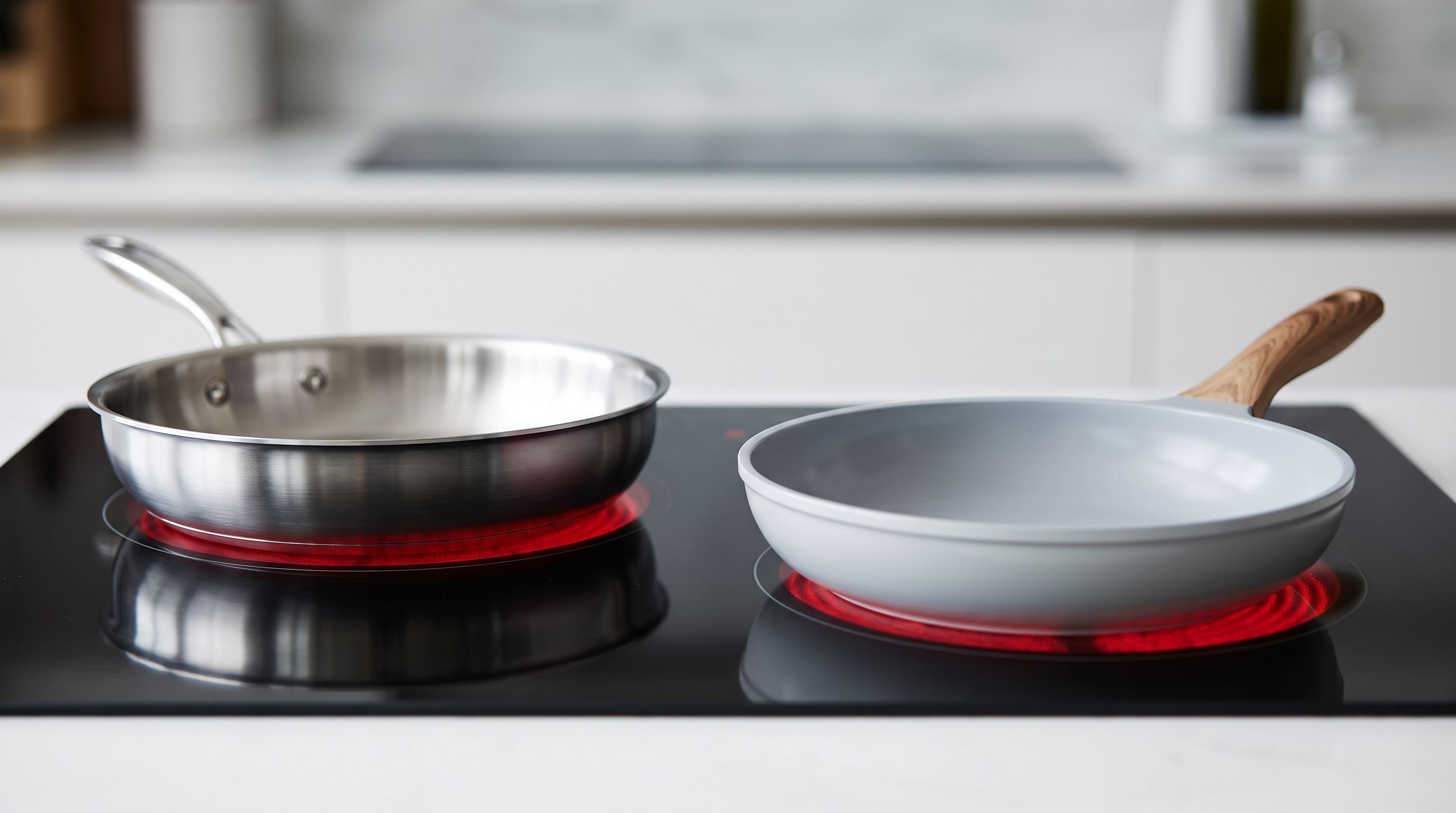
Glass Top Stove Cookware in 2026: 5 Picks That Won't Scratch
The best cookware for a glass top stove in 2026, ranked by base flatness, weight, and scratch risk — plus which pans to keep off a smooth-top range entirely.