Pullman Loaf Pan vs Standard Tin: Which Bakes Better Bread?
Pullman loaf pan or standard loaf tin in 2026? We compare volume, gauge, coatings and lid behavior to help you pick the right pan for sandwich bread.
Reader-supported: we may earn a commission from links on this page, at no extra cost to you. It never affects our picks. Learn more.
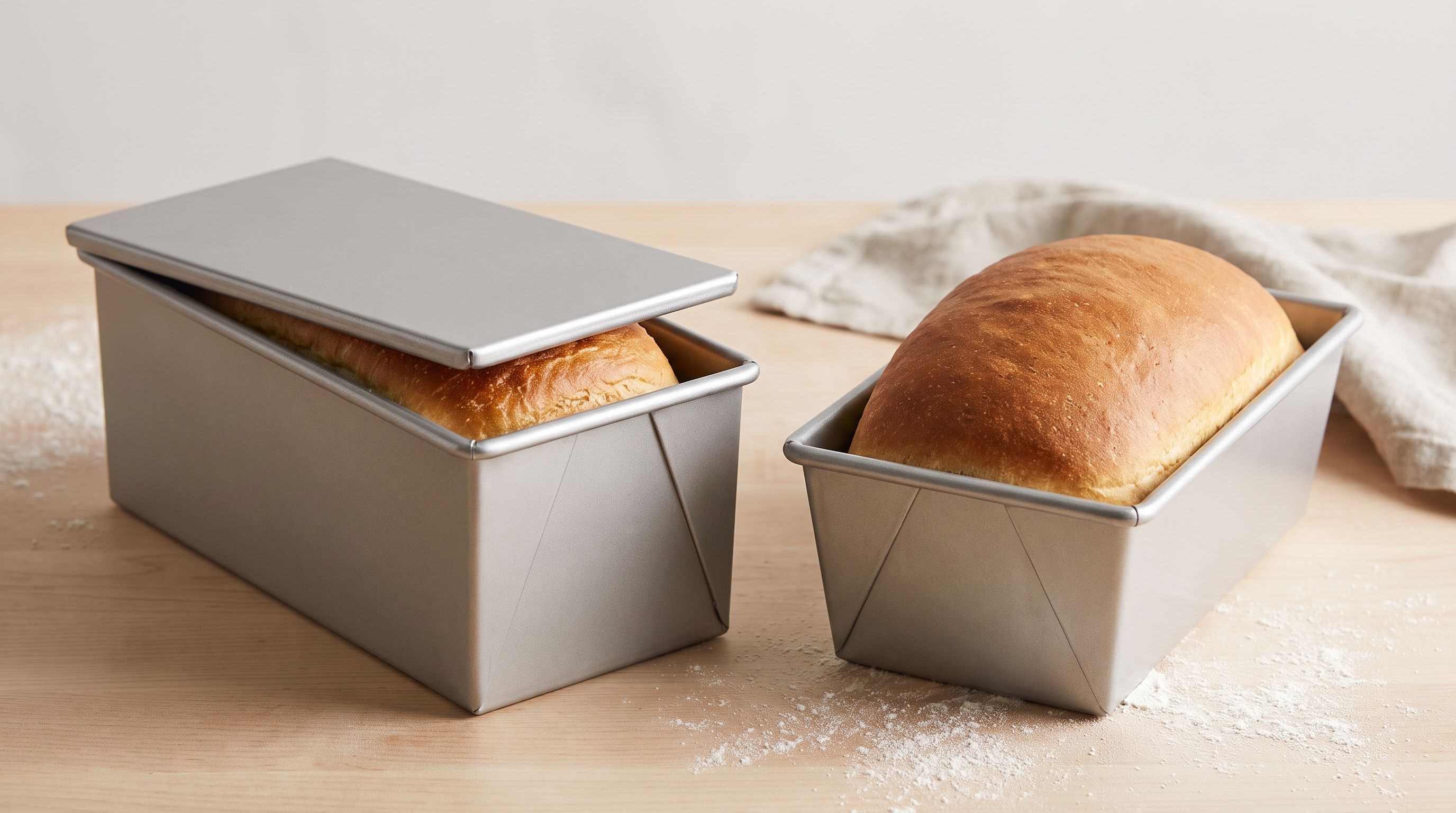
If you've ever pulled a beautiful sandwich loaf from the oven only to find the top mushroomed over the rim and the slices too tall for your toaster, you've already met the problem a Pullman loaf pan solves. The lid is the whole point: it caps the rise and forces the dough into a square-cornered brick — pain de mie in French, "pullman" in English because the shape stacked neatly in railcar galleys.
But a lidded pan is not automatically the better pan. A standard open loaf tin bakes a domed loaf with a thicker, browner crust and handles quick breads, meatloaf and banana bread that a Pullman can't. Here's how the two actually differ, and how to decide which belongs in your cabinet.
The core difference: constrained rise vs free rise
A standard loaf pan lets dough expand upward during oven spring. You get a domed top, more crust surface area, and slices that vary in width from top to bottom. That's fine — great, even — for rustic sandwich bread, cinnamon swirl, and anything you want to look homemade.
A Pullman pan has a sliding lid that caps the loaf at a fixed height. The dough hits the lid, has nowhere to go, and fills the corners instead. The results:
- Uniform square slices from end to end, which matters for sandwiches, French toast, croque monsieur, and crustless tea sandwiches.
- A thin, soft crust. With the lid on, steam is trapped and the top never browns hard. Pain de mie means "crumb bread" for a reason.
- Tighter, finer crumb. Constrained expansion compresses the gas cells. You get a plush, close texture rather than open holes.
- Slightly longer bakes at the same temperature, because the lid insulates the top.
You can also bake lid-off in a Pullman — it just becomes a long, narrow open pan with a domed loaf.
Volume and sizing: the number that trips people up
This is where most first-time Pullman buyers go wrong. Pullman pans are sized by length, and the two common sizes behave very differently.
A 13 x 4 x 4 inch Pullman holds roughly 2 lb (around 900 g) of dough. A 9 x 4 x 4 inch Pullman holds roughly 1.5 lb (around 680 g). A standard 8.5 x 4.5 inch loaf pan is about a 1 lb pan, and the common 9 x 5 inch tin is a bit larger still.
The general rule for a lidded bake: fill the pan about two-thirds full with dough so the loaf rises to meet the lid without crushing itself or forcing the lid open. Underfill and you get a short, dense brick with a visible gap; overfill and dough squeezes out the lid seams, which is a genuinely miserable cleanup. If you use a bread recipe written for a 9 x 5 tin in a 13-inch Pullman, you will underfill it badly. Scale the recipe up roughly 1.5 to 2x, or buy the 9-inch Pullman.
Gauge, material and coating
Aluminized steel is the default recommendation for loaf pans in 2026 and for good reason: it's steel with an aluminum-silicon coating, so you get the rigidity of steel plus aluminum's heat conduction. It resists warping at the high temperatures and long bakes bread demands. The Chicago Metallic Commercial II line is built on exactly this, in a commercial gauge that doesn't flex when you grip it one-handed.
Anodized aluminum heats faster and more evenly than steel and never rusts, though it's softer and will dent if abused. Fat Daddio's Anodized Aluminum Bread Pan is the straightforward value play here — uncoated, so it needs greasing or a parchment sling, but nothing to wear out.
Coatings are the real decision point. Silicone-based nonstick (what USA Pan uses, branded Americoat) releases enriched sandwich doughs reliably and survives dishwasher trips better than cheap PTFE-style coatings, though handwashing extends life either way. Uncoated aluminized steel, like the Chicago Metallic Commercial II Uncoated 1 lb Loaf Pan, develops a seasoned patina over years and will outlast any coating — but lean, low-fat doughs can stick, so grease properly.
One underrated feature: the corrugated or ribbed surface on USA Pan bakeware. The fluting reduces contact area and promotes airflow, which genuinely helps release and gives the loaf's sides a subtle ridged texture.
Lid fit matters more than the spec sheet suggests
On a Pullman, the lid is the component that fails. Cheap pans warp slightly after a few high-heat bakes and the lid then binds or won't slide at all. Look for a lid with a folded, reinforced edge and a pan body stiff enough not to flex. The USA Pan Bakeware Pullman Loaf Pan with Cover, 13 x 4 inch is the one most consistently praised in owner feedback for a lid that still slides freely after extended use — the heavier gauge is doing the work.
 Best overall · USA Pan Bakeware Pullman Loaf Pan with Cover, 13 x 4 inch — Check price on Amazon →
Grease the lid's underside and the top inch of the pan walls. Dough expands into that zone and sticks there more often than at the bottom.
Comparison table
| Pullman pan (lid on) | Pullman pan (lid off) | Standard loaf tin | |
|---|---|---|---|
| Typical sizes | 13 x 4 x 4 in ( |
Same | 8.5 x 4.5 in (~1 lb), 9 x 5 in |
| Loaf shape | Square brick, flat top | Tall, narrow, domed | Classic domed |
| Crust | Thin, pale, soft | Medium, browned | Thickest, most browned |
| Crumb | Fine, tight, plush | Moderately open | Open, variable |
| Best for | Sandwich bread, pain de mie, brioche, milk bread | Tall sandwich loaves | Everything: quick breads, banana bread, meatloaf |
| Dough fill level | ~2/3 full | ~1/2 to 2/3 full | ~1/2 to 2/3 full |
| Storage | Bulky; lid is a separate piece | Bulky | Compact, stackable |
| Versatility | Low | Medium | High |
So which should you buy?
Buy a Pullman if you bake sandwich bread, milk bread, or brioche on a regular schedule and care about uniform slices. It's a specialist tool and it does its one job better than anything else. Start with the USA Pan Bakeware Pullman Loaf Pan with Cover, 13 x 4 inch if you bake for a household; choose the USA Pan Bakeware Small Pullman Loaf Pan with Cover, 9 x 4 inch if your oven is compact or you'd rather bake 1.5 lb loaves more often.
Buy a standard tin if you bake occasionally or bake a wide range — banana bread, pound cake, meatloaf, a weekend sourdough sandwich loaf. The Chicago Metallic Commercial II Non-Stick 1 lb Loaf Pan is the sensible default; go with the Chicago Metallic Commercial II Uncoated 1 lb Loaf Pan if you'd rather never think about coating wear, or the Fat Daddio's Anodized Aluminum Bread Pan 9 x 5 inch to spend less.
 Budget pick · Fat Daddio's Anodized Aluminum Bread Pan 9 x 5 inch — Check price on Amazon →
Buy both if you're serious. Honestly, most regular bread bakers end up here. They're different tools, not competing versions of the same one.
FAQ
Can I bake a Pullman loaf without the lid? Yes. It just rises freely and domes, like a tall standard loaf. Fill to about half for a controlled rise, since the pan is narrower than a conventional tin.
Does bread take longer to bake with the lid on? Usually slightly, since the lid traps steam and insulates the top. Check internal temperature rather than color — enriched sandwich doughs are typically done around 190°F, lean doughs a bit higher.
Why did my Pullman loaf come out short with a gap at the top? Underfilled, or underproofed. Aim for roughly two-thirds of the pan volume in dough, and let it proof until it's about an inch below the rim before sliding the lid on.
Is aluminized steel or anodized aluminum better? Aluminized steel is stiffer and more warp-resistant, which matters for lid fit on a Pullman. Anodized aluminum conducts heat a little more evenly and never rusts. Either works well; gauge and build quality matter more than the material choice.
Can I use gluten-free dough in a Pullman pan? Yes, and gluten-free sandwich doughs often benefit from the support of four walls and a lid. Because GF batters are wetter and rise less predictably, start at about half-full and adjust from there.
Does the nonstick coating survive the dishwasher? Silicone-based coatings hold up better than most, but handwashing meaningfully extends the life of any coated pan. Never cut bread in the pan.
Our picks
USA Pan Bakeware Pullman Loaf Pan with Cover, 13 x 4 inch, Nonstick & Quick Release Coating, Made in the USA from Aluminized Steel
Heavy aluminized steel, corrugated surface and a lid that actually slides smoothly after dozens of bakes.

Chicago Metallic Loaf Pan, Commercial II, 1-Pound | Uncoated | Traditional | Pack of 2
Commercial-gauge aluminized steel in the classic 8.5 x 4.5 size — the workhorse open tin.

USA Pan Bakeware Pullman Loaf Pan With Cover, 9 x 4 inch, Nonstick & Quick Release Coating, Made in the USA from Aluminized Steel
A 9-inch Pullman that fits compact ovens and makes a 1.5 lb loaf instead of a giant pain de mie.
Chicago Metallic Loaf Pan, Commercial II, 1-Pound | Uncoated | Traditional | Pack of 2
No coating to scratch or wear out — ideal for crusty, high-heat lean doughs and long-term use.
Fat Daddio's Bread Pan Anodized Aluminum, 9 x 5 x 2.75 Inch, Set of 2, Silver
Anodized aluminum heats fast and evenly, releases well with a light grease, and costs little.
Get the best kitchen gear deals in your inbox
Join the PrepDeck newsletter for hand-picked kitchen gear deals and new buying guides. No spam, unsubscribe anytime.
Related reads
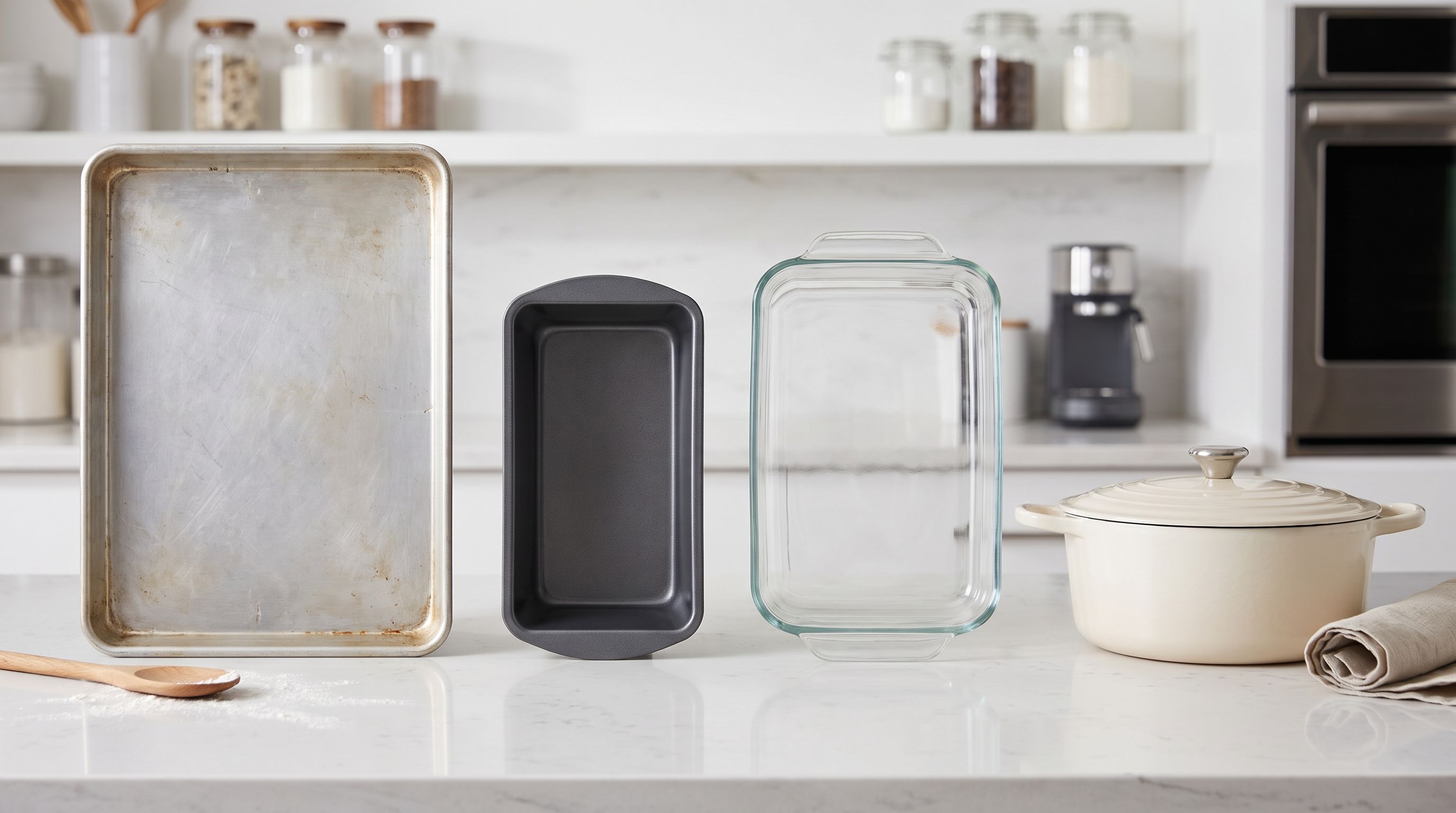
Bakeware Set Buying Guide 2026: The Heat Math Behind Dark Pans
Aluminized steel, dark nonstick, glass or ceramic? We compare heat absorption, warping risk and longevity to help you pick the best bakeware set in 2026.
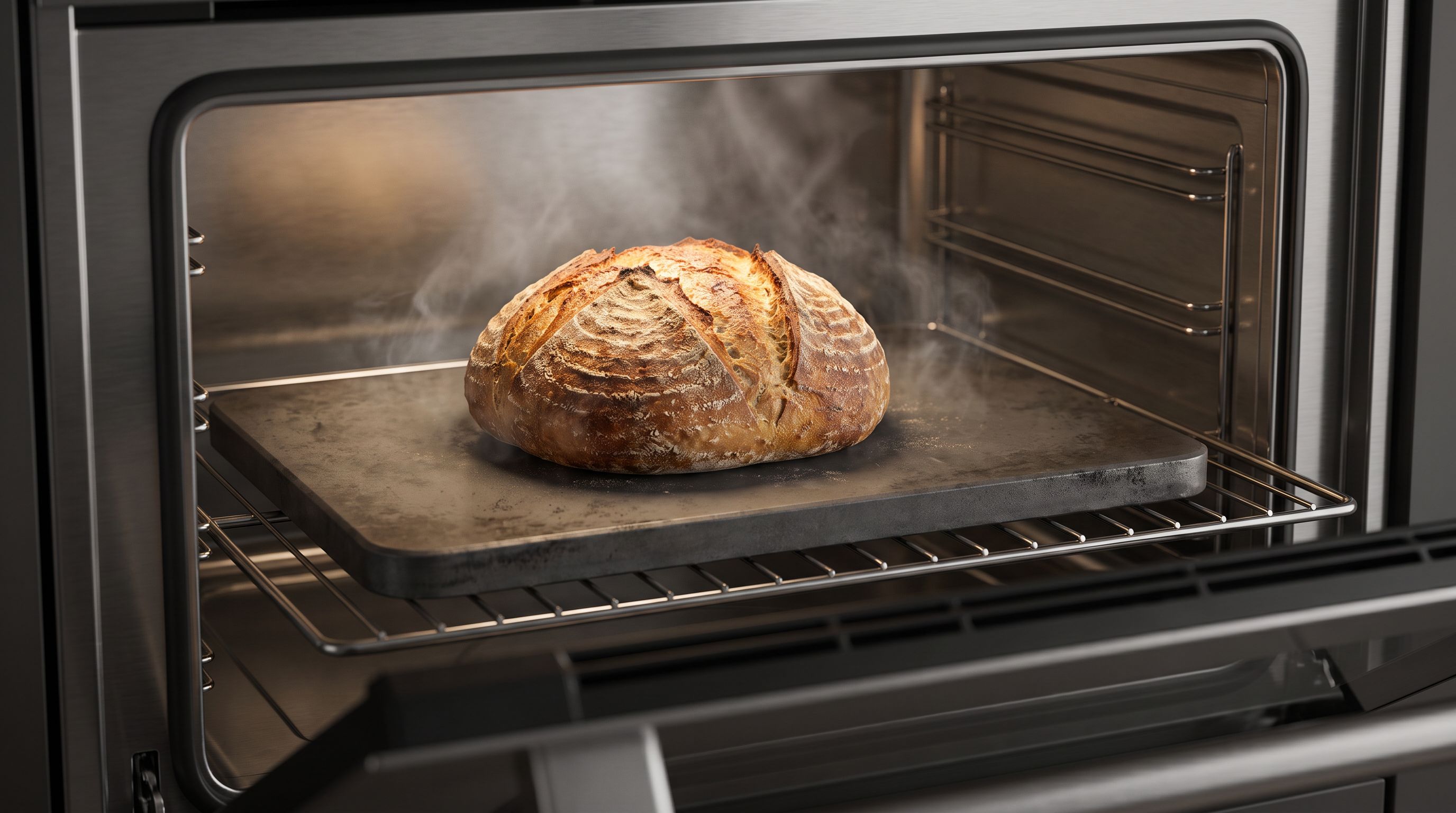
Baking Steel for Bread in 2026: Fit It to Your Rack First
A baking steel for bread lives or dies on fit. Measure your rack, pick a thickness your oven can preheat, and see which 2026 steels suit sourdough and pizza.
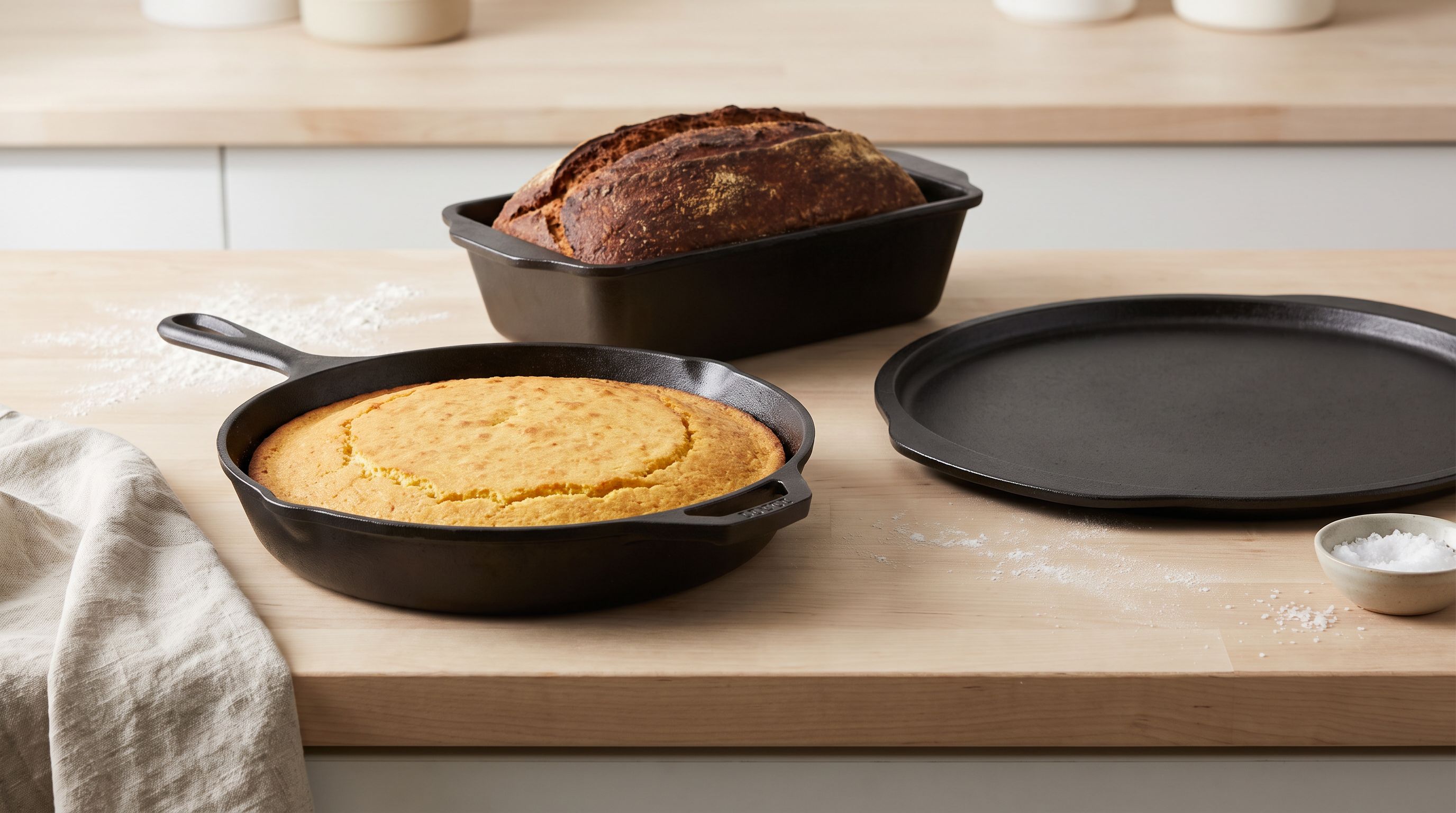
Cast Iron Bakeware in 2026: Preheat Mass Is the Real Spec
Cast iron bakeware in 2026, ranked by preheat mass and oven rack clearance — loaf, cornbread and pizza pans compared against steel and ceramic for crust.