Pitcher vs Under-Sink: The Best Kitchen Water Filter 2026
Pitcher or under-sink? We compare NSF certifications, cartridge cost per gallon, and capacity to find the best water filtration system for kitchen 2026 coffee.
Reader-supported: we may earn a commission from links on this page, at no extra cost to you. It never affects our picks. Learn more.
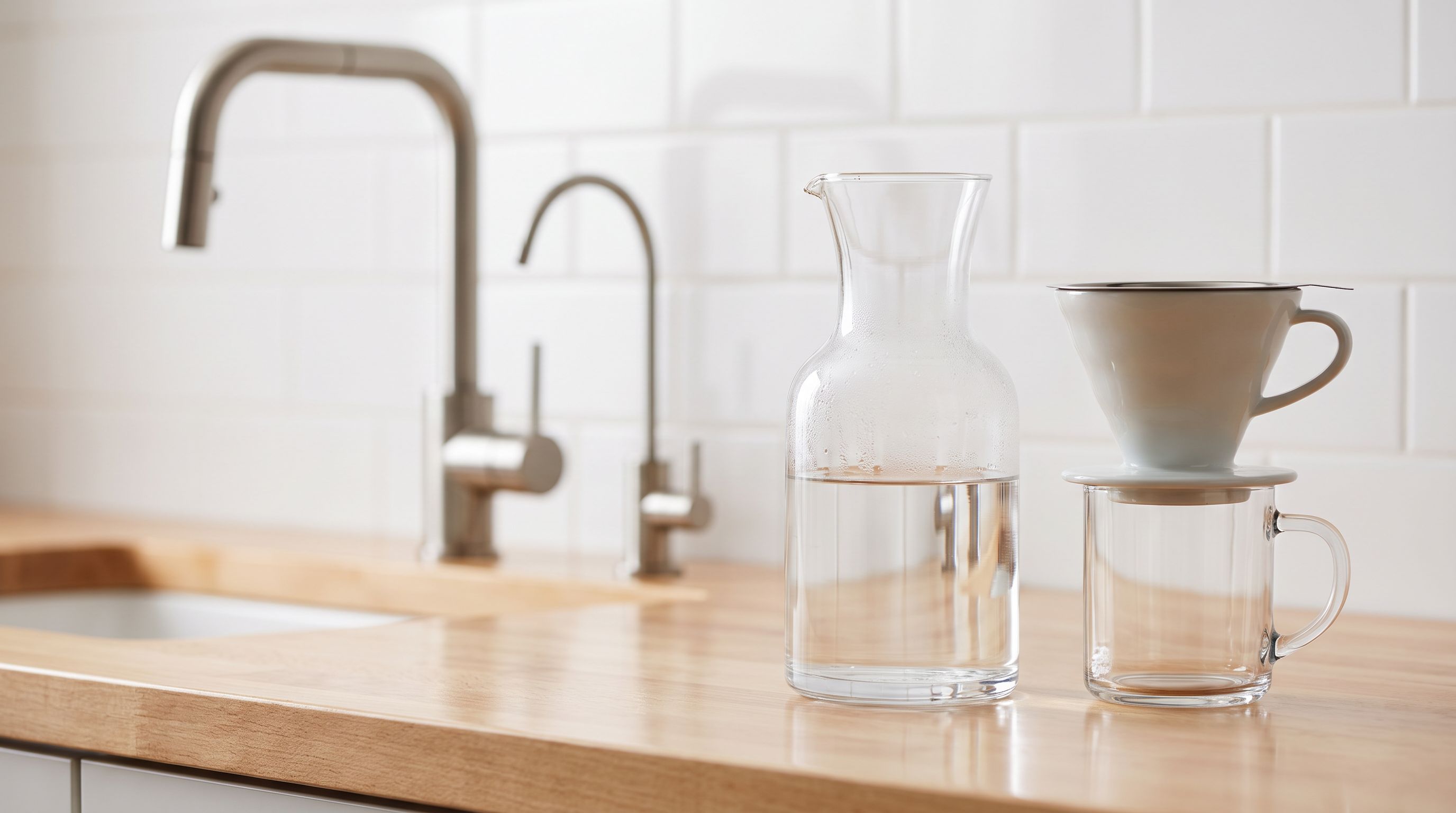
If your coffee tastes flat, your kettle has a chalky ring, or your stock tastes faintly of swimming pool, your water is doing more work in your kitchen than any appliance you own. Water is 98% of a cup of coffee and the entire cooking medium for pasta, rice, beans, and stock. Yet most people choose a filter based on which box was on sale.
This guide compares the two realistic options for a home kitchen — a countertop pitcher or dispenser versus a plumbed under-sink system — using the three things that actually matter: what the filter is certified to remove, what a cartridge costs per gallon, and how much filtered water you can get before the flow slows to a trickle. We compared manufacturer specs, NSF certification listings, and published lab results from independent reviewers rather than testing units ourselves.
Start With Certifications, Not Marketing Claims
"Filters 99% of contaminants" means nothing on its own. The useful shorthand is NSF/ANSI standard numbers, and only a handful matter for kitchen water:
- NSF/ANSI 42 — aesthetic effects. Chlorine, taste, odor, sediment. This is the minimum for coffee, because chlorine reacts with coffee oils and produces a dull, chemical finish.
- NSF/ANSI 53 — health effects. Lead, cysts, VOCs, certain heavy metals. If you have older plumbing or lead service lines, this is non-negotiable.
- NSF/ANSI 401 — emerging contaminants. Pharmaceuticals, pesticides, BPA.
- NSF/ANSI 58 — reverse osmosis. The only standard that covers TDS reduction, plus fluoride, arsenic, and nitrates.
- NSF/ANSI 473 / P473 — PFAS. PFOA and PFOS specifically.
Two phrases to watch for: "certified to" (a third party verified it) versus "tested to" or "designed to meet" (the manufacturer says so). Both appear on packaging; only one is audited. Also check whether certification applies to the system or just the replacement cartridge, and whether the claim covers the full rated cartridge life.
The practical floor for a coffee-focused kitchen is NSF 42 chlorine reduction. The practical ceiling is NSF 58 RO, which gives you a near-blank slate you can remineralize.
The Real Argument: TDS Control vs. Convenience
Here is the part most guides skip. For brewing, you don't want zero minerals — you want the right minerals. The widely cited SCA brewing water target lands around 50–175 ppm total dissolved solids with modest alkalinity. Calcium and magnesium pull flavor compounds out of the grounds; carbonate hardness (alkalinity) buffers acidity and, in excess, makes coffee taste chalky and flat while scaling your espresso machine's boiler.
A carbon pitcher or carbon under-sink filter removes chlorine and improves taste but barely touches hardness or TDS. If your tap water is already in a decent range, that's perfect and it's the cheapest path. If your tap water is 300+ ppm hard, carbon alone will not save your espresso machine.
Reverse osmosis is the opposite: it strips nearly everything, including the minerals you want. RO water straight from the tap tastes thin and, more importantly, is aggressive toward boilers and brass fittings in some machines. The fix is simple — either use an RO system with a remineralization stage, or blend RO with a small amount of tap water, or dose with a brewing mineral concentrate. If you own an espresso machine and live with hard water, RO plus remineralization is the only setup that genuinely solves the problem.
Cost Per Gallon: Where Pitchers Quietly Lose
Pitchers have the lowest entry cost and the highest running cost, because cartridge life is measured in dozens of gallons, not hundreds. A typical basic pitcher cartridge is rated around 40 gallons; premium carbon-block pitchers like the Epic Pure stretch to about 150 gallons; ZeroWater's ion-exchange cartridges are shorter-lived still and shorten dramatically as source TDS rises — a household on hard well water can burn through one in a couple of weeks.
Under-sink carbon systems typically run 6–12 months or several hundred to a few thousand gallons per cartridge set. Under-sink RO systems use a sediment/carbon pre-filter (roughly 6–12 months) plus an RO membrane that often lasts 2–3 years. Divide total annual cartridge cost by your actual consumption, not the rated capacity — most people replace on time, not on volume.
A household drinking and cooking with four to six gallons a week will almost always come out ahead with an under-sink system within two years. A single person who only wants better pour-over water may never hit that break-even.
Head-to-Head Comparison
| Basic pitcher | Premium pitcher (Epic Pure, ZeroWater) | Countertop RO (AquaTru) | Under-sink carbon (Aquasana Claryum) | Under-sink RO (Waterdrop G3P600) | |
|---|---|---|---|---|---|
| Typical certifications | NSF 42, some 53 | NSF 42/53/401, some 473 | NSF 42/53/58/401 | NSF 42/53/401/473, many claims | NSF 58 plus others |
| Removes chlorine | Yes | Yes | Yes | Yes | Yes |
| Reduces TDS/hardness | No | ZeroWater yes; Epic no | Yes | No | Yes |
| Cartridge life | ~40 gal | ~100–150 gal | Hundreds–thousands of gal | 6–12 months | Pre-filters 6–12 mo; membrane 2–3 yr |
| Running cost per gallon | Highest | High | Moderate | Low | Lowest |
| Install | None | None | Plug in, fill tank | Plumbing, cabinet space | Plumbing, outlet, cabinet space |
| Flow rate | Slow drip | Very slow (Epic) | Batch, minutes per tank | Full faucet flow | Fast, tankless |
| Best for | Renters, one person | Small households wanting certified removal | Renters who need RO | Soft/moderate water, coffee taste | Hard water, espresso, big households |
Which One Should You Actually Buy?
You rent, or you only filter drinking and coffee water. Get a premium pitcher. The Epic Pure Water Filter Pitcher is the better all-around choice — its carbon block holds a broad certified contaminant list and the 150-gallon cartridge rating keeps cost per gallon reasonable. Be warned: it is genuinely slow, so fill it the night before.
 Best pitcher · Epic Pure Water Filter Pitcher — Check price on Amazon →
You have an espresso machine and hard water, but can't plumb anything. The ZeroWater 10-Cup Ready-Pour Pitcher gets you to near-zero TDS with an included meter, and you remineralize from there with brewing salts. It's the cheapest route to controlled brew water. The included TDS meter is also the single most useful diagnostic tool in this category — use it on your tap before you buy anything else.
You want RO without touching the plumbing. The AquaTru Classic Countertop Reverse Osmosis Water Purifier is the standout, carrying NSF certifications across 42, 53, 58, and 401 while sitting on the counter. It occupies real estate roughly the size of a bread machine and works in batches, but it needs only an outlet.
 Best overall · AquaTru Classic Countertop Reverse Osmosis Water Purifier — Check price on Amazon →
Your water is decent and you just want it to taste right at full faucet speed. The Aquasana Claryum 3-Stage Max Flow Under Sink Water Filter is the pick. It leaves calcium and magnesium in place — which is what you want for brewing — while removing chlorine, lead, and a long list of certified contaminants at a flow rate that fills a kettle in seconds.
You have hard water, a household, and a cabinet. The Waterdrop G3P600 Reverse Osmosis System is the most capable option here: tankless, 600 GPD, a 2:1 pure-to-drain ratio that wastes far less than older tank systems, and a dedicated faucet. Pair it with a remineralization cartridge or blend if you're brewing with it.
 Best under-sink · Waterdrop G3P600 Reverse Osmosis System — Check price on Amazon →
Installation and Maintenance Reality Check
Under-sink systems need a cold-water tee, a drain saddle (RO only), cabinet clearance, and usually a hole in the sink deck or a spare sprayer port for the dedicated faucet. Granite and composite sinks cannot be drilled casually. Tankless RO units also need a nearby outlet. If any of that sounds like a weekend you don't have, countertop is the honest answer.
Whatever you buy, set a calendar reminder for cartridge changes. An expired carbon filter doesn't just stop working — it can shed accumulated material back into the water. That's the single most common failure in home filtration, and it's entirely preventable.
FAQ
Does filtered water really change how coffee tastes? Yes, noticeably. Removing chlorine eliminates a chemical dullness, and controlling alkalinity changes perceived acidity and sweetness. Mineral content affects extraction itself, not just taste.
Is reverse osmosis water bad for my espresso machine? Pure RO water is aggressive toward some metals and gives weak, flat shots. Use a system with remineralization, blend with tap, or dose brewing minerals. Many machine manufacturers specify a minimum hardness — check your manual.
Do I need a water test first? A TDS meter and your municipal water quality report cover most of it. If you have a private well, older pipes, or a lead service line, get a certified lab test before choosing between carbon and RO.
How much water does an RO system waste? Older tank systems ran 3:1 or 4:1 drain-to-pure. Modern tankless units like the G3P600 are rated at 2:1 pure-to-drain, a meaningful improvement.
Will a filter stop limescale in my kettle? Only RO or a dedicated softening/ion-exchange filter will. Carbon filters do not reduce hardness, so scale will keep forming.
Our picks
AquaTru Classic Alkaline Countertop Water Purifier | Certified 4-Stage Reverse Osmosis Filtration System Reduces 84 Contaminants Like Lead, Chromium 6, Forever Chemicals | No Plumbing | Add Minerals
Countertop RO with a long NSF-certified contaminant list — no plumbing, and it strips chlorine and TDS for clean-tasting coffee.
Waterdrop G3P600 Tankless Reverse Osmosis Water Filter System Silver Faucet
Tankless 600 GPD RO with a 2:1 pure-to-drain ratio and a dedicated faucet — fast enough to fill a kettle without waiting.

Aquasana Under Sink Water Filter | Claryum 3-Stage Max Flow | AQ-6300M-BN
Carbon-block filtration with dozens of NSF/ANSI certifications that keeps beneficial minerals in your brew water.
Epic Water Filters Pure Filter Pitchers for Drinking Water, 10 Cup 150 Gallon Filter, Tritan BPA Free, Removes Fluoride, Chlorine, Lead, Forever Chemicals (White & Bamboo)
Slow-flow carbon block pitcher certified against a broad contaminant list, with a long 150-gallon cartridge life.

ZeroWater 10-Cup Pitcher Water Filter Removes PFOA/PFAS
Five-stage ion exchange drops TDS to near zero — ideal as a base for remineralized espresso water.
Get the best kitchen gear deals in your inbox
Join the PrepDeck newsletter for hand-picked kitchen gear deals and new buying guides. No spam, unsubscribe anytime.
Related reads
Convection Microwaves in 2026: 5 Picks by Cubic Feet
The best convection microwave 2026 picks compared by interior cubic feet, turntable diameter and external footprint — so you know what actually fits your counter.
Commercial Blender for Home Use in 2026: Worth the Noise?
Pro-grade blenders promise decades of service, but they're loud and tall. We compare Vitamix, Blendtec, Waring and Cleanblend on power, cabinet fit and warranty.
Countertop vs Over-the-Range Microwave: Fit First in 2026
Countertop vs over the range microwave in 2026: compare cavity size, venting CFM, 30-inch cutouts, clearance rules and long-term reliability before you buy.