Espresso Scale Buying Guide 2026: Fit Under the Portafilter First
An espresso scale is useless if it won't fit your drip tray. Compare footprint, height, response speed and water resistance across the best 2026 picks.
Reader-supported: we may earn a commission from links on this page, at no extra cost to you. It never affects our picks. Learn more.
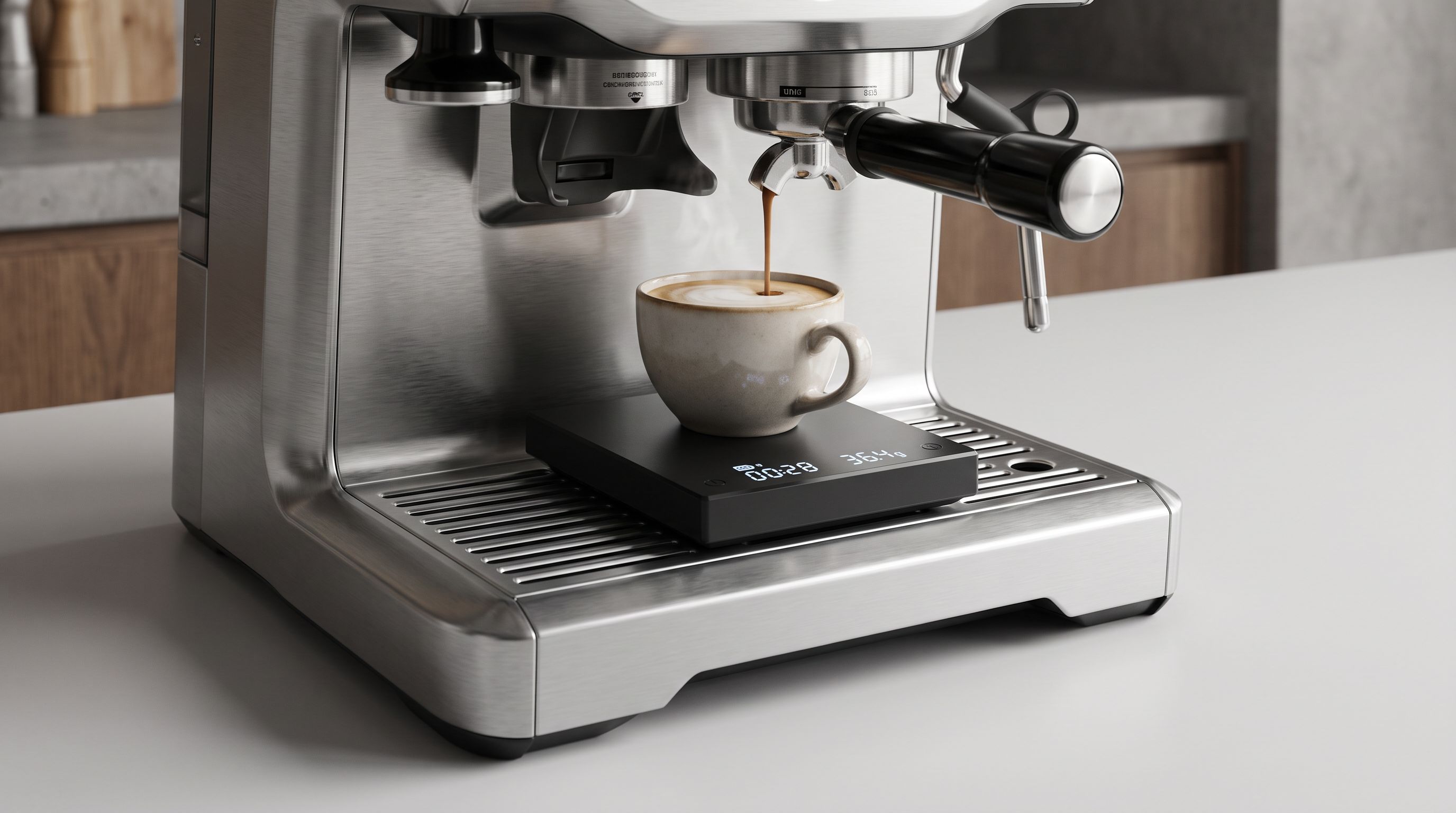
Most espresso scale buying advice starts with accuracy. That's the wrong place to start. Virtually every scale sold for coffee resolves to 0.1 g, and the difference between 0.1 g and 0.05 g resolution is invisible in a 36 g shot. What actually ruins the experience is geometry: a scale that's 2 mm too tall to sit under your portafilter with a cup on top, or a footprint so wide it hangs over the drip tray and rocks every time you bump it.
So this guide ranks by fit first — footprint, overall height, and whether the thing survives steam wand splatter and purge water — then by response speed, which is the second thing that separates a good espresso scale from an expensive paperweight.
Measure before you buy: the three numbers that matter
Grab a ruler and the machine you actually own.
Spout-to-tray clearance. Measure from the bottom of your portafilter spouts straight down to the drip tray grate. On a Breville Bambino or Barista Express you typically have around 85–100 mm. On a Rancilio Silvia or a La Marzocco Linea Mini you have considerably more. Now subtract the height of the cup or carafe you brew into. Whatever's left is your scale height budget — and most espresso-specific scales land in the 15–35 mm range for exactly this reason.
Tray footprint. Measure the usable flat area of your drip tray grate, not the tray's outer dimensions. Espresso scales cluster around 100–110 mm square because that's what fits most home machines. Pour-over scales are typically 130–160 mm wide, which is why people buy one and then discover it bridges the tray edges and tips.
Water exposure. A drip tray is a wet environment. Purge water, backflush splatter, a cup that overflows. Look for sealed buttons, a raised weighing platform, or an explicit splash-resistance claim — and treat USB-C ports as a weak point unless they're covered.
The fast-response question
Espresso brews in 25–35 seconds and the last 5 g arrive quickly. A scale that updates its display three times a second will visibly lag the real weight, so you overshoot. Scales marketed specifically for espresso advertise fast refresh rates and dedicated espresso modes that reduce filtering; kitchen scales and most general brewing scales do not.
This is also the single most common complaint in owner feedback on cheap scales: the number is "slow" or "jumps." Based on reviews and independent comparison videos — including one widely circulated teardown-style comparison of roughly $1,850 worth of coffee scales — the gap between premium and budget here is real and it's about responsiveness and UI logic, not about raw accuracy.
Comparison table
| Scale | Footprint style | Profile | Best fit | Espresso mode / timer | Water resistance |
|---|---|---|---|---|---|
| Acaia Lunar 2021 | ~105 mm square, purpose-built for trays | Very low | Nearly any home or prosumer machine | Yes, multiple modes + auto-tare/auto-start | Water-resistant body, sealed design |
| Timemore Black Mirror Nano | Smallest footprint here | Low | Tight Bambino/Dedica-class trays | Espresso mode with auto timer | Splash-resistant, not submersible |
| Hario V60 Drip Scale Polaris | Mid-size, slim | Slim enough for most trays | One scale for espresso and pour over | Auto-start timer | Splash-resistant |
| Normcore Espresso Scale | Compact square | Low | Budget espresso setups | Yes, with flow-rate readout | Splash-resistant |
| Acaia Pearl Model S | Large, brewing-first | Taller | Pour over primary, espresso occasional | Yes, app-connected | Limited — keep it dry |
 Budget pick · Normcore Espresso Scale — Check price on Amazon →
 Best dual-duty pick · Hario V60 Drip Scale Polaris — Check price on Amazon →
 Best compact value · Timemore Black Mirror Nano — Check price on Amazon →
The picks
Acaia Lunar 2021 — best overall
The Lunar exists because Acaia designed a scale around a drip tray rather than a kitchen counter. The roughly 105 mm square footprint sits cleanly on most home and prosumer trays, the profile is low enough that a standard 6 oz cup still clears typical spouts, and the body is built to shrug off the splashes that kill ordinary scales. Response speed is the headline: it's the benchmark other espresso scales get compared to, and the auto-tare/auto-start behavior means you can set a cup down and just pull the shot.
It is expensive, and nothing about the measurement is twice as accurate as a $50 scale. What you're paying for is durability in a wet environment, a UI that doesn't fight you mid-shot, and resale value that stays stubbornly high. If you pull multiple shots a day and the scale lives permanently in the tray, it's the one that stops being a decision.
Timemore Black Mirror Nano — best compact value
The Nano is the answer for genuinely tight drip trays — Breville Bambino, De'Longhi Dedica, anything where the Lunar's footprint is already borderline. It's small, low, quick enough to dial in by, and costs a fraction of the premium options. The trade-off shows up in UI fussiness; owners note that mode settings can be finicky and the small platform means a wide cup overhangs. For a single-cup espresso workflow, that's acceptable. If you also want to weigh a 500 g pour over on it, look at the larger Black Mirror models instead.
Hario V60 Drip Scale Polaris — best dual-duty pick
If you brew espresso in the morning and V60 on weekends, the Polaris is the sanest compromise in 2026. It's slim enough to live under a portafilter on most machines, has an automatic timer that starts when liquid hits the cup, and it's priced well below the Acaia tier. It isn't the fastest responder in this group, so expect to learn a small amount of lead time when you're chasing a precise 36 g out. For everyone who doesn't want two scales on the counter, that's a fair trade.
Normcore Espresso Scale — budget pick
Normcore's espresso scale covers the fundamentals that matter: low profile, compact square platform, splash resistance, and a flow-rate display that's genuinely useful for diagnosing channeling and grind adjustments. It's the pick when you've just bought the machine and the grinder and the budget is gone. Expect a slightly less refined interface than the premium options and a shorter expected service life around water.
Acaia Pearl Model S — premium pick for brewing
The Pearl Model S is not a drip-tray scale. It's taller and wider, built for filter brewing with app connectivity and brew-guidance features. Include it only if your priority ordering is reversed — pour over daily, espresso occasionally on a machine with generous clearance. Trying to force it into a compact tray is the classic expensive mistake.
What to skip
Kitchen scales with a 1 g resolution are a non-starter; you cannot dial in a recipe you can't resolve. So are scales with unsealed membrane buttons sold as "coffee scales" — they tend to fail within a year of drip-tray duty. And unless you're running a café, built-in Bluetooth scales that only report through an app add a failure point without adding shot quality.
A reasonable rule: spend on the grinder first, the scale second, and buy the scale that physically fits the machine you already own.
FAQ
What size should an espresso scale be? Around 100–110 mm square is the sweet spot for home drip trays, with an overall height under about 35 mm. Measure your spout-to-tray clearance and subtract your cup height before shopping.
Do I really need 0.1 g resolution? Yes, but it's table stakes — nearly every coffee scale offers it. A 0.1 g readout lets you repeat a 18.0 g in / 36.0 g out recipe. Finer resolution adds nothing meaningful for espresso.
Is a built-in timer necessary? It's a convenience, not a requirement — but auto-start timers that trigger on first drop are genuinely useful because they free both hands during the critical first seconds of the shot.
Can I use a pour-over scale for espresso? Sometimes, if your machine has tall clearance and the scale is slim. The Hario Polaris is the most common successful crossover. Large brewing scales like the Acaia Pearl Model S usually will not fit.
Will a splash-resistant scale survive the drip tray? Splash resistance handles purge spray and the occasional overflow. It does not survive submersion or being rinsed under a tap. Wipe it dry after cleaning sessions and keep liquid away from the charging port.
Our picks
Acaia Lunar 2021
105 mm square footprint, water-resistant body and the fastest refresh rate of any espresso scale.
TIMEMORE Black Mirror Basic 2 Coffee Scale Espresso/Pour Over with Auto Timer and Flow Rate Function, 1600mAh, 2kg/0.1g Precision, g/oz Units, Portable Digital Scale for Kitchen/Baking/Cooking
Tiny footprint and low profile that slides under most portafilters for a fraction of the Lunar's cost.
HARIO V60 Drip Scale, Black (New Model)
Slim enough for a drip tray yet large enough for pour over, with an auto-start timer.
Normcore Pocket Coffee Scale V3, Pour Over Drip Espresso Scale, Barista Scale with Timer, Anodized Aluminum Body with Back-Lit LCD Display, Black
Low-profile, splash-resistant espresso scale with flow rate display at an entry-level price.
Acaia Pearl Model S
Best choice if one scale must handle espresso duty and daily pour over with app connectivity.
Get the best kitchen gear deals in your inbox
Join the PrepDeck newsletter for hand-picked kitchen gear deals and new buying guides. No spam, unsubscribe anytime.
Related reads
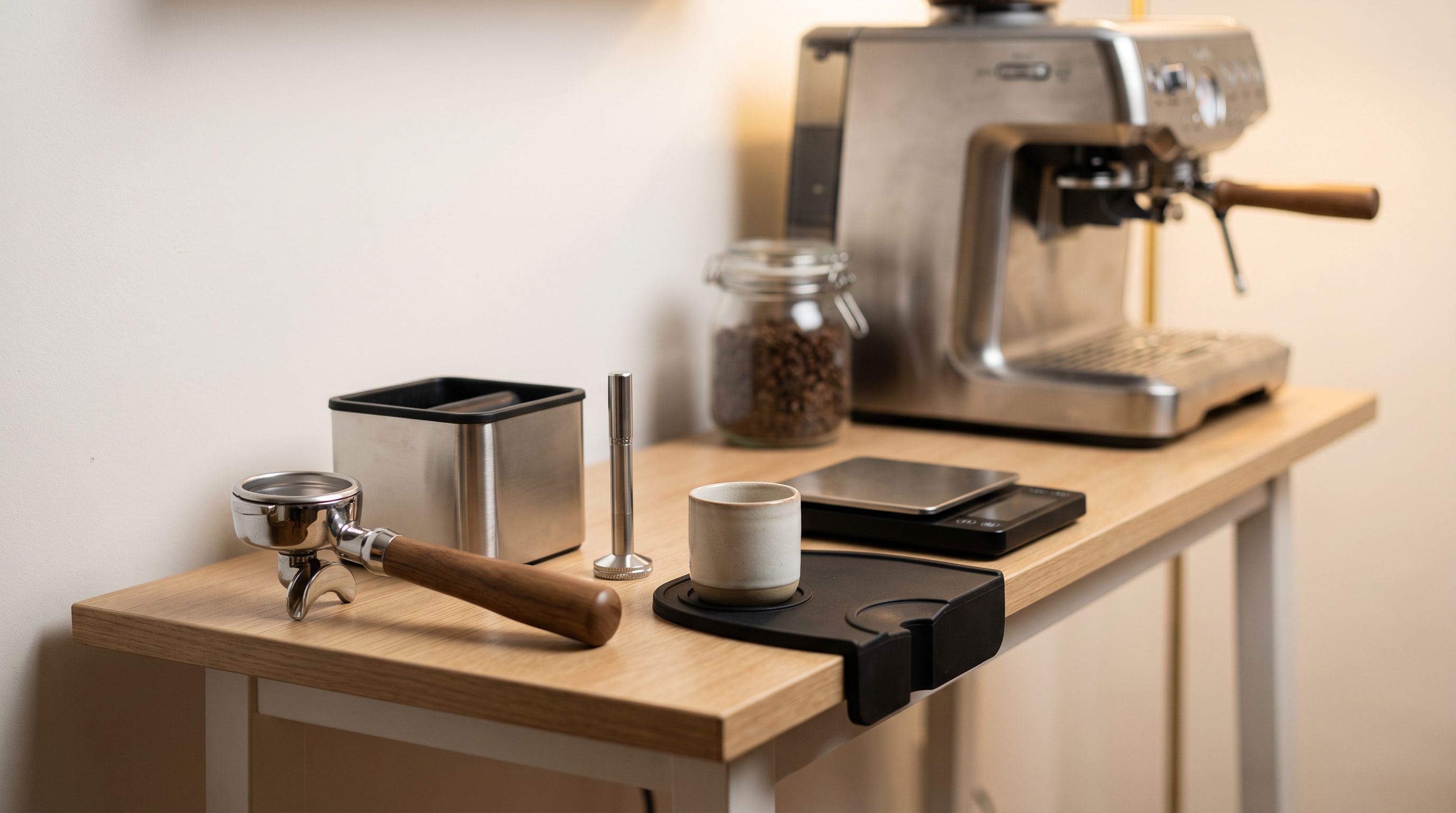
Espresso Accessories Kit 2026: Buy by Counter Depth
An espresso accessories kit guide sorted by counter depth — knock box height, WDT tools, scales and mats that fit 14, 20 or 26 inches of space.
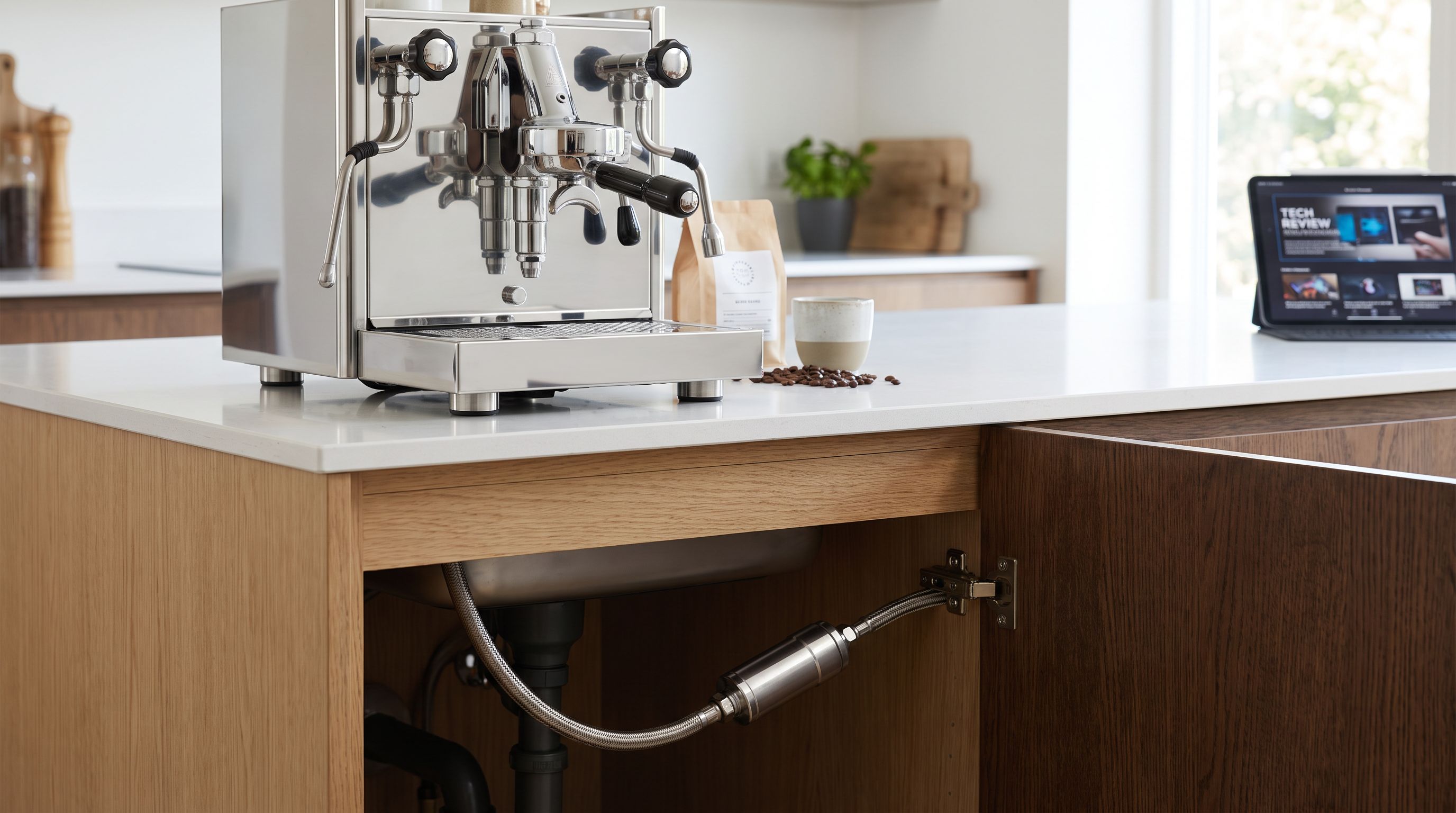
Plumbed In Espresso Machine 2026: What Your Sink Needs
Thinking of plumbing in your espresso machine in 2026? Here's the line pressure, regulator, filtration and machine compatibility you actually need under the counter.
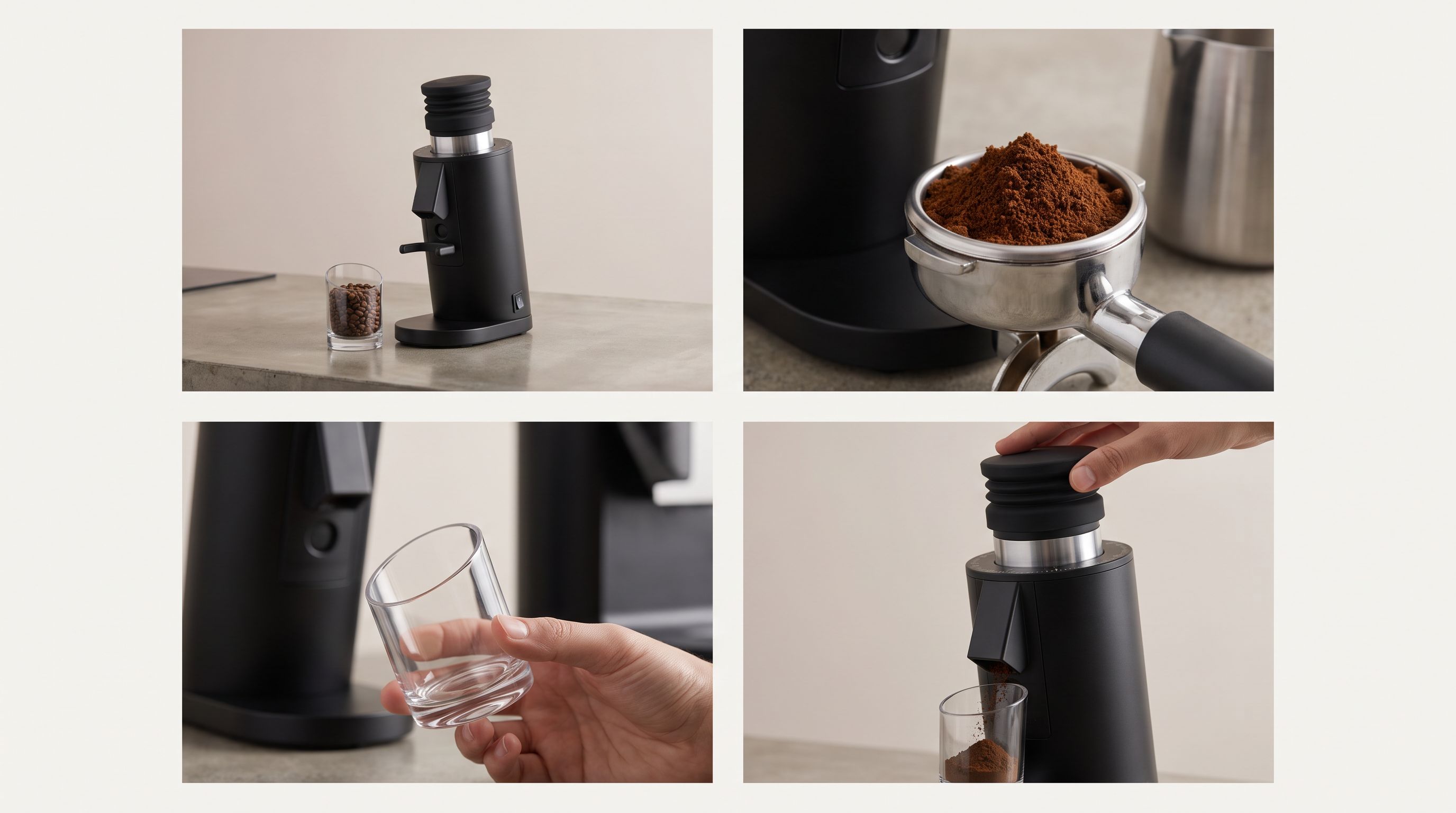
Single Dose Coffee Grinder 2026: Ranked by Retention
We compared single dose coffee grinders for 2026 on grounds retention, burr size and bellows design — picks from $250 to $900 for home espresso.