Ceramic vs PTFE Nonstick in 2026: Which Lasts Longer?
Ceramic vs PTFE nonstick cookware compared on heat limits, real-world lifespan, induction compatibility and safety — plus which pans are worth buying in 2026.
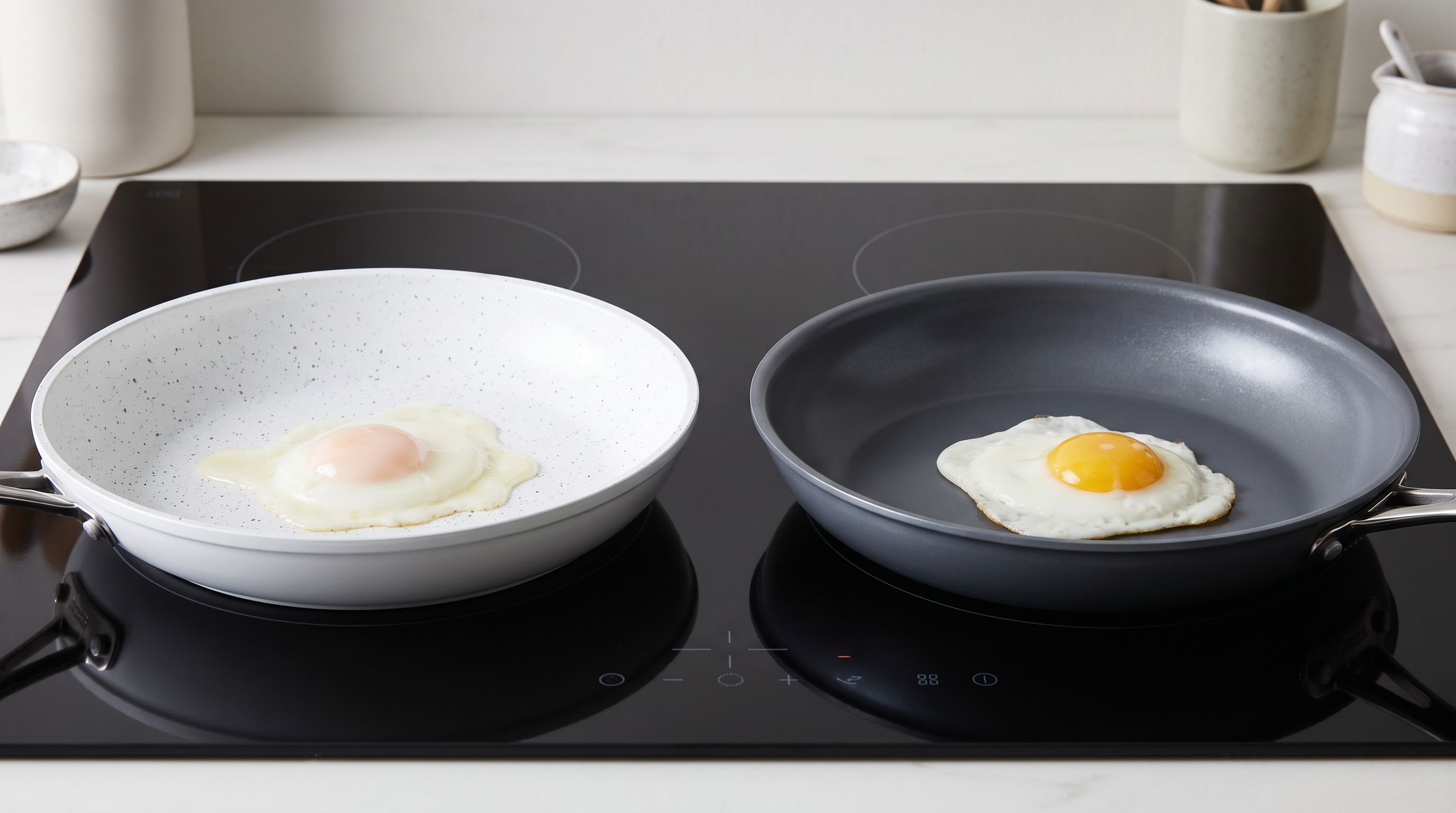
Reader-supported: we may earn a commission from links on this page, at no extra cost to you. It never affects our picks. Learn more.
Every nonstick pan is a consumable. That's the uncomfortable truth behind the ceramic vs PTFE nonstick cookware debate — neither coating is permanent, and anyone promising a "lifetime" slick surface is selling you something. Wirecutter's nonstick guide makes the same point bluntly: both PTFE and ceramic coatings are delicate and will eventually wear out, which is why buying a 12-piece nonstick set is usually a mistake.
So the real question isn't "which one lasts forever." It's: which coating degrades more slowly under the way you actually cook, and which compromises can you live with? We compared both chemistries on heat tolerance, reported lifespan from expert reviews and owner feedback, induction compatibility, and safety — here's where each one wins.
What the two coatings actually are
PTFE (polytetrafluoroethylene, the stuff branded as Teflon) is a fluoropolymer sprayed and cured onto an aluminum or hard-anodized body, usually in two or three layers, sometimes with ceramic or diamond particles mixed in for abrasion resistance. It is a genuinely slick polymer — nothing sticks to it chemically.
Ceramic nonstick is a sol-gel coating: a silicon-based liquid (think silica, the same family as glass and sand) applied and cured into a hard, glassy film. It's not clay, it's not the "ceramic" of a stoneware dish, and it contains no PTFE, PFOA or related PFAS. Its release comes from being extremely smooth and hard, not from being chemically slippery.
That distinction explains almost every practical difference between them.
Heat limits: ceramic takes the oven, PTFE takes the abuse
Ceramic coatings tolerate higher temperatures without degrading. Most manufacturers rate ceramic pans oven-safe to roughly 400–600°F depending on the handle, and the sol-gel film itself handles brief high-heat contact without breaking down. GreenPan rates its Thermolon Minerals Pro coating (used on the Valencia Pro line) for high-heat oven use, which is why ceramic pans are the easier choice for oven-finishing a frittata.
PTFE is the opposite story. The polymer begins to break down meaningfully above roughly 500°F, and overheating an empty PTFE pan can release fumes that are notoriously dangerous to pet birds. In practice that means: never preheat a PTFE pan empty on high, and check the manufacturer's oven rating (commonly 400–500°F) rather than assuming.
But here's the catch that trips people up. Ceramic's heat tolerance is high while its resistance to heat-induced stickiness is low. The most common failure mode reported by owners isn't chipping — it's a ceramic pan that mysteriously turns sticky after a few months. The usual cause is polymerized oil baked into the microscopically porous surface over repeated medium-high cooking. Once that happens, the release is gone and it rarely comes back.
Lifespan: the honest numbers
No one publishes a warranty that says "18 months," so lifespan estimates come from review-site retesting and owner reports. The pattern across those sources is consistent:
- PTFE, well treated: roughly 3–5 years of regular home use before release noticeably declines. Thicker multi-layer coatings on heavy bodies last toward the top of that range.
- PTFE, abused (metal utensils, dishwasher, high heat, cold-water quenching): 1–2 years.
- Ceramic, well treated: roughly 1–3 years. Excellent release when new — often better than PTFE for the first few months — with a steeper decline curve.
- Ceramic, abused: can go sticky in under a year.
Several testing outlets have noted the same thing after long-term retests: ceramic pans start brilliant and fade faster, while good PTFE starts very good and fades more gradually. If longevity is your single priority, PTFE wins. If avoiding fluoropolymers entirely is your priority, ceramic wins and you accept replacing pans more often.
Comparison table
| Ceramic (sol-gel) | PTFE (Teflon-type) | |
|---|---|---|
| Coating type | Silica-based glassy film | Fluoropolymer, 2–3 layers |
| Typical lifespan (regular use) | ~1–3 years | ~3–5 years |
| Release when new | Excellent, often slicker than PTFE | Very good, very consistent |
| Release at 12 months | Noticeably reduced | Mostly intact |
| Oven rating (typical) | 400–600°F, handle-dependent | 400–500°F |
| Empty-pan overheating | Degrades release; no fume hazard | Can emit fumes above ~500°F |
| Metal utensils | No — chips and scratches easily | Only on pans explicitly rated for it |
| Dishwasher | Technically yes on many; hand-wash anyway | Technically yes on many; hand-wash anyway |
| Contains PFAS/PTFE/PFOA | No | PTFE yes; PFOA phased out since 2013 |
| Induction | Only with a bonded magnetic base | Only with a bonded magnetic base |
| Best at | Eggs, delicate fish, oven finishing, PFAS avoidance | Daily high-volume cooking, longevity, searing-adjacent work |
Induction: the spec most people get wrong
Neither coating has anything to do with induction compatibility. Induction cares only about the base metal. Aluminum and hard-anodized aluminum are non-magnetic, so any nonstick pan — ceramic or PTFE — needs a bonded stainless steel disc or full stainless-clad construction to work on an induction hob.
Check the product listing for "induction compatible" or a magnetized base, then verify with a fridge magnet when it arrives. Among our picks, the OXO Good Grips Pro 12-Inch Frying Pan, the GreenPan Valencia Pro, Caraway's ceramic fry pan and the stainless-clad Made In Nonstick Frying Pan all carry magnetic bases. Tramontina's Professional line is aluminum-bodied and is the one to skip if you're on induction.
 Premium PTFE pick · Made In Nonstick Frying Pan 10-Inch — Check price on Amazon →
 Best PTFE for induction · OXO Good Grips Pro 12-Inch Frying Pan — Check price on Amazon →
One induction-specific warning: induction heats fast and concentrates power in the base. That accelerates coating degradation on both chemistries. Use lower power settings than you would on gas, and never run an empty pan on boost.
Which should you buy?
Buy PTFE if you cook eggs, pancakes and stir-fries most days and want the pan to still work in year three. The Tramontina Professional 10-Inch Fry Pan is the long-running value benchmark — heavy gauge aluminum, restaurant-grade coating, riveted handle — as long as you're not on induction. For induction kitchens, the OXO Good Grips Pro 12-Inch Frying Pan adds a hard-anodized body, a magnetic base and a coating rated for metal utensils, which removes the single biggest cause of premature failure. If you want nonstick built like real cookware, the five-ply stainless-clad Made In Nonstick Frying Pan is the premium option, and its heft means fewer hot spots.
 Best overall PTFE pan · Tramontina Professional 10-Inch Fry Pan — Check price on Amazon →
Buy ceramic if avoiding PTFE and PFAS is non-negotiable, or if your cooking leans toward delicate fish, omelets and oven-finished dishes. The GreenPan Valencia Pro 10-Inch is the most durable ceramic we'd recommend: Thermolon Minerals Pro over hard-anodized aluminum, induction-ready, high oven rating. The Caraway Nonstick Ceramic Fry Pan 10.5-Inch is the design-led choice, genuinely slick when new, and worth it if a pan lives on your stovetop — just accept that it needs gentler handling.
 Best-looking ceramic · Caraway Nonstick Ceramic Fry Pan 10.5-Inch — Check price on Amazon →
Buy a set of either? Don't. Buy one 10-inch and maybe one 12-inch nonstick for eggs and fish, and cover everything else with stainless clad or cast iron. You'll replace the nonstick every few years; you'll never replace the rest.
Five habits that double either coating's life
- Medium heat, always. Nonstick doesn't need high heat to work.
- Never preheat empty — add oil or food first.
- Silicone, wood or nylon utensils only, unless the pan is explicitly metal-safe.
- Hand-wash with a soft sponge. Dishwasher detergent is abrasive and alkaline.
- Let the pan cool before washing. Thermal shock warps the base and cracks the film.
FAQ
Is ceramic nonstick safer than PTFE? Ceramic sol-gel coatings contain no PTFE, PFOA or PFAS. Modern PTFE has been PFOA-free since the 2013 industry phase-out, and intact PTFE is inert if swallowed as a flake. The genuine PTFE risk is fumes from overheating an empty pan above roughly 500°F — dangerous to birds, flu-like in humans. If you want that risk off the table entirely, go ceramic.
Why did my ceramic pan stop being nonstick? Almost always polymerized oil baked into the surface from cooking too hot, plus microscopic abrasion. A paste of baking soda and water sometimes helps briefly, but the loss is generally permanent.
Can I use cooking spray? No, on either coating. Aerosol sprays contain lecithin and propellants that burn onto the surface and build an invisible varnish. Use a thin film of oil from a bottle instead.
Do more expensive nonstick pans last longer? Up to a point. Paying for a heavier body and a thicker multi-layer coating genuinely helps; paying for color and marketing doesn't. Beyond mid-range, you're buying better heat distribution and handles, not a longer-lived coating.
Is "diamond-infused" or "granite" nonstick different? Mostly marketing. Those are usually PTFE with hard particles added for scratch resistance, or ceramic with a textured finish. Read the fine print for whether PTFE is present.
Our picks
Tramontina Professional 10-Inch Non Stick Frying Pan
Restaurant-grade PTFE on heavy aluminum with a riveted silicone handle — the durability benchmark for the money.
OXO Enhanced 12" Frying Pan Skillet, PFAS-Free Ceramic Nonstick, Durable Hard Anodized Cookware, Scratch Resistant, Stainless Steel Handle, Good Grips, Dishwasher & Oven safe, Black
Hard-anodized body with a magnetic steel base, three-layer PTFE and metal-utensil tolerance.

GreenPan Valencia Pro 10" Ceramic Nonstick Frying Pan with Lid
Thermolon Minerals Pro sol-gel coating, hard-anodized base, oven-safe high and induction-ready.
Caraway Non-Stick Ceramic Frying Pan (2.7 qt, 10.5")
PTFE-free ceramic coating over aluminum with a magnetized base — stylish, but treat it gently.
Made In Cookware - ProCoat 10" Non Stick Frying Pan (Graphite) - 5 Ply Stainless Clad Nonstick - Professional Cookware - Crafted in USA - Induction Compatible
Five-ply stainless-clad construction with PTFE release — the closest nonstick gets to real cookware.
Get the best kitchen gear deals in your inbox
Join the PrepDeck newsletter for hand-picked kitchen gear deals and new buying guides. No spam, unsubscribe anytime.
Related reads
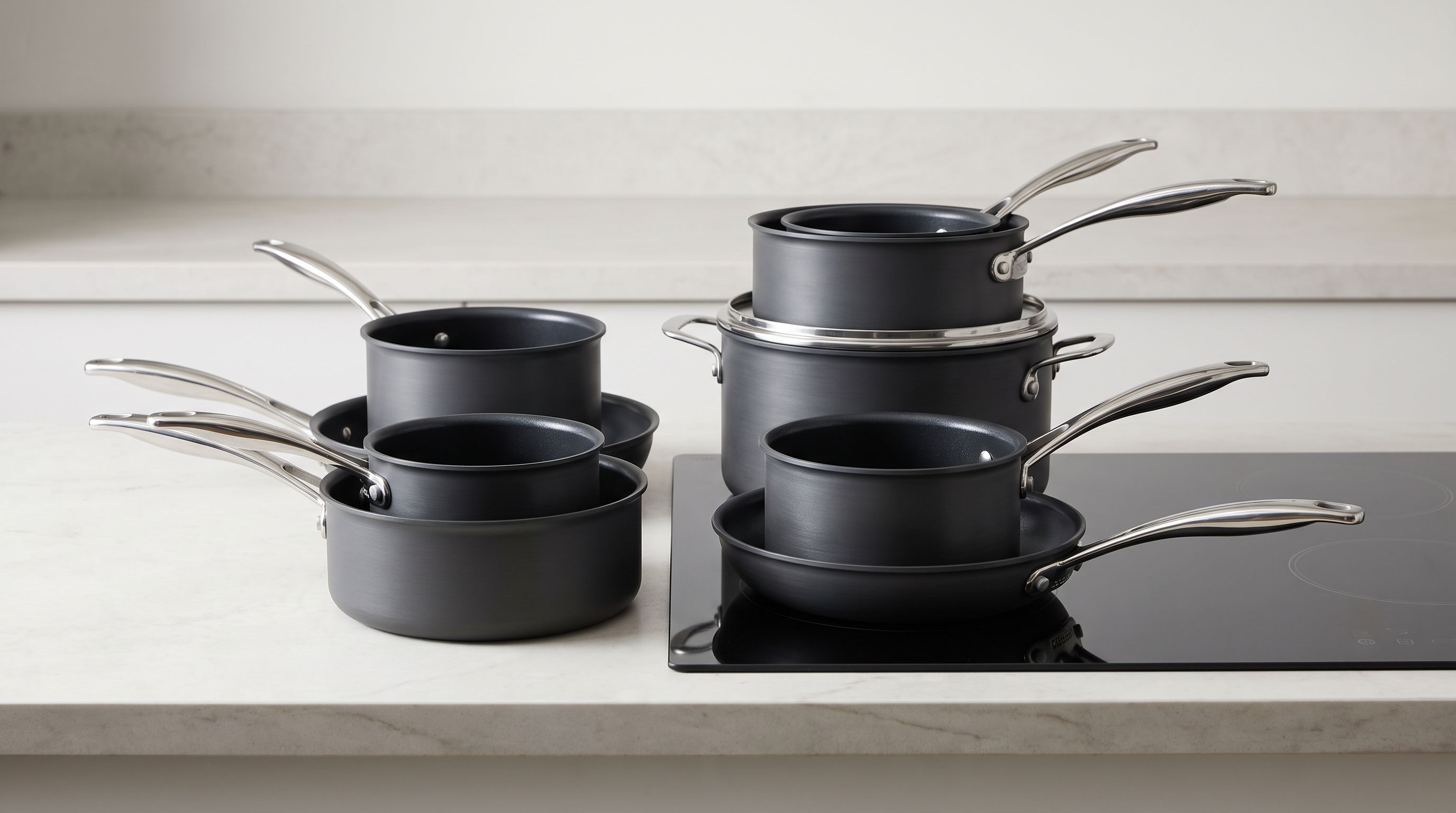
Nonstick Cookware Sets in 2026: Ranked by Oven Limit
The best nonstick cookware set 2026 picks ranked by coating type, oven-safe temperature, handle build and induction compatibility — the specs that decide longevity.
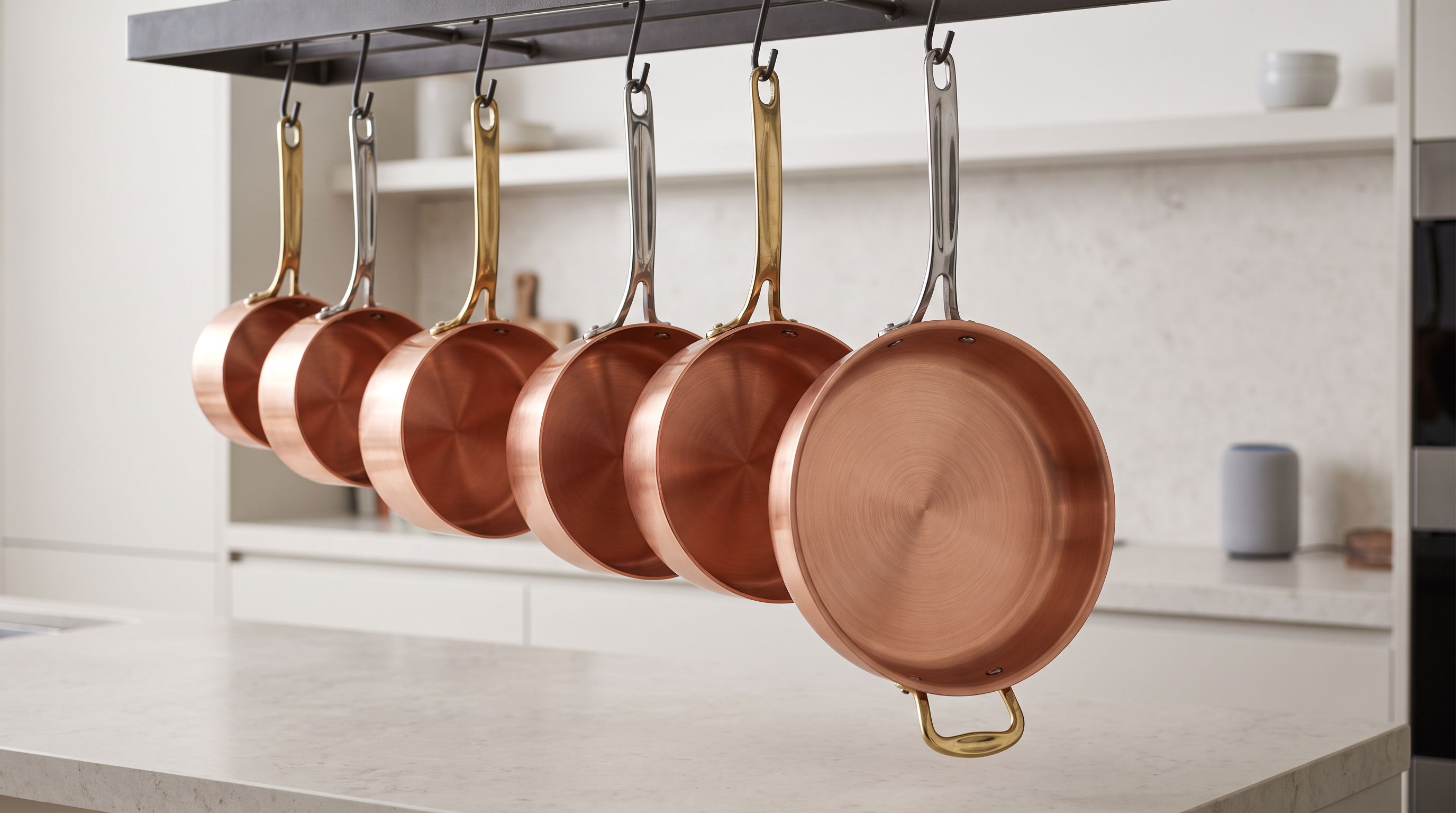
Copper Cookware in 2026: Which Lining Is Worth It?
A copper cookware buying guide for 2026: tin vs stainless linings, why 2.5mm gauge matters, retinning costs over a decade, and which pans earn the premium.
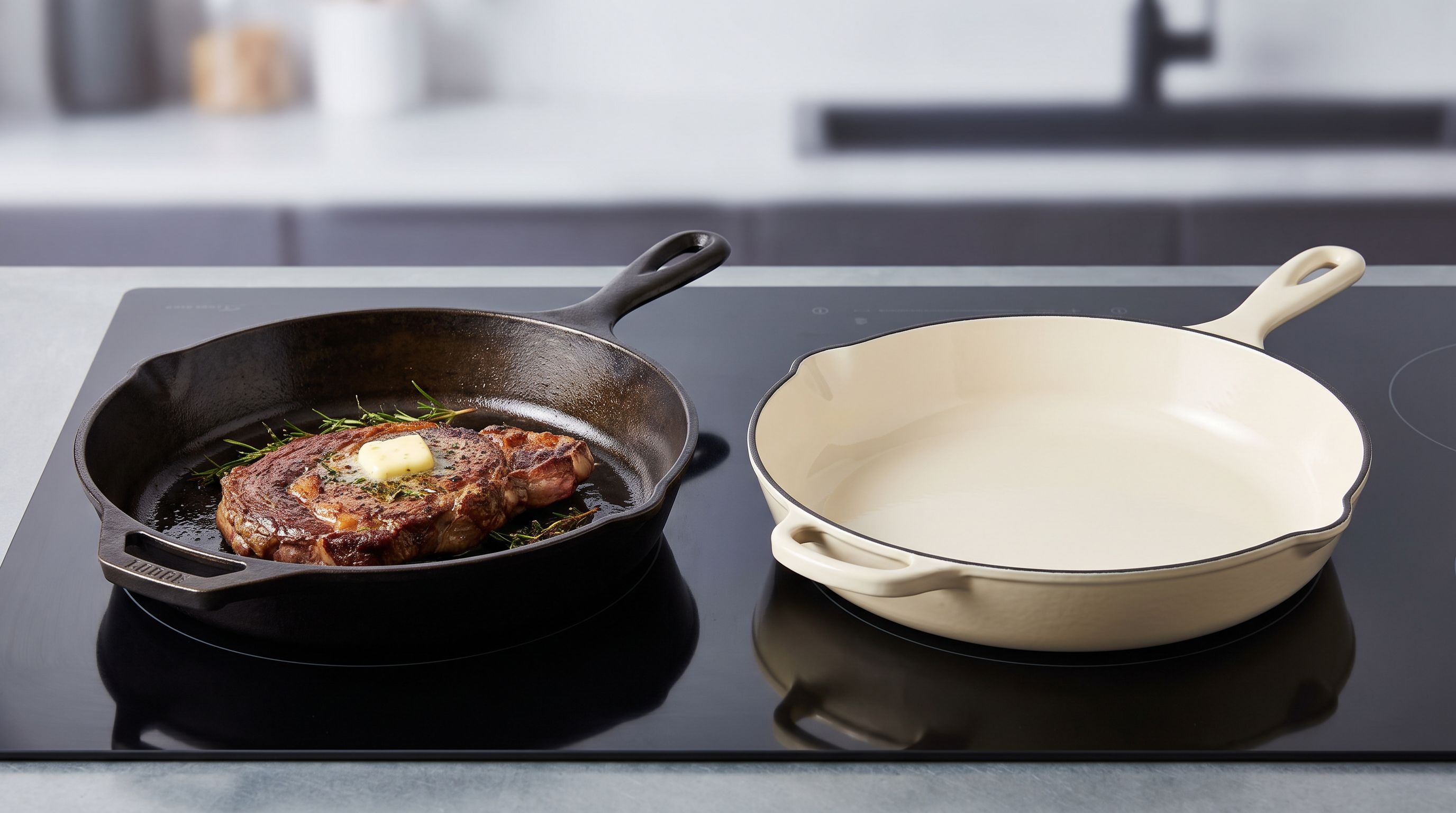
Enameled vs Bare Cast Iron Skillet: Which Wins in 2026?
Enameled vs bare cast iron skillet, settled: how each handles searing, acid, induction and 10+ years of wear — plus the skillets worth buying in 2026.