Boning Knife vs Fillet Knife (vs Cleaver): Pick One for 2026
Boning knife vs fillet knife vs cleaver: how blade flex, spine thickness and steel decide which specialty blade earns your next knife slot in 2026.
Reader-supported: we may earn a commission from links on this page, at no extra cost to you. It never affects our picks. Learn more.
You own a chef's knife. It does 85% of your cooking. The remaining 15% — breaking down a chicken, skinning a fillet of salmon, splitting a squash, trimming silverskin off a pork loin — is where it starts to feel clumsy. That's the gap a specialty blade fills.
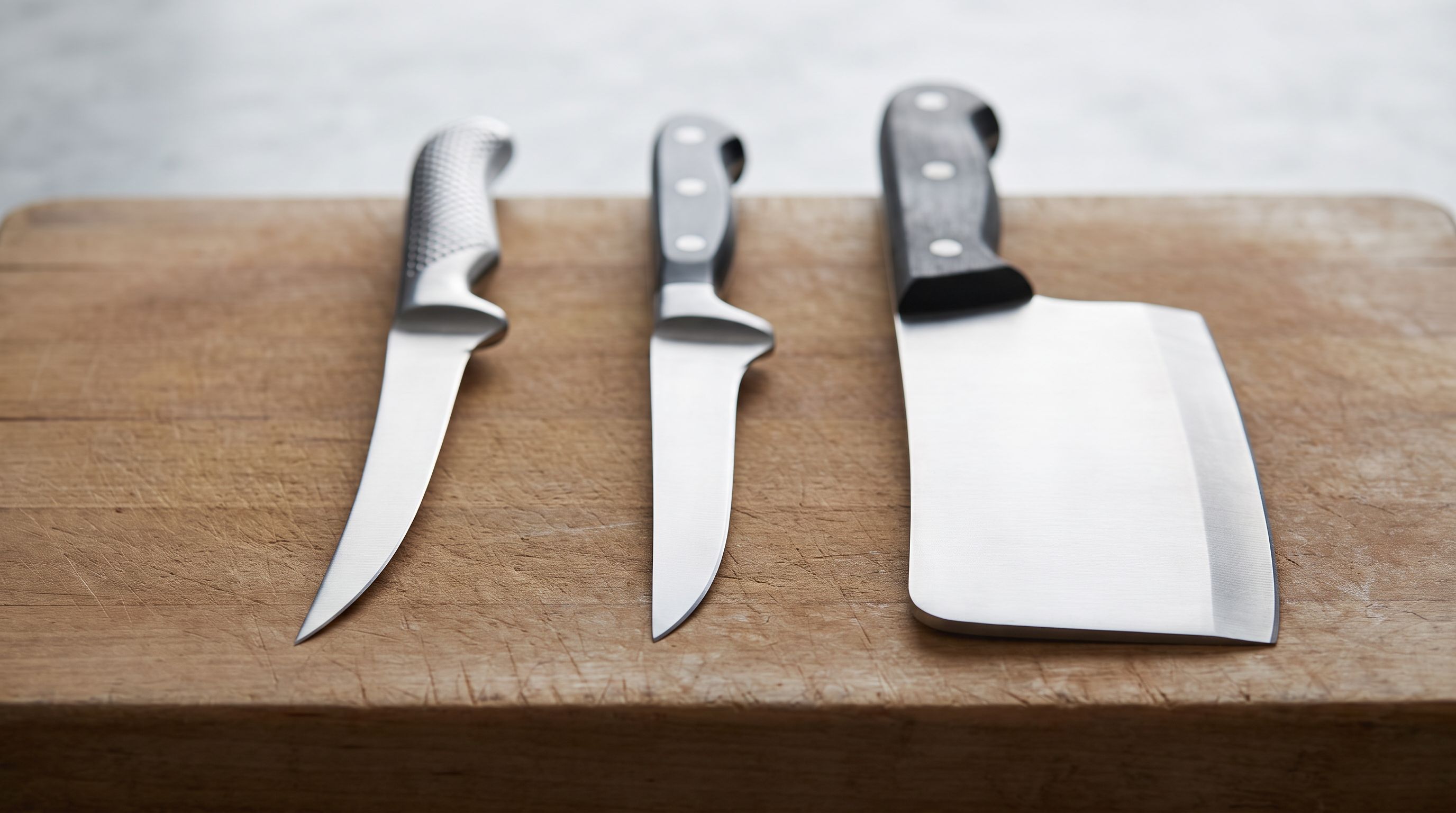
The three candidates are the boning knife, the fillet knife and the cleaver. They look different enough that people assume the choice is obvious, but boning and fillet knives overlap heavily, and "cleaver" describes two completely different tools. Here's how to sort them by the three specs that actually matter: blade flex, spine thickness and steel.
The short answer
- Cook a lot of meat and poultry? Buy a semi-stiff curved boning knife. It's the most broadly useful of the three.
- Buy whole fish, or catch them? Buy a flexible fillet knife, 7–9 inches.
- Cook Chinese food, or process a lot of vegetables? Buy a Chinese vegetable cleaver (a cai dao), not a meat cleaver.
- Buy a heavy bone-splitting cleaver only if you genuinely break down primals or hack through poultry backs weekly. Most home kitchens use one twice a year.
Flex is the real dividing line
Forget blade length for a second. The spec that separates these knives is how much the blade bends under pressure.
Flexible blades (fillet knives, flexible boning knives) bend noticeably by hand. That flex lets the edge ride along a surface — the curve of a ribcage, the plane between flesh and skin — instead of cutting straight through it. That's precisely what you want for fish, where the flesh is soft and the yield loss from a stiff blade is real.
Semi-stiff blades flex a little at the tip and almost nothing near the heel. This is the butcher's standard. You get enough give to follow a chicken thigh bone, enough backbone to pop a joint or lever through cartilage. If you buy one knife from this whole category, it should probably be semi-stiff.
Stiff boning knives (often called "beef boning" knives) barely flex at all. They're for large-animal work on a bench, usually by people doing it all day. For home use, stiff blades feel unforgiving.
As one of the comparison guides in circulation puts it plainly: fillet knives are generally longer and more flexible, aimed at removing skin and bones from fish; boning knives separate meat from bone on land animals. A boning knife can fillet a fish in a pinch and will do it worse. A fillet knife can bone a chicken in a pinch and will feel vague doing it.
Spine thickness: why a cleaver isn't a bigger chef's knife
Spine thickness tells you what a blade is allowed to hit.
A boning or fillet knife has a thin spine and a narrow blade, so it can enter tight spaces and change direction. It should never contact bone hard. A Chinese vegetable cleaver has a tall blade but a surprisingly thin spine — it's a slicer with a big face for scooping, not a chopper. A Western meat cleaver has a thick, wedge-shaped spine designed to survive impact with bone, and it's ground obtuse on purpose, because a thin acute edge would chip.
This is where most cleaver purchases go wrong. People buy a heavy meat cleaver expecting it to make beautiful vegetable slices, then find it wedges through a cabbage and crushes herbs. If you want the famous cleaver experience — scooping diced onion off the board with the blade face, slicing scallions paper-thin — you want a thin-ground Chinese chef's knife like the Dexter-Russell Traditional 7-Inch Chinese Chef's Knife/Cleaver, not a bone splitter.
Steel: the trade-off nobody warns you about
Fillet and boning knives live a hard life. They get used on wet surfaces, near salt, sometimes outdoors near a lake, and they're thin enough that an edge chip is a real setback.
- Softer stainless (typical German-style / X50CrMoV15-class steel) holds an edge less long but is tough, forgiving and takes a new edge on a steel or a cheap stone in under a minute. For fish and poultry, this is often the smarter choice — you're re-establishing the edge constantly anyway. The Victorinox Fibrox Pro line and the Mercer Culinary Millennia 8-Inch Flexible Fillet Knife both sit here.
- Harder Japanese stainless (VG-MAX, VG-10, SG2-class) holds a keen edge far longer at a steeper angle, which is glorious on silverskin and fish skin — but it chips if you lever against bone or drop it on a tile floor. The Shun Classic 6-Inch Boning and Fillet Knife is the example: outstanding on careful indoor butchery, not the knife to throw in a tackle box.
- Carbon steel (common on traditional Chinese cleavers) sharpens easily and gets wickedly keen, but will rust if you leave it wet. Wipe it dry, every time, and it develops a stable patina.
 Premium pick · Shun Classic 6-Inch Boning and Fillet Knife — Check price on Amazon →
 Budget pick · Mercer Culinary Millennia 8-Inch Flexible Fillet Knife — Check price on Amazon →
Comparison table
| Boning knife (semi-stiff) | Fillet knife (flexible) | Chinese vegetable cleaver | Meat/bone cleaver | |
|---|---|---|---|---|
| Typical length | 5–6 in | 7–9 in | 7–8 in | 6–7 in |
| Flex | Slight, at tip | High, along most of blade | None | None |
| Spine | Thin | Very thin | Thin for its height | Thick, wedge-shaped |
| Edge geometry | Moderate | Moderate to fine | Fine | Obtuse (durable) |
| Best at | Poultry, pork, lamb, trimming | Skinning and filleting fish | Vegetables, herbs, boneless meat slicing | Splitting bone, poultry backs |
| Avoid | Hard bone contact | Any bone contact | Bones, frozen food | Delicate knife work |
| Who should buy | Most home cooks | Anglers, whole-fish buyers | Stir-fry and prep-heavy cooks | Rarely needed at home |
Which one earns the slot?
If you cook meat more than fish: boning knife, semi-stiff, curved. The Victorinox Fibrox Pro 6-Inch Curved Boning Knife is the pick most professional kitchens default to for a reason — the curve tracks joints, the Fibrox handle stays grippy with wet hands, and when the edge dulls you take it to a stone without anxiety. It'll spatchcock a chicken, remove a pork loin's silverskin, and trim a brisket.
If you handle whole fish: flexible, and longer than you think. For trout, panfish and small snapper, the Victorinox Fibrox Pro 6-Inch Flexible Boning/Fillet Knife is nimble enough to work around a small ribcage. For salmon, lake trout and anything over a few pounds, length matters — a longer blade lets you take skin off in one pass instead of sawing, which is where the Mercer Culinary Millennia 8-Inch Flexible Fillet Knife earns its keep. Commercial fishermen overwhelmingly use inexpensive stainless knives like these, re-sharpened often, and that's an informed preference rather than a budget compromise.
 Best for fish · Victorinox Fibrox Pro 6-Inch Flexible Boning/Fillet Knife — Check price on Amazon →
If you want maximum edge quality for indoor butchery: the Shun Classic 6-Inch Boning and Fillet Knife. It's ground thinner and harder than the Western options and glides through connective tissue. Treat it as a cutting tool, never a prying tool.
If your bottleneck is vegetables: skip the boning knife entirely. The Dexter-Russell Traditional 7-Inch Chinese Chef's Knife/Cleaver is a different kind of upgrade — it changes how fast you can prep a stir-fry, because the tall blade doubles as a bench scraper and the thin grind doesn't wedge.
What about a bone-splitting cleaver?
Be honest about frequency. If you buy half a hog, break down whole poultry weekly, or make stock from split femurs, a heavy cleaver is a legitimate tool. Otherwise, kitchen shears handle poultry backbones, your butcher will band-saw anything larger, and the cleaver will sit in the block taking up the slot a boning knife should have had.
Care notes that matter for thin blades
- Never twist or pry with a flexible blade. Flex is for following curves, not levering joints.
- Hand wash and dry immediately — these are the thinnest blades in your kitchen and the most prone to rust pitting at the edge.
- Hone frequently. A boning knife that's slightly dull stops tracking bone and starts skating, which is how people cut themselves.
- Store in a sheath, magnetic strip or block. A thin edge rattling in a drawer dies fast.
FAQ
Can one knife do both boning and filleting? A flexible boning knife around 6 inches is the honest compromise and the reason many manufacturers label them "boning/fillet." It'll handle chicken and small-to-medium fish well. It won't match a 9-inch flexible blade on a side of salmon.
Is a curved or straight blade better for filleting fish? Curved for most fish — it follows the ribcage naturally. Straight blades are preferred by some for long, clean skinning passes and for larger flat fish. Victorinox makes both, which is exactly why fishermen argue about it; both answers are defensible.
How long should a fillet knife be? Roughly: 6 inches for panfish and trout, 7–8 inches for most freshwater and medium saltwater fish, 9 inches and up for salmon and large species. Longer blades skin in one stroke; shorter ones maneuver better in tight cavities.
Do I need a flexible knife if I only cook chicken? No. Semi-stiff is better for poultry — you want the blade to stay put when you work around the thigh joint.
Is an electric fillet knife worth it? Only if you clean a cooler's worth of fish at a time. For a few fillets, a sharp manual blade is faster, quieter and gives a cleaner cut.
Our picks

Victorinox 6 Inch Curved Fibrox Pro Boning Knife with Semi-stiff Blade
The butcher-shop default: semi-stiff curved blade, grippy Fibrox handle, easy to sharpen.
Victorinox Fibrox 6-In Curved Boning & Fillet Knife, Flexible Steel Blade
Flexible narrow blade that rides the ribcage and skin line on trout, salmon and snapper.
Mercer Culinary M22608 Millennia Black Handle, 8-Inch, Chef's Knife
Long, genuinely flexible blade for big fish at a price that won't hurt if it gets dinged.
Shun Classic 6" Boning & Fillet Knife
VG-MAX core at a steep edge angle — sharpest option here, best for careful indoor butchery.

Dexter Russell Traditional 7" x 2" Chinese Chef's Knife, Meat Cleaver
Thin-ground carbon-steel vegetable cleaver that slices and scoops better than it chops.
Get the best kitchen gear deals in your inbox
Join the PrepDeck newsletter for hand-picked kitchen gear deals and new buying guides. No spam, unsubscribe anytime.
Related reads
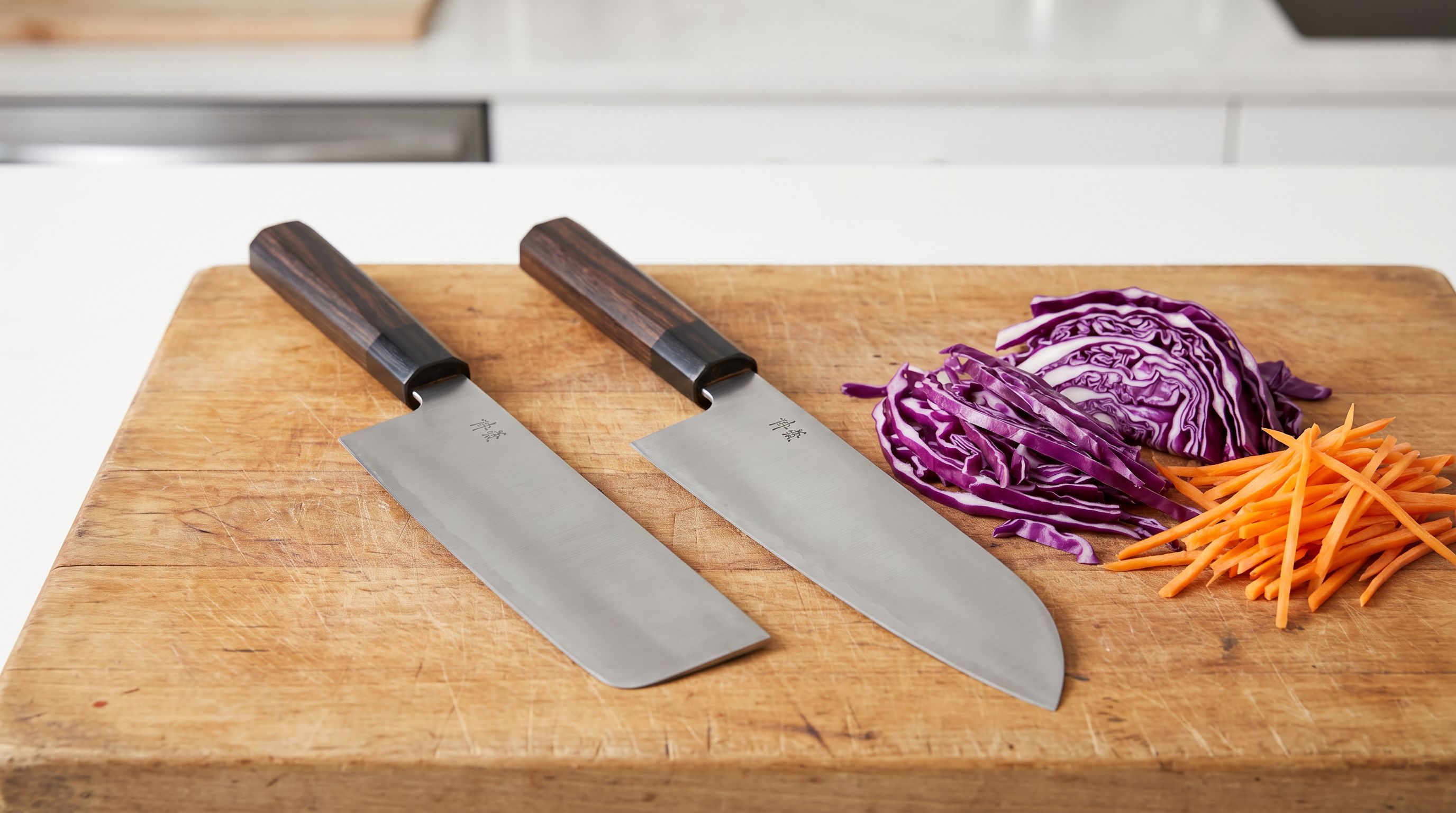
Santoku vs Nakiri in 2026: Which One Earns Board Space?
Santoku vs nakiri in 2026: how blade geometry, edge angle and knuckle clearance decide which Japanese knife belongs on your board — and which you can skip.
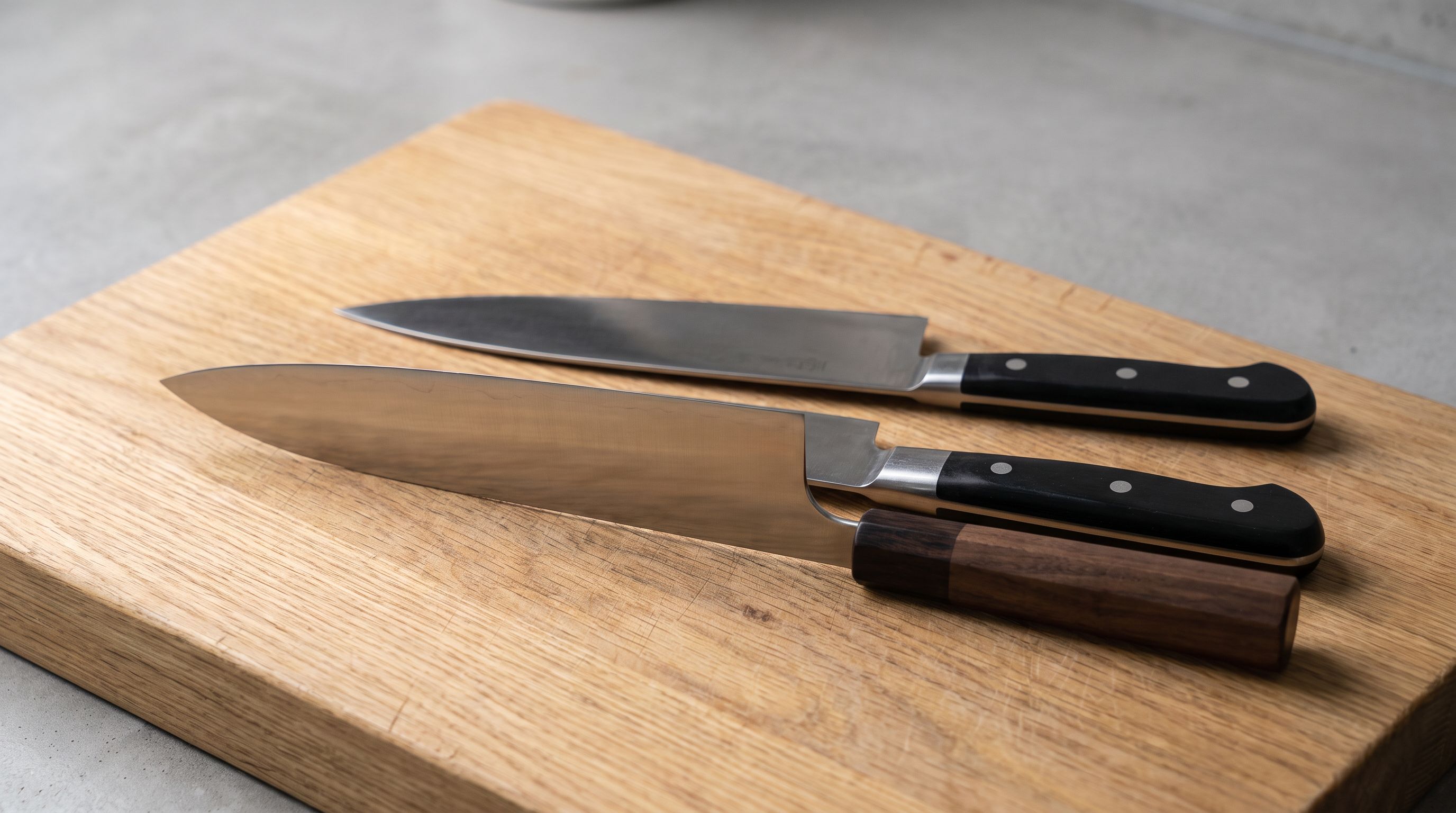
Japanese vs German Chef Knife: Which Fits Your Hands in 2026
Japanese vs German chef knife, compared on edge angle, steel hardness, blade geometry and upkeep — plus four knives worth buying as your first serious blade in 2026.
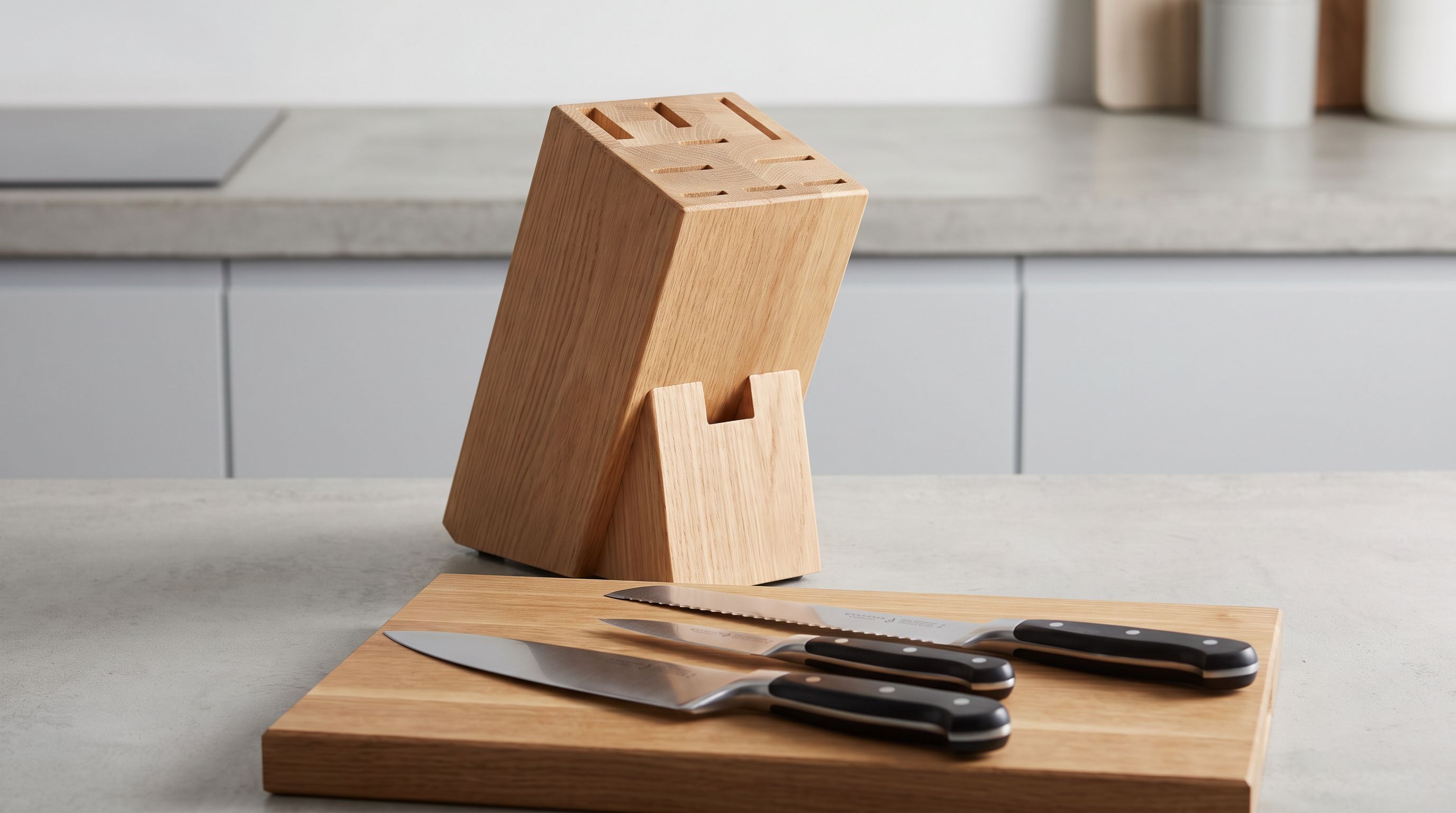
Knife Sets in 2026: 5 Blocks Ranked by What You Use
The best knife set 2026 picks ranked by piece utility, steel and block footprint — so you stop paying for filler blades and steak knives you never pull out.