Pantry Shelving Units in 2026: Buy by Weight Per Shelf
A pantry shelving unit buying guide for 2026: real per-shelf load ratings, 14 vs 18 vs 24 in depths, door clearance, and which wire, solid or modular systems hold up.
Reader-supported: we may earn a commission from links on this page, at no extra cost to you. It never affects our picks. Learn more.
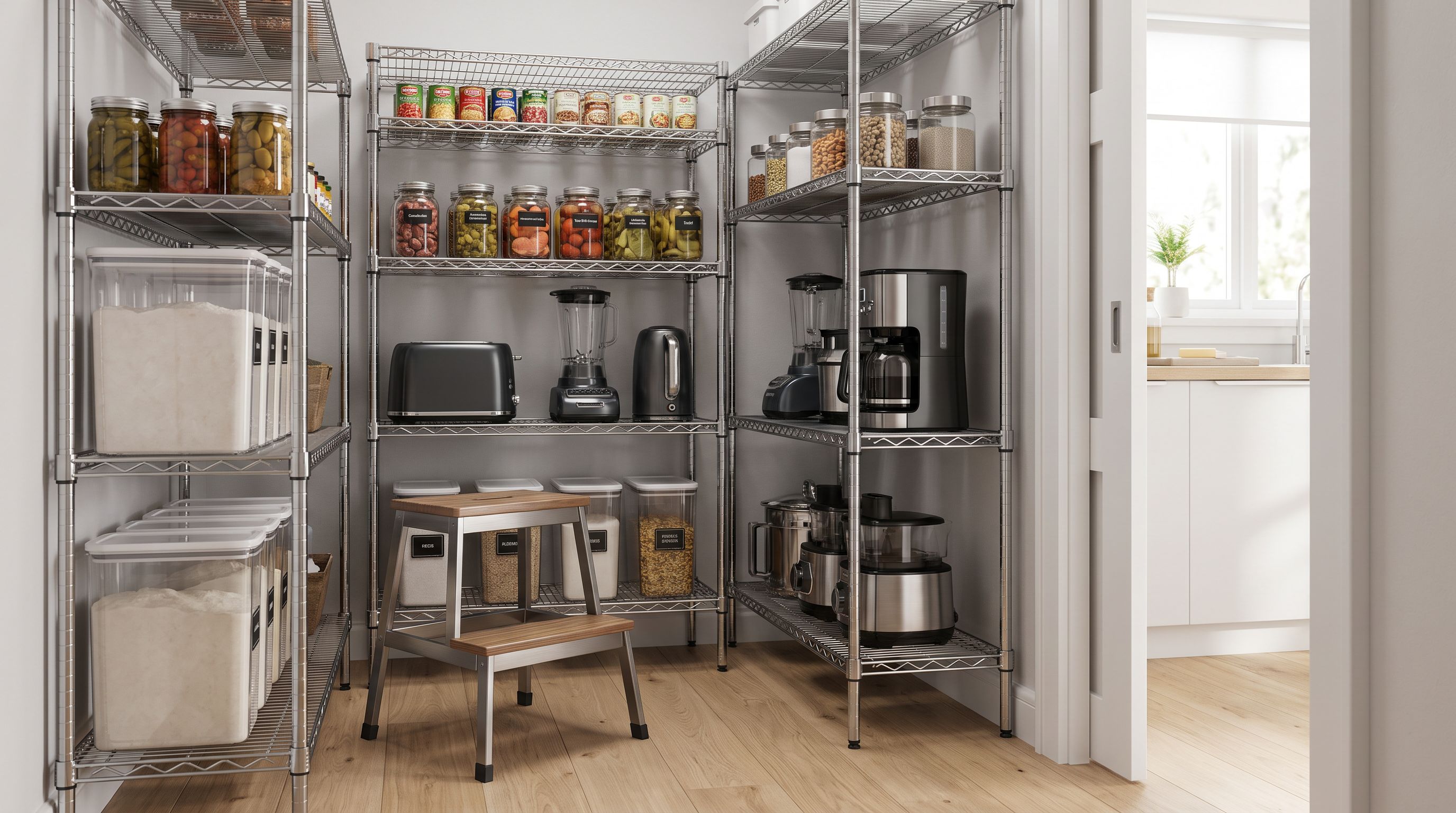
Most pantry shelving gets bought by looks and by price. Then a 50-pound bag of dog food, six cases of sparkling water and a stand mixer go on it, and the middle shelf develops a permanent smile.
The number that actually matters on a pantry shelving unit is load rating per shelf, evenly distributed — not the headline "2,000 lbs capacity" on the box, which is the sum of all shelves and assumes a perfectly level floor and evenly spread weight. The second number that matters is depth, because a 24-inch-deep unit swallows food you'll never see again and often won't fit through a standard 30-inch pantry door opening once it's assembled.
Here's how to buy by the numbers.
The three numbers to check before anything else
1. Per-shelf capacity, evenly distributed
Manufacturers rate shelves "evenly distributed" (EDL). A shelf rated 350 lbs will not hold 350 lbs stacked in one corner. Useful benchmarks for real pantry loads:
- Canned goods, double-stacked, 36 in wide shelf: roughly 120–180 lbs
- Case of 24 water bottles: about 30 lbs each; three cases ≈ 90 lbs
- 25 lb flour bin + 25 lb sugar bin + 10 lb rice: ~65 lbs plus containers
- Stand mixer, Dutch oven, air fryer on one shelf: 60–90 lbs
That means a 250 lb-per-shelf rating is genuinely adequate for most home pantries, 350+ lbs is comfortable, and anything rated under 100 lbs per shelf is a linen rack wearing a pantry costume.
2. Depth, and what you lose to it
| Depth | Fits | Trade-off |
|---|---|---|
| 12–14 in | Cans, jars, spices, boxed goods | Nothing hides; great visibility. Won't take a bulk paper towel pack |
| 16–18 in | The sweet spot — bins, cereal boxes, small appliances | Still reachable; fits most walk-ins and reach-ins |
| 20–24 in | Bulk cases, large appliances, pet food bins | Front row blocks back row. Needs pull-out bins to stay usable |
For walk-in pantries, 16–18 inches on the side walls plus one deeper 24-inch bank on the back wall is the layout that works for most people.
3. Door and hallway clearance
Standard interior pantry doors are 24, 28, or 30 inches wide, with the rough opening a bit narrower once trim and stops are in. Freestanding units are assembled in place, so check the shelf dimension: a 24 x 48 in shelf will not tip through a 28-inch doorway in one piece. Wire shelving assembles post-by-post inside the pantry, which is exactly why it's still the default for tight rooms. Welded units arrive partially assembled and need a real clear path.
Also measure ceiling height against post height. Common post lengths are 54, 63, 72 and 86 inches; a 72-inch unit under an 8-foot ceiling leaves a full foot of dead air you could be using.
Wire vs. solid vs. modular: what you're really choosing
Wire shelving wins on airflow, adjustability (shelves move in 1-inch increments on tapered split sleeves), visibility, and getting a unit into a small room. It loses on small items tipping over and on crumbs falling through. Shelf liners solve both for a few dollars.
Solid steel or laminate decking is better for flour, loose produce, and anything that wobbles. It's heavier, usually rated higher, and far harder to maneuver into a tight pantry.
Modular / wall-mounted systems (ventilated wall shelving, track-and-bracket) free up the floor entirely and let you run shelves wall-to-wall without wasted corners. The catch: they're only as strong as your anchors. Into studs with proper standards, ventilated wall shelving routinely handles serious weight; into drywall anchors alone, assume far less and never load bulk water onto it.
The picks, by what they're actually for
Best overall: Seville Classics UltraDurable 5-Tier NSF Steel Wire Shelving (18 x 36 in)
The 18 x 36 configuration is the single most useful footprint in home pantries: deep enough for cereal boxes and bins, shallow enough that nothing disappears, and narrow enough to assemble inside a small room. Shelves are NSF-certified for food contact, adjust in 1-inch increments, and the posts accept casters or leveling feet. Owner feedback is consistent on two points — the chrome finish holds up fine indoors, and you should add shelf liners on day one if you store spice jars or anything with a small base. Seville also sells matching extension posts, so a 72-inch unit can grow later.
Budget pick: AmazonBasics 5-Shelf Adjustable Heavy Duty Storage Shelving Unit (14 x 36 in)
The 14-inch depth is the underrated choice. In a narrow reach-in pantry or a closet conversion, 14 inches keeps the walkway clear and makes every can visible from the door. Build quality is a step below the NSF units — thinner posts, more flex if you overload one shelf — but for canned goods, boxed pasta and paper goods it's more than enough. Buy it when you want two units flanking a doorway rather than one deep one.
Premium pick: Metro Super Erecta 5-Shelf Chrome Wire Shelving Starter Unit
This is the commercial system every other wire shelf copies. What you pay extra for is the ecosystem: posts, shelves, dividers, ledges, casters and add-on units that are all cross-compatible and still stocked years from now. Shelf ratings are the highest in the wire category, and the split-sleeve collars lock far more positively than budget clones. If your pantry is permanent and you expect to reconfigure it as your household changes, Metro Super Erecta is the one you buy once.
Best for heavy bulk storage: Gladiator 4-Shelf Welded Steel Garage Shelving Unit
When the pantry doubles as a bulk-buy room — cases of water, 40 lb pet food, five-gallon buckets — welded steel with laminate decking is the correct answer. The solid decks mean no liner needed, nothing tips, and you can slide bins across the surface. The trade-offs are real: it's heavy, fewer shelves means taller gaps, and it needs an unobstructed path to get into position. Put it on the back wall and build around it.
Best door-mounted add-on: Elfa Utility Door & Wall Rack
The back of the pantry door is 4–5 inches of free depth that almost everyone wastes. A door rack holds spices, foil boxes, snack packets and oils in a single visible row — the stuff that otherwise gets lost behind cans. Mount it into the door's stiles, measure your shelf-to-door clearance first (you need about 5 inches of swing space), and check that the door still closes over your deepest unit.
Comparison at a glance
| Unit | Type | Typical depth | Best use | Watch for |
|---|---|---|---|---|
| Seville Classics UltraDurable 5-Tier NSF | Wire, freestanding | 18 in | All-round walk-in and reach-in pantries | Add liners for small jars |
| AmazonBasics 5-Shelf Adjustable | Wire, freestanding | 14 in | Narrow pantries, closet conversions | Lower per-shelf tolerance; don't overload |
| Metro Super Erecta Starter Unit | Wire, modular commercial | 18–24 in | Long-term, reconfigurable builds | Costs more; buy posts to suit ceiling |
| Gladiator 4-Shelf Welded Steel | Solid deck, welded | 24 in | Bulk water, pet food, buckets | Heavy; needs clear door path |
| Elfa Utility Door & Wall Rack | Door-mounted rack | 4–5 in | Spices, foil, snacks | Needs door swing clearance |
Layout rules that save you a second purchase
- Heaviest on the bottom shelf, 6–8 inches off the floor. Keeps cleaning easy and lowers the center of gravity.
- Leave 14–16 inches of vertical gap for the shelf holding cereal boxes and bins; 10–11 inches is plenty for cans.
- Anchor tall units to a stud. Most freestanding shelving includes or accepts an anti-tip bracket. Use it, especially with kids in the house.
- Buy bins before you buy a third shelf. Deep shelves become usable the moment everything on them pulls out like a drawer.
- Level the floor, not the shelf. Load ratings assume all four posts carry weight. One short leg on an uneven floor can cut effective capacity dramatically — use the leveling feet.
PrepDeck compares products using manufacturer specifications, independent test reports and verified owner feedback rather than physical in-house testing.
FAQ
What per-shelf weight rating do I actually need? For a typical household pantry, 250 lbs evenly distributed per shelf is comfortable. Go to 350+ lbs per shelf if you store cases of bottled water, bulk pet food, or 25 lb flour and sugar bins.
Is wire or solid shelving better for a pantry? Wire for airflow, visibility and easy assembly in tight rooms; solid decking for flour, loose items and anything that tips. Many people use wire on the walls and one solid unit for bulk.
Will a shelving unit fit through my pantry door? Wire shelving assembles inside the room post by post, so door width rarely matters. For welded or pre-assembled units, compare the shelf's width and depth against your door's clear opening — not the nominal door size.
How deep should pantry shelves be? 16–18 inches is the best all-round depth. Use 12–14 inches for cans and spices where visibility matters, and reserve 24 inches for bulk items stored in pull-out bins.
Can I mount shelving on the wall instead? Yes, if you hit studs with proper standards or brackets. Wall-mounted ventilated shelving frees the floor and eliminates corner waste, but drywall anchors alone won't support heavy pantry loads.
Do I need NSF-certified shelving at home? It's not required, but NSF certification signals the shelf finish is rated for food contact areas and easy to sanitize — a reasonable bar for anything holding open food packages.
Our picks
Seville Classics UltraDurable 5-Tier NSF Steel Wire Shelving (18 x 36 in)
NSF-rated wire shelving with high per-shelf capacity, wheels or feet, and a depth that clears most pantry doors.
AmazonBasics 5-Shelf Adjustable Heavy Duty Storage Shelving Unit (14 x 36 in)
Shallow 14-inch depth for narrow pantries, with adjustable shelves and a solid capacity for canned goods.

METRO 5A577C Super Adjustable Super Erecta 5-Tier Industrial Wire Shelving Starter Unit, Chrome, 24" x 72" x 74"
The commercial original: true modular posts, highest shelf ratings, and parts you can still buy in a decade.
Gladiator 4-Shelf Welded Steel Garage Shelving Unit
Welded steel frame with laminate decks that handle cases of water and bulk flour without sagging.
Elfa Utility Door & Wall Rack
Turns the back of a pantry door into shallow spice and can storage without stealing floor space.
Get the best kitchen gear deals in your inbox
Join the PrepDeck newsletter for hand-picked kitchen gear deals and new buying guides. No spam, unsubscribe anytime.
Related reads
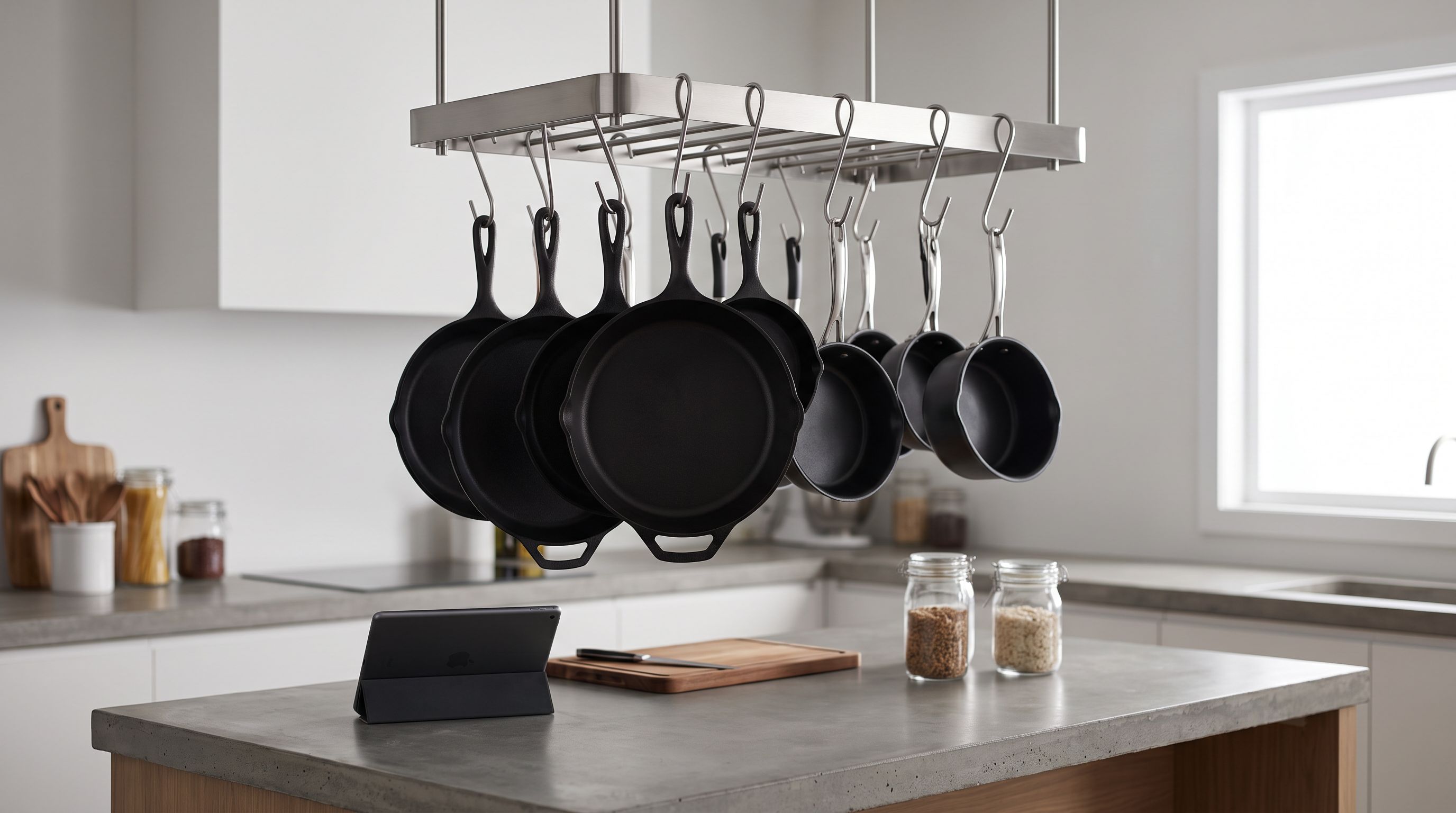
Hanging Pot Racks in 2026: Fit Them to Your Joists First
The best hanging pot rack depends on joists, studs and load rating — not looks. Our 2026 guide covers mounting hardware, spacing, capacity and five solid picks.
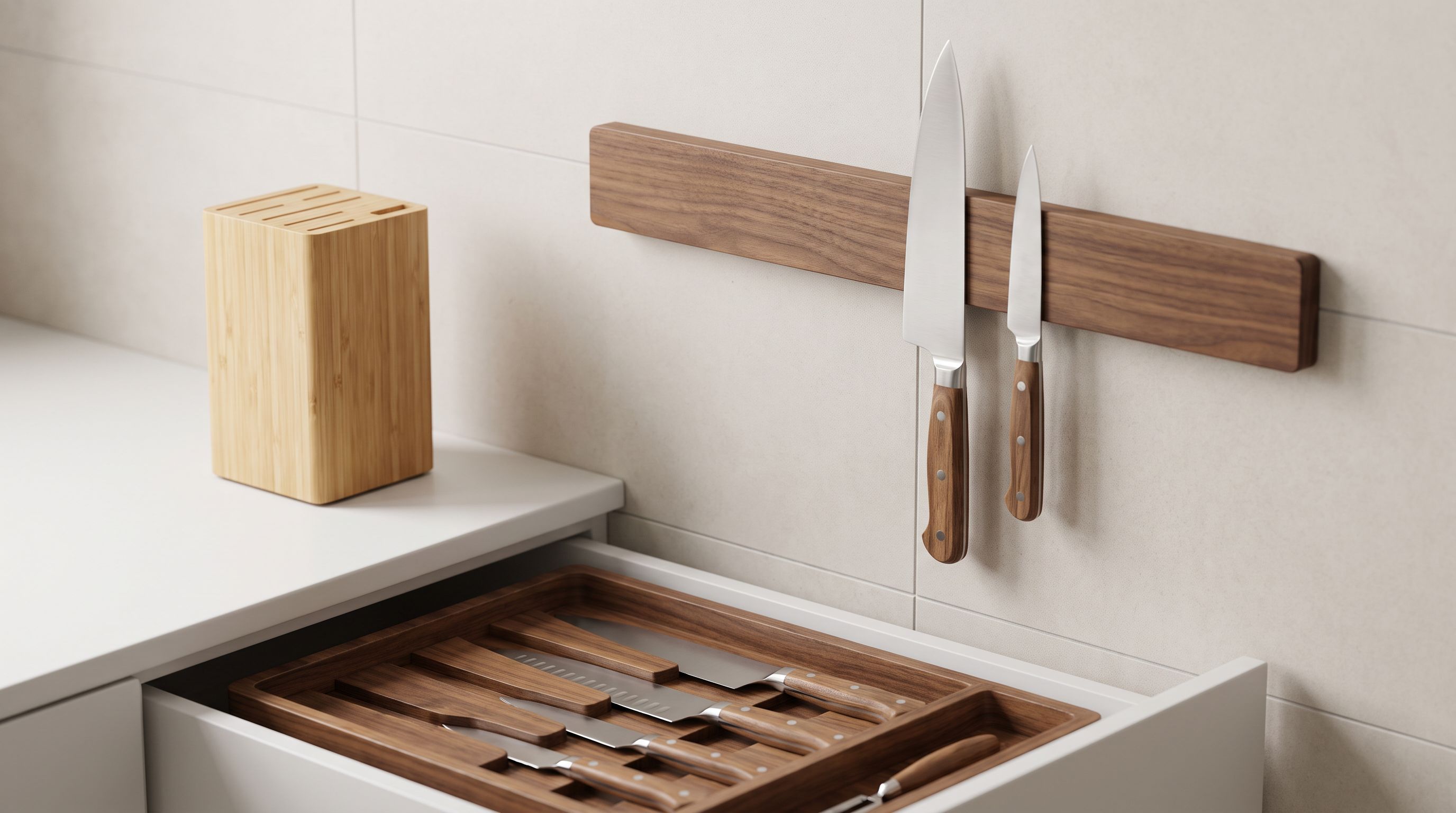
Knife Storage in 2026: Block, Magnetic Strip or Drawer?
Knife blocks vs magnetic strips vs in-drawer trays in 2026: how each format affects counter space, edge protection and knife capacity — plus four picks worth buying.
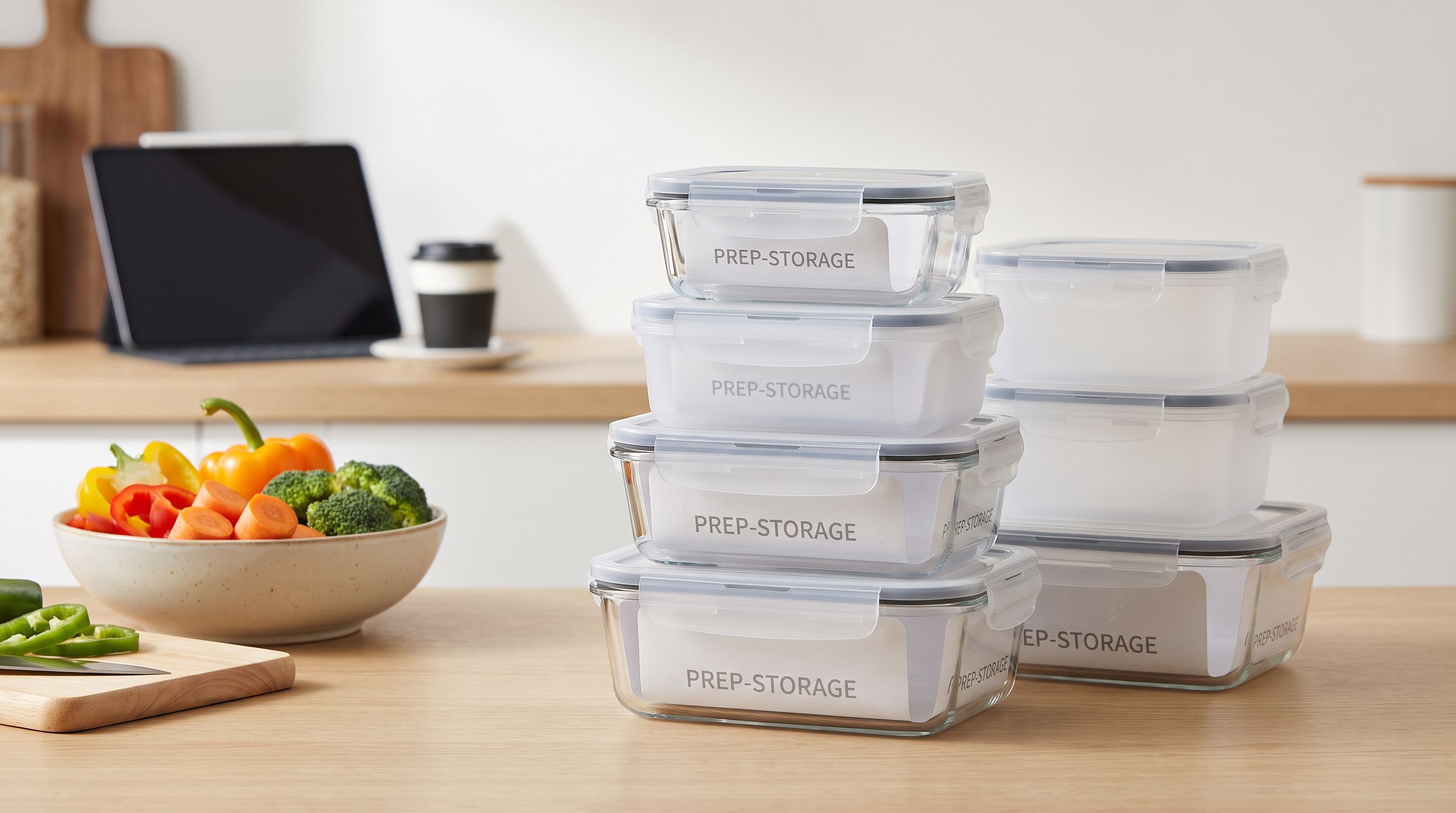
Glass vs Plastic: The Best Food Storage Containers for 2026
Glass or plastic? We compared the best food storage containers of 2026 on oven and freezer limits, lid seal design, stack height, and fridge footprint.