Knife Steel, Decoded: Hardness, Edge Retention, Chipping
What HRC actually means at the cutting board, why 58–62 is the real sweet spot, and how steel choice shapes edge retention, chipping and sharpening in 2026.
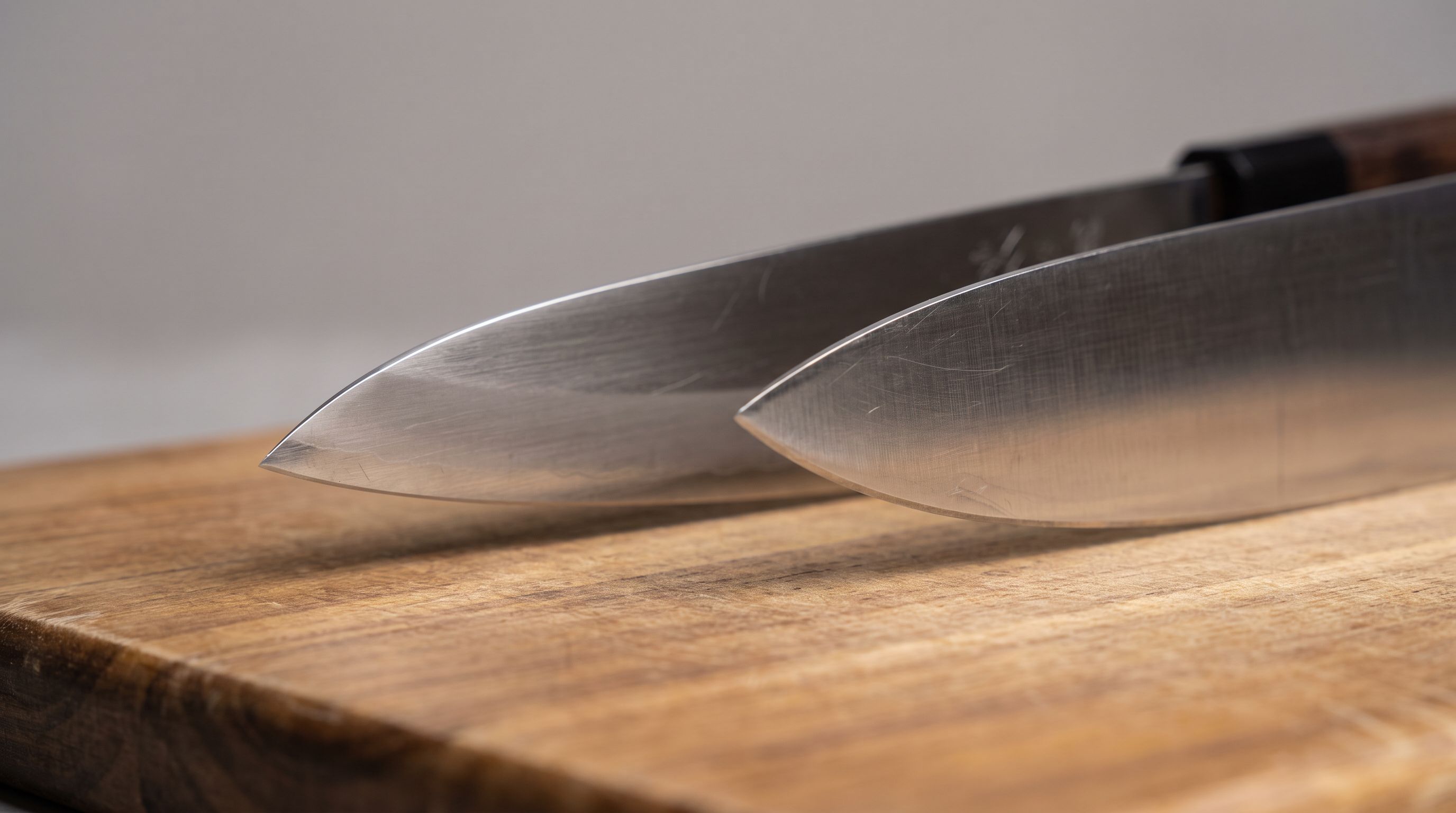
Reader-supported: we may earn a commission from links on this page, at no extra cost to you. It never affects our picks. Learn more.
Walk into any knife conversation in 2026 and you'll hit a number within thirty seconds: 58 HRC, 61 HRC, "ours is 63." It's printed on boxes, stamped into product pages, and argued about in forums with the intensity usually reserved for sourdough hydration. The number is real, it's measurable, and it genuinely tells you something.
It just doesn't tell you what most marketing copy implies.
Hardness is not sharpness. It isn't quality, and it isn't even a direct proxy for how long your knife stays sharp. What it actually describes is how a steel responds to force — whether the very edge of the blade bends out of the way, wears down slowly, or snaps off in a tiny crescent you'll notice next time you slice a tomato. Understanding that distinction is the difference between buying a knife that fits your kitchen and buying one that spends six months in a drawer because you're scared of it.
What's actually happening with knife steel right now
The Rockwell C scale (HRC) measures resistance to indentation: a diamond cone gets pressed into the steel under a fixed load, and the depth of the dent determines the number. Higher number, harder steel. Kitchen knives mostly live between about 54 and 64 HRC.
Here's the part that gets flattened in marketing. As steel-focused resources like Knife Steel Nerds have long argued, the biggest practical benefit of higher hardness isn't abrasive wear resistance — it's resistance to edge deformation. A soft edge rolls. It bends sideways under lateral pressure, and a rolled edge feels dull even though no steel has been lost. That's why a softer knife can be brought back to life in a few strokes on a honing rod: you're straightening, not removing metal.
A hard edge resists that rolling. But the same molecular stubbornness means it has nowhere to go when it meets something it can't cut. Instead of bending, it fractures. Multiple current steel guides make the same point: push hardness up and you trade toughness away, and above roughly 62 HRC the gains in edge retention start coming with real losses in impact resistance. A very hard blade that meets a chicken bone, a frozen edge, or a careless twist in a hard carrot will chip rather than roll.
So "edge retention" isn't one property. An edge dulls through wear, micro-chipping, deformation, and corrosion — and hardness helps with some of those while actively making others worse. A 63 HRC blade used on a glass cutting board by someone who scrapes diced onion with the blade edge will dull faster than a 56 HRC one, because it's losing material in chips rather than quietly deforming.
The other variable that marketing tends to skip entirely: geometry. A thin blade with a low edge angle cuts dramatically better than a thick one, regardless of steel. Much of what people attribute to "Japanese steel" is really Japanese grinding — thinner stock, a more acute edge, less shoulder behind the bevel. Steel composition and heat treatment set the ceiling; geometry determines whether you ever get near it.
The real players and what's actually shipping
The steels you'll meet in a home kitchen in 2026 are a surprisingly small list, and they cluster into recognizable behavior groups.
| Steel / family | Typical use | Behavior you'll notice |
|---|---|---|
| X50CrMoV15 and similar European stainless | Wüsthof, Zwilling, Victorinox | Lower hardness; rolls rather than chips; hones back quickly; sharpens easily |
| AUS-8 / AUS-10 | Mid-range Japanese and Japanese-style blades | Moderate hardness, decent stainless behavior, forgiving |
| VG-10 | Tojiro DP, many clad gyutos | Hard, keen, stainless; noticeably more chip-prone than German steel |
| VG-MAX | Shun Classic line | Kai's proprietary VG-10 derivative; marketed for edge retention, same care rules apply |
| Powder metallurgy stainless (SG2/R2, and similar) | Premium Japanese lines | High hardness and wear resistance; least forgiving of abuse |
| White/Blue carbon steels | Traditional Japanese single-bevel and some gyutos | Very keen, very easy to sharpen, rusts if you look at it wrong |
Victorinox's Fibrox Pro 8-inch chef's knife is the clearest example of the soft-and-tough philosophy still winning on practicality. It's been a default recommendation across professional kitchens and review outlets for years not because the steel is exotic but because it's thin, light, cheap to replace, and essentially impossible to ruin. You will roll that edge. You will also fix it in under a minute.
The Mac Professional MTH-80 occupies the middle that most home cooks actually want: a thin Japanese grind, hardness high enough to hold a fine edge, but not pushed into glass territory. It has been a long-standing top pick at mainstream review outlets for exactly that reason.
Shun's Classic line, built around a VG-MAX core with Damascus cladding, is the mass-market face of high-hardness Japanese stainless. Based on owner reviews and the brand's own care guidance, the trade-off is explicit: no bones, no frozen food, no twisting, no dishwasher. Shun's warranty and free sharpening service exist in part because chipped tips are a known failure mode, not a rare accident.
Tojiro's DP gyuto is the value entry into VG-10 — a hard core clad in softer stainless, which is a structural compromise worth understanding. Cladding gives you a tough spine and sides protecting a hard cutting core. It doesn't protect the edge itself.
What it means if you're shopping today
Start with your technique and your board, not the spec sheet.
If you cut on a plastic or end-grain wood board, use a pinch grip, never scrape with the edge, and hand-wash immediately — a harder blade in the 60–62 HRC range will reward you with longer intervals between sharpenings and a cleaner cut through tomato skin and fish.
If anyone in your household cuts through chicken joints, puts knives in the sink, or uses a glass or bamboo board, hardness is a liability. The 56–58 HRC European stainless in a Victorinox or Wüsthof isn't a downgrade; it's the correct engineering answer for that environment.
A few things the number genuinely doesn't cover: heat treatment quality varies between makers at identical stated HRC, factory edges are often the worst edge a knife will ever have (a point made repeatedly by knife-focused reviewers), and corrosion resistance is a separate axis entirely — carbon steels can be both hard and rust-prone.
And one honest truth: almost nobody's knife is dull because of steel choice. It's dull because it hasn't been sharpened in two years. A 56 HRC knife maintained monthly outperforms a 62 HRC knife maintained never, every single time.
What to watch next
Powder metallurgy steels keep trickling down from the custom and outdoor-knife world into kitchen lines, promising high hardness and better toughness through finer, more uniform carbide structures. That's a genuine materials advance rather than a marketing one — but it's still expensive to produce and harder to sharpen at home, so expect it to stay in premium tiers.
The more useful trend for most buyers is disclosure. More brands now publish both steel type and target hardness range instead of saying "high-carbon stainless," which means nothing. Treat vague descriptions as a signal, and treat an unusually high advertised HRC on a cheap knife with suspicion — hardness without controlled heat treatment is just brittleness.
FAQ
What HRC should a home cook's chef knife be? Current steel guides converge on 58–62 HRC as the general sweet spot for kitchen knives — meaningful edge retention without fragility. Below that you gain forgiveness; above it you need disciplined technique.
Does higher HRC mean sharper? No. Sharpness is a function of edge geometry and how well the knife was sharpened. Hardness affects how long that sharpness survives and how it fails.
Why did my expensive Japanese knife chip? Most likely lateral force or impact: bone, frozen food, scraping the board with the edge, or a twist mid-cut. Harder steels fracture where softer ones bend.
Can I fix a chipped edge? Small chips can be ground out on a coarse stone, which removes material and slightly changes the profile. Larger chips are a job for a professional service — several Japanese brands, including Shun, offer sharpening programs.
Is carbon steel better than stainless? Different, not better. Carbon steels take a very keen edge and sharpen easily, but they stain, patina, and rust without immediate drying. That's a maintenance commitment, not a performance hierarchy.
Our picks

Victorinox Fibrox Pro Chef’s Knife, 8 Inch - Swiss Army Kitchen Knife, High Carbon Stainless Steel Blade, Non-Slip Fibrox Handle, Dishwasher Safe, Black
Softer stainless at a lower HRC — it rolls instead of chipping and takes 60 seconds to re-hone.

Mac Knife Professional series 2-piece starter knife set PRO-20, MTH-80 Pro series 8" Chef's knife w/dimples and PKF-50 Pro series 5" Paring knife, handcrafted in Seki, Japan
A thin, hard-but-not-brittle Japanese blade that's long been a default recommendation for home cooks.

Shun Classic 8" Chef's Knife
Hard VG-MAX core holds a keen edge but demands no bones, no twisting, no dishwasher.
Tojiro DP 8.2-Inch Gyuto (VG-10 core)
VG-10 clad in softer stainless — classic Japanese edge behavior without boutique pricing.
Get the best kitchen gear deals in your inbox
Join the PrepDeck newsletter for hand-picked kitchen gear deals and new buying guides. No spam, unsubscribe anytime.
Related reads
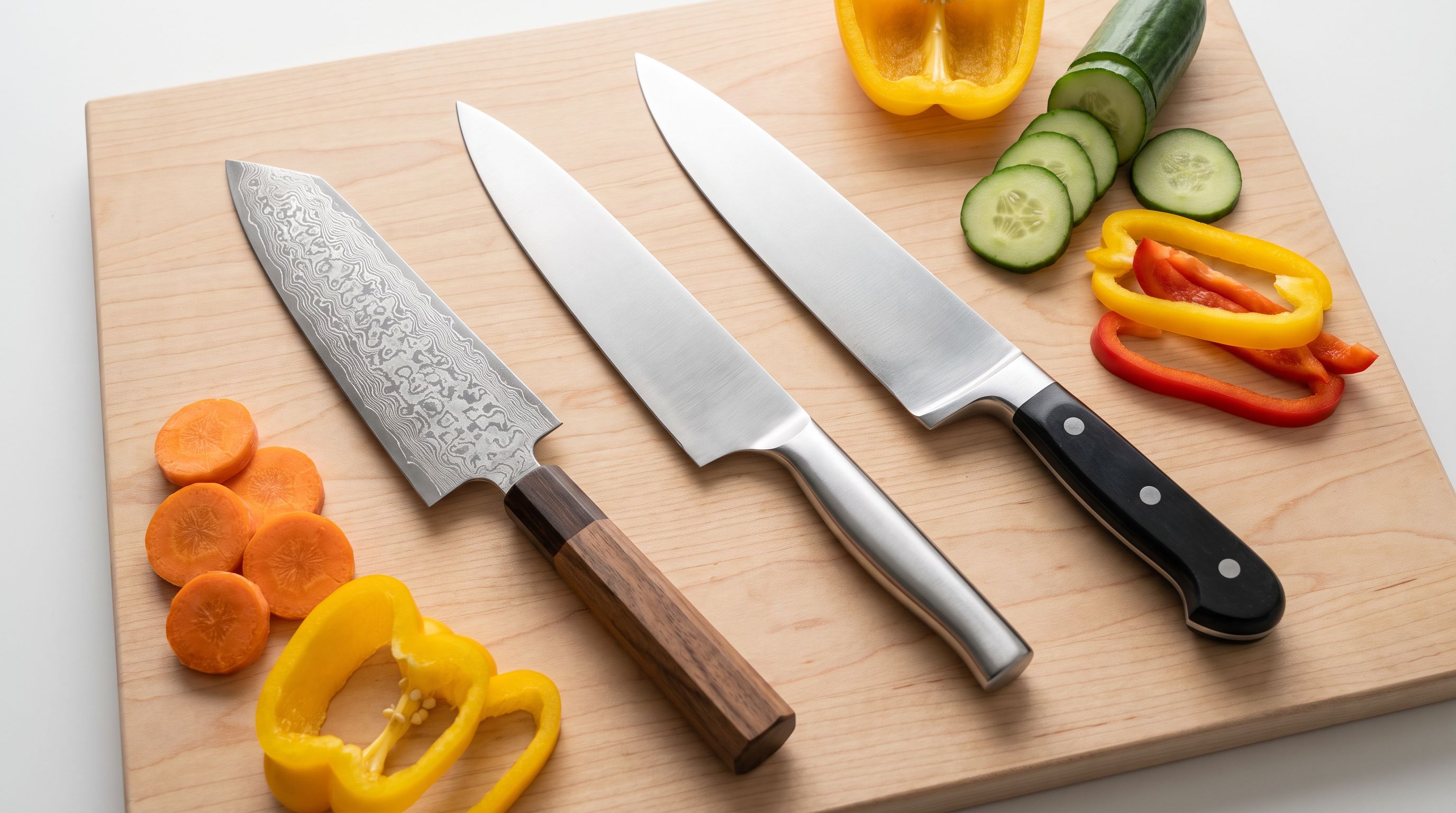
VG-10 vs AUS-10 vs S35VN: The Best Chef Knife Steel in 2026
VG-10, AUS-10, S35VN and X50CrMoV15 decoded. Learn which chef knife steel matches your cooking style, hardness, edge retention and chip risk in 2026.
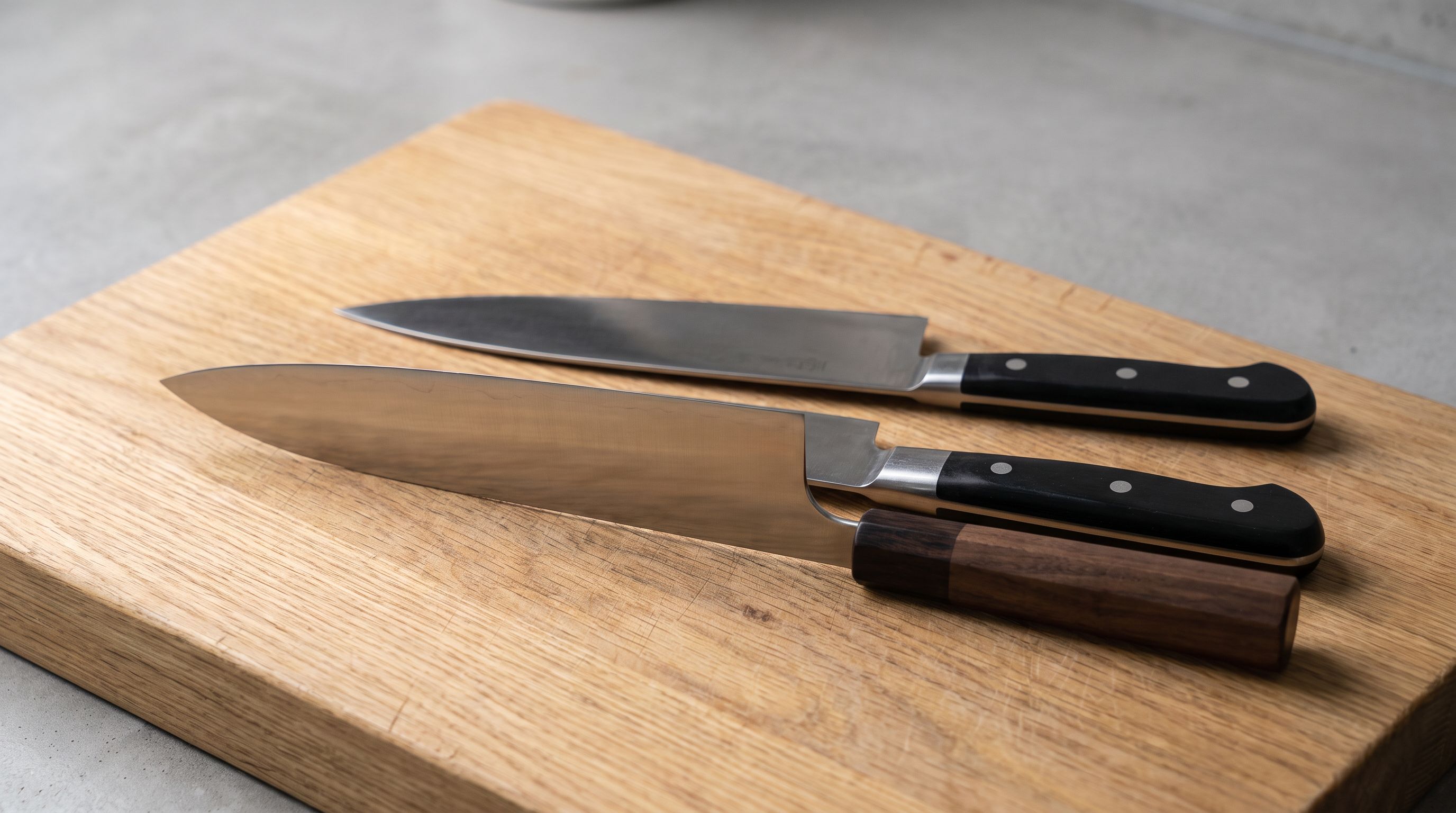
Japanese vs German Chef Knife: Which Fits Your Hands in 2026
Japanese vs German chef knife, compared on edge angle, steel hardness, blade geometry and upkeep — plus four knives worth buying as your first serious blade in 2026.
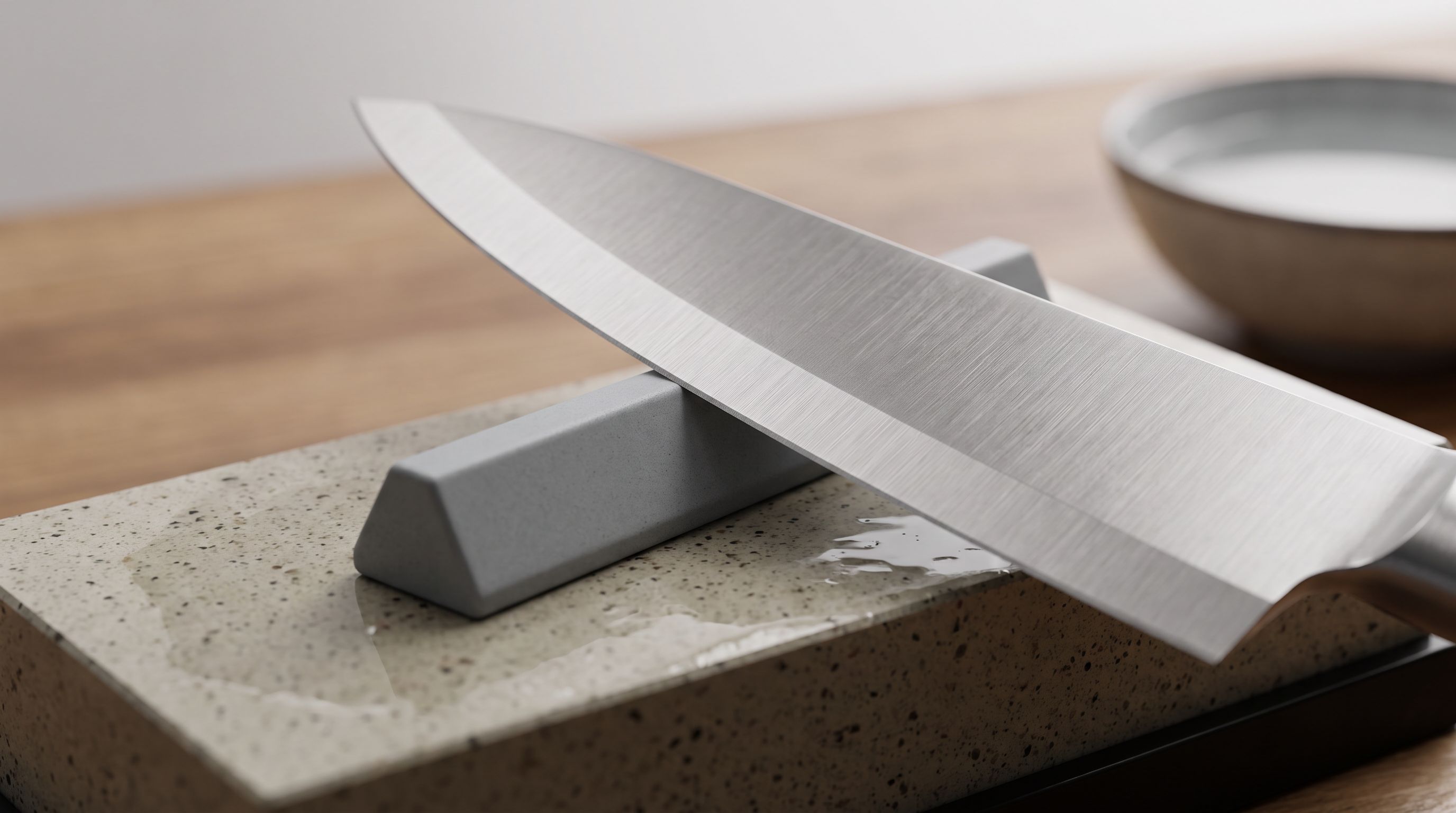
Knife Edge Angle in 2026: 15° vs 20°, and Which Fits You
Knife edge angle explained: 15 vs 20 degrees, how bevel angle interacts with steel hardness, sharpener presets, and your cutting board habits in 2026.