Countertop Oven vs Wall Oven in 2026: A Baker's Call
Countertop oven vs wall oven for baking in 2026: cavity size, rack spacing, heat recovery, and real installed cost compared, plus four ovens worth buying.
Reader-supported: we may earn a commission from links on this page, at no extra cost to you. It never affects our picks. Learn more.
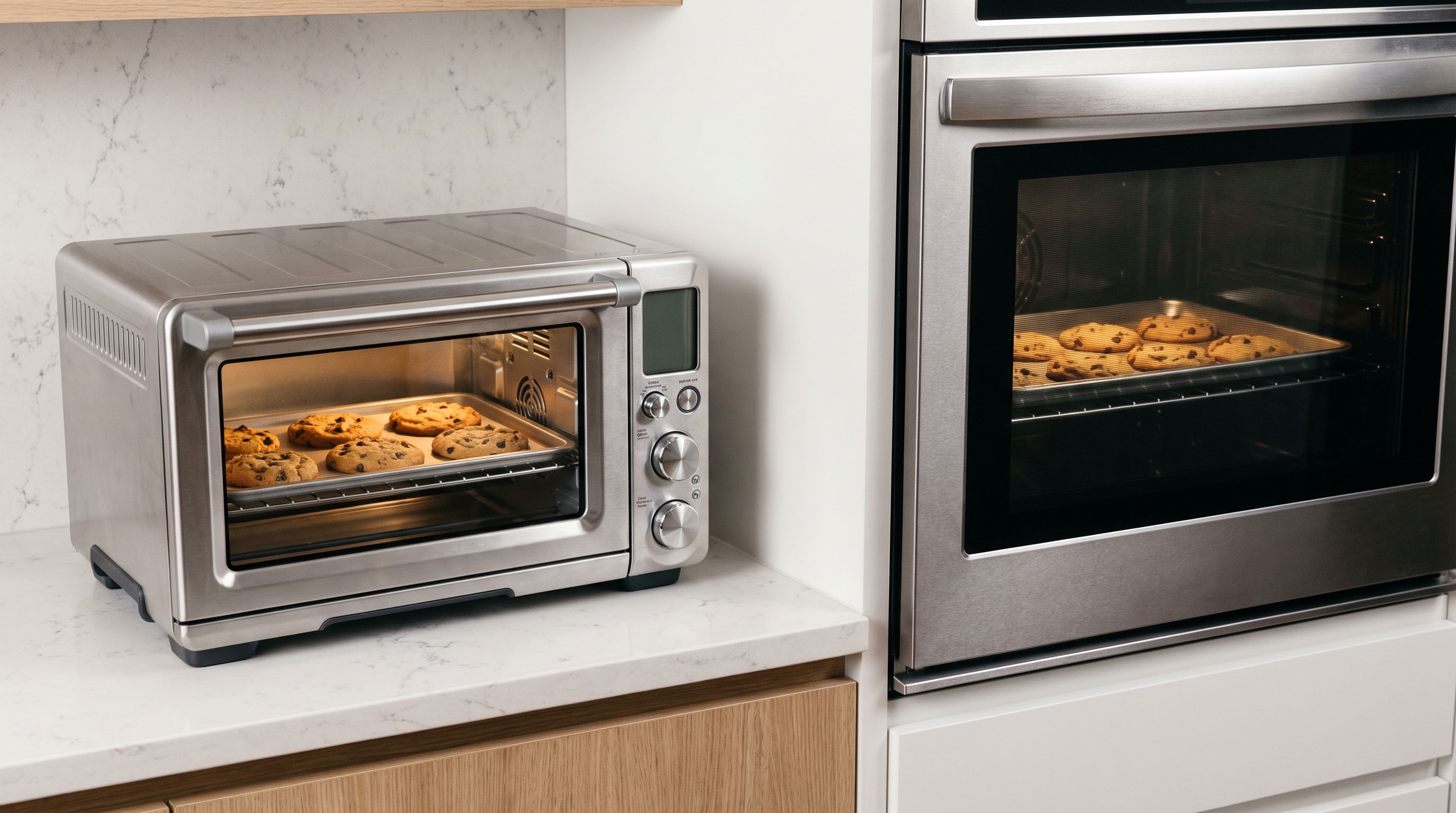
If you bake more than you roast, the oven question stops being about dinner and starts being about geometry: how many sheet pans fit, how far apart the racks sit, and how fast the cavity claws back temperature after you open the door four times in twenty minutes. That's where the countertop oven vs wall oven decision actually gets decided — not in the spec sheet's cubic feet.
Here's the honest version of the tradeoff, and where each one earns its space in 2026.
The short answer
Buy a high-end countertop convection oven if you bake in batches of one or two sheet pans, live in a rental or a kitchen you don't want to cut into, want preheat measured in minutes instead of fifteen, or already have a mediocre range oven you'd rather supplement than replace.
Buy a wall oven if you bake holiday volume, need three racks at once, bake tall things (angel food, panettone, layered sheet cakes, 5-quart Dutch oven sourdough), or you're already mid-remodel and the cabinet cut is happening anyway.
The thing nobody says plainly: a $400–$600 countertop oven and a $2,500 wall oven are not competing for the same job. The countertop unit wins on speed, precision at small scale, and not heating your kitchen. The wall oven wins on capacity, recovery, and the ability to bake the same recipe the same way for fifteen years.
Cavity size and rack spacing: the real constraint
Countertop ovens are advertised by slice count and pizza diameter, which tells a baker almost nothing. What matters is whether a standard half-sheet pan (18 x 13 inches) fits, and whether you get two rack positions far enough apart to actually use both.
Most large countertop ovens — including the Breville Smart Oven Air Fryer Pro BOV900BSS and the Breville Smart Oven Pro BOV845BSS — accept a 13-inch pizza or a quarter-sheet comfortably, and the BOV900BSS handles a 14-pound bird or a 9x13 pan. Two racks are usually available, but the vertical gap is tight: anything that domes or rises (muffins, popovers, boules) will crowd or scorch on the upper element. Plan on single-rack baking and rotating batches.
 Best value countertop convection · Breville Smart Oven Pro BOV845BSS — Check price on Amazon →
A 30-inch wall oven typically gives you roughly 5 cubic feet, three or four rack positions, and enough clearance that two half-sheets of cookies bake simultaneously without one tray shielding the other. That's the whole argument for a wall oven in one sentence.
Also worth checking: wall ovens come in 24-inch, 27-inch, and 30-inch widths. A 24-inch unit is common in galley and apartment kitchens, and its usable cavity is much closer to a big countertop oven than the price difference suggests. If you're considering a 24-inch wall oven purely for capacity, do the measurement first.
Recovery and heat stability
Heat recovery is the hidden baking variable. Open a door, lose 50–75°F, and how fast the oven returns to setpoint determines whether your second tray browns like the first.
Countertop ovens have a real advantage here in one direction: small cavity, exposed quartz or ribbon elements, fast reheat. The Breville Element iQ system in the BOV900BSS and BOV845BSS moves power between elements rather than cycling everything on, which keeps swing tighter than the cheap bimetal thermostats in budget toaster ovens. The disadvantage is thin insulation and a small thermal mass — those same ovens drop temperature faster the moment the door opens, and they radiate heat into your kitchen.
Wall ovens are the opposite: slow to preheat (10–15 minutes is normal, longer on heavily insulated European models), but far more stable once there. Heavy insulation, a larger mass of steel, and a convection fan with its own ring element in true/European convection setups mean temperature holds steady through repeated door openings. For long bakes — brioche, laminated dough, a 45-minute sourdough with a mid-bake lid removal — that stability is worth more than fast preheat.
Steam is the other differentiator. The Anova Precision Oven APO is the outlier in this comparison: a countertop oven with real steam injection and percentage humidity control, plus a probe that can drive the cook. For bread bakers, that is functionality most sub-$4,000 wall ovens simply do not offer. Steam wall ovens exist from Miele, Wolf, Gaggenau and others, but they sit well above standard wall oven pricing.
 Best for sourdough and precision baking · Anova Precision Oven APO — Check price on Amazon →
Installed cost is not sticker cost
A countertop oven costs what it costs, arrives in a box, and plugs into a standard 120V outlet — though the big ones draw 1800W and genuinely want their own circuit if you're also running a kettle.
A wall oven's price tag is the beginning. Budget for:
- Electrical: most 30-inch electric wall ovens need a dedicated 240V circuit, often 30–50A. If one doesn't exist, that's an electrician and possibly a panel conversation.
- Cabinetry: the cut-out dimensions are model-specific and unforgiving. Swapping brands frequently means modifying the cabinet.
- Delivery and install: these units are heavy and awkward, and most retailers charge separately for haul-away of the old one.
None of that is a reason to skip a wall oven. It's a reason to get a real quote before you fall in love with a Wolf or a Gaggenau.
Comparison
| High-end countertop oven | 30-inch wall oven | |
|---|---|---|
| Typical usable capacity | ~0.8–1.0 cu ft; 13" pizza / quarter-sheet | ~4.5–5.0 cu ft; two half-sheets side by side |
| Rack positions | 2–3, tightly spaced | 3–5, generous spacing |
| Preheat to 350°F | Roughly 5 minutes | Roughly 10–15 minutes |
| Heat recovery after door opening | Fast reheat, but bigger initial drop | Slower reheat, much smaller drop |
| Power | 120V, ~1800W, standard plug | 240V dedicated circuit, hardwired |
| Steam baking | Available (Anova Precision Oven) | Premium models only |
| Install cost | None | Electrical + cabinetry + delivery |
| Kitchen heat spill | Noticeable | Minimal |
| Expected service life | 4–8 years typical | 12–20 years typical |
| Best for | Weeknight batches, small-batch cookies, proofing, supplementing a range | Holiday volume, tall bakes, multi-rack consistency |
Picking within each camp
If you go countertop: the Breville Smart Oven Air Fryer Pro BOV900BSS is the most capable all-rounder — the larger cavity and Element iQ control make it the one that behaves most like a small real oven. If air frying is irrelevant to you, the Breville Smart Oven Pro BOV845BSS covers the same baking ground for less. The Cuisinart TOA-70 Air Fryer Toaster Oven is the sensible budget option when you want a second oven for cookies and sides without overthinking it — expect less precise temperature control and more rotation. Bread-focused bakers should look hard at the Anova Precision Oven APO; steam and humidity control change what's possible with lean doughs in a way more wattage doesn't.
 Budget pick · Cuisinart TOA-70 Air Fryer Toaster Oven — Check price on Amazon →
If you go wall oven: the Café CTS70DP2NS1 is the model that keeps surfacing in independent coverage, including Consumer Reports' wall oven testing and Wirecutter's recommendation, because it delivers true European convection and a clean, customizable look without luxury-tier pricing. Step up to Wolf or Miele for better build and more convection modes; step up to Gaggenau if money has genuinely stopped mattering.
The move most bakers should actually make
If your current range oven works but underwhelms, the highest-return purchase in 2026 is usually a good countertop convection oven plus an oven thermometer, not a wall oven. You get a second cavity, fast preheats, and a dedicated space for proofing and small batches — for a fraction of an installed wall oven.
Spend on the wall oven when you're already opening up the kitchen, when three racks is a weekly need rather than a December one, or when you've simply outgrown rotating trays. Those are real reasons. "My cookies brown unevenly" usually isn't — that's a thermometer, a rotation, and a lighter-colored sheet pan.
FAQ
Can a countertop oven fully replace a wall oven? For one or two people who bake small batches, yes. For anyone who regularly cooks a turkey, bakes two sheets at once, or needs a tall cavity, no — the geometry runs out before the heating does.
Is convection in a countertop oven the same as in a wall oven? Not quite. Many wall ovens use true/European convection with a dedicated third element around the fan, so the circulated air is already at temperature. Most countertop ovens just add a fan to existing elements, which still improves evenness but is a weaker effect.
Do I need to drop the temperature for convection? Standard guidance is roughly 25°F lower, or shorten the time by about 25 percent. Some ovens, including Breville's, auto-adjust when you select a convection setting — check before you double-discount.
How long do countertop ovens last? Shorter than built-ins. Heavy daily use tends to wear out elements and door seals within several years. Factor that into the cost comparison: a wall oven amortized over fifteen years is less lopsided than the sticker prices suggest.
What about a 24-inch wall oven instead? Good compromise for small kitchens, and often overlooked. You keep the stability, insulation, and 240V power of a built-in, give up some width, and usually save on both the unit and the cabinetry.
Our picks

Breville BOV900BSS Smart Oven Air Fryer Pro, Brushed Stainless Steel
Large enough for a half-sheet pan, with Element iQ heat control and true convection for even bakes.
Breville BOV845BSS Smart Oven Pro, Brushed Stainless Steel
The 1800W Smart Oven Pro bakes 13-inch pizzas and 6-slice batches without the air-fryer premium.
Cuisinart Air Fryer Toaster Oven, 1800W, 8-in-1 with Air Fry, Convection, Broil & Warm, 0.6 Cubic Feet, 60-Minute Timer, TOA-70NAS, Stainless Steel
Simple, roomy stainless countertop oven that handles cookies and small loaves for far less money.
Anova Culinary Sous Vide Precision Cooker 3.0 (WiFi), 1100 Watts, Stainless Steel
Steam injection plus sous-vide-grade probe control gives bread bakers oven-spring a home oven can't.
Café CTS70DP2NS1 30-Inch Single Wall Oven
True European convection, big usable cavity, and a cleaner install price than luxury-brand rivals.
Get the best kitchen gear deals in your inbox
Join the PrepDeck newsletter for hand-picked kitchen gear deals and new buying guides. No spam, unsubscribe anytime.
Related reads
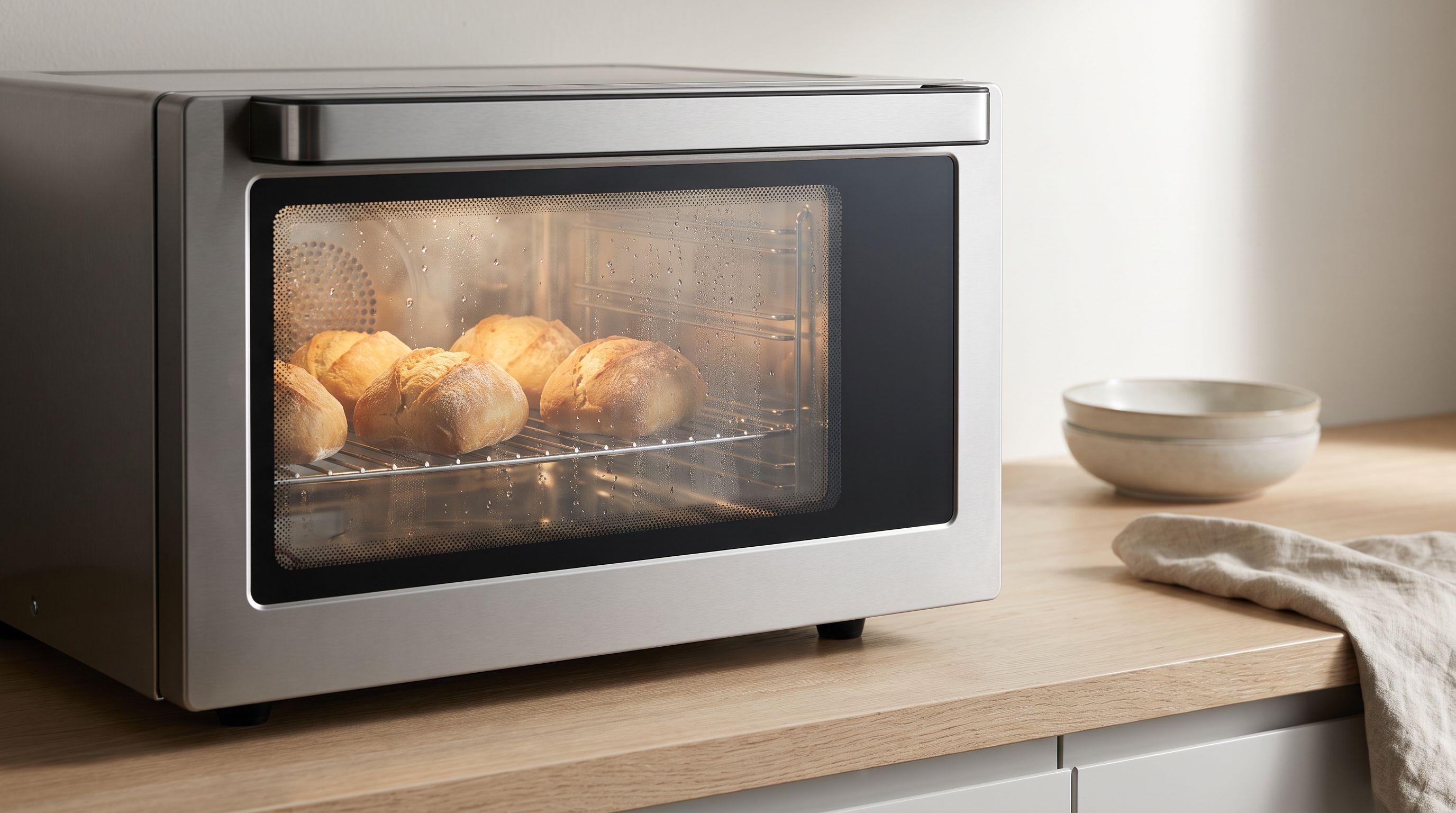
Countertop Steam Oven 2026: Does Steam Beat Convection?
A countertop steam oven 2026 buying guide ranked by cavity size, water tank capacity, and whether combi-steam actually earns its price over a good convection oven.
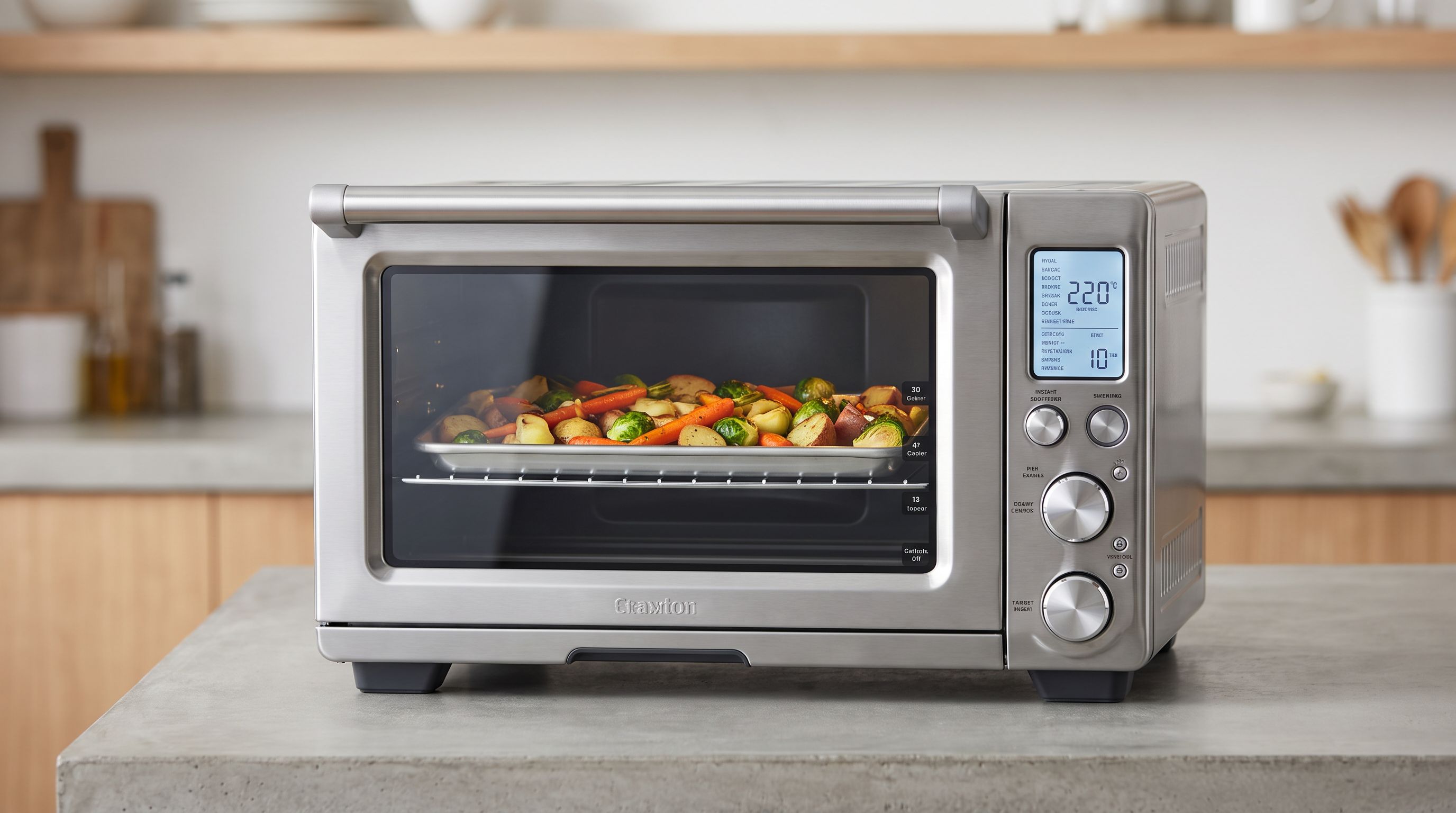
Countertop Convection Ovens in 2026: 5 Picks by Rack Space
The best countertop convection oven depends on sheet-pan fit and counter depth. We compare 5 large-capacity models in 2026 by usable rack space and element layout.
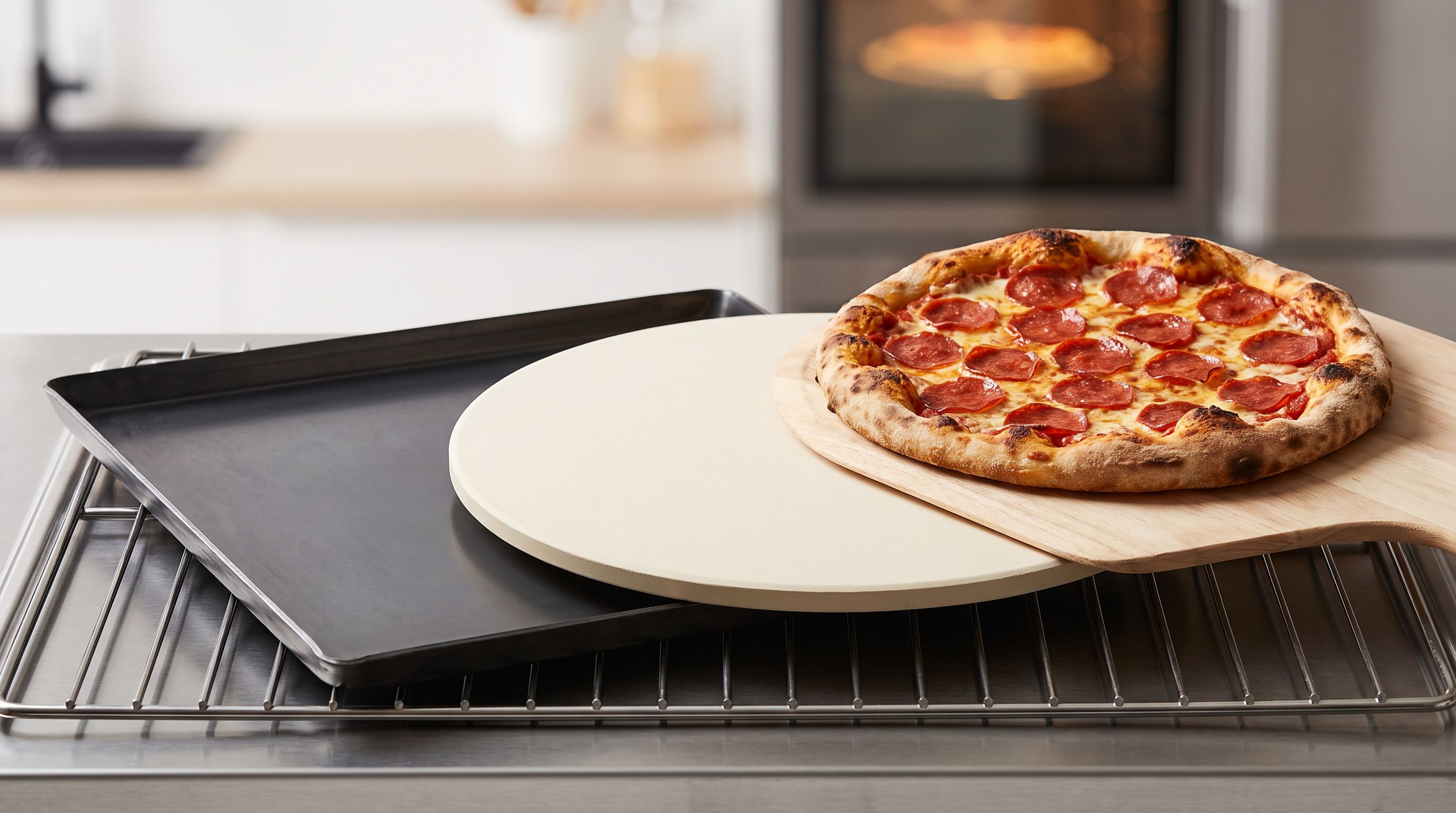
Pizza Steel vs Stone in 2026: Pick One That Fits Your Oven
Pizza steel vs stone in 2026: how thickness, mass and rack clearance change your crust — plus picks sized for standard 30-inch home ovens.