Built-In vs Freestanding Pizza Oven: What Your Patio Can Actually Handle
Built-in vs freestanding pizza oven in 2026: install cost, gas plumbing, patio clearances, portability and resale compared — plus the models worth buying.
Reader-supported: we may earn a commission from links on this page, at no extra cost to you. It never affects our picks. Learn more.
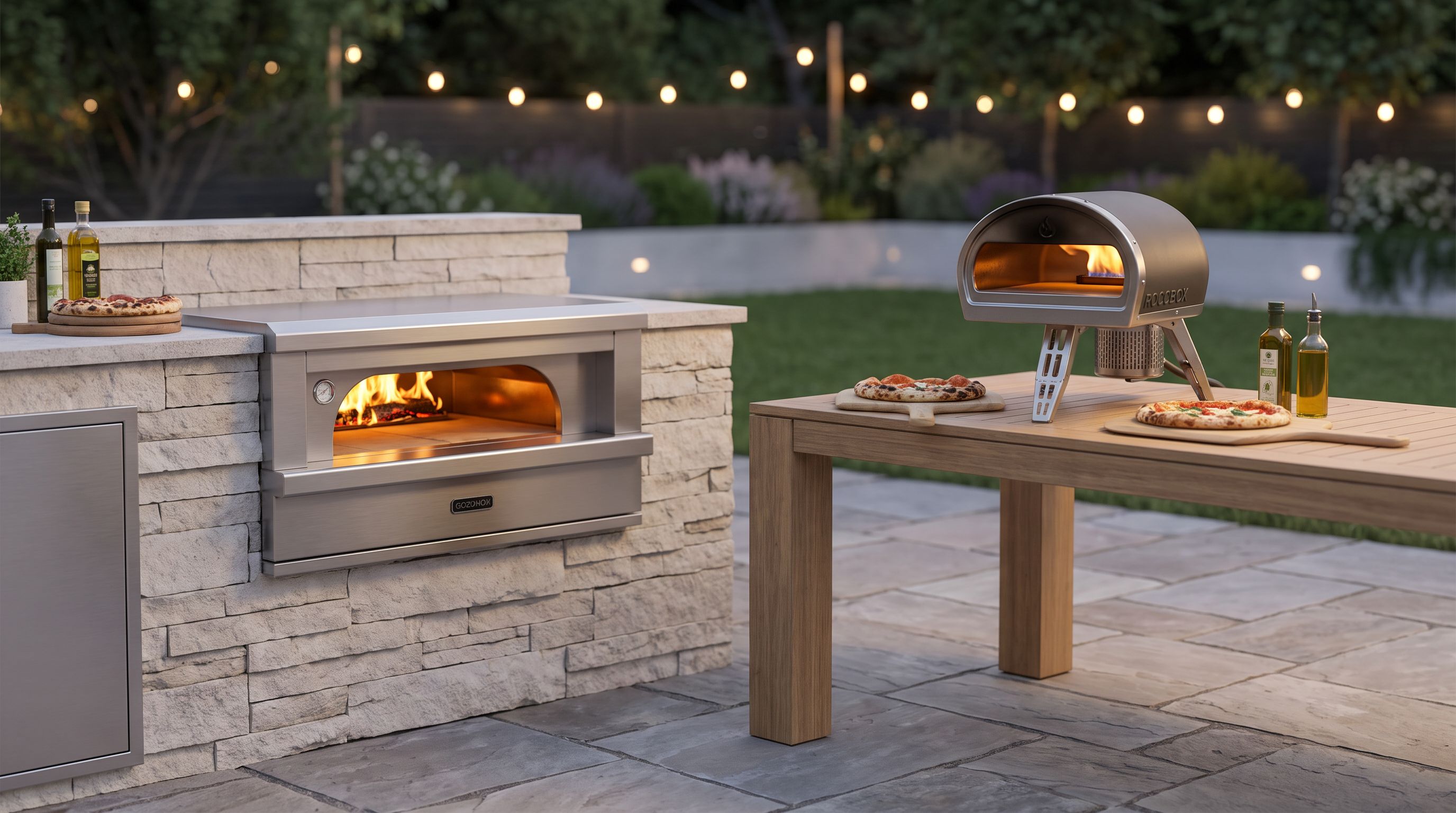
Outdoor pizza ovens split into two very different purchases. One is a kitchen renovation: masonry, a permanent gas line, clearances designed into the structure. The other is an appliance you carry out of a box, set on a table, and fire in 20 minutes. They cook similar pizza. They do not cost similar money, and they don't leave you in the same position when you move house.
Here's how to decide, with the practical stuff — install cost, fuel, footprint, resale — ahead of the romance.
The short version
Buy freestanding if you're pizza-curious, you rent, your patio is small, you want wood-fired and gas without committing, or you might move within five years. A good portable gas oven hits 900°F+ and bakes a Neapolitan pie in 60–90 seconds — the same ballpark as a built-in.
Buy built-in if you're already building or renovating an outdoor kitchen, you cook for crowds regularly, you want an oven that holds heat for hours of roasting and bread after the pizza's done, and you plan to stay put.
The honest truth is that the built-in advantage is no longer about peak temperature. Portable ovens caught up years ago. The built-in advantage is thermal mass, capacity, and the fact that it looks like it belongs there.
Install cost: what actually drives the number
A freestanding oven's "install cost" is a propane tank and maybe a stand. That's it.
A built-in oven is three budgets stacked:
- The oven insert itself, which is typically the smaller line item on a masonry build and the larger one on a stainless insert like the Lynx Professional Napoli.
- The enclosure — block, steel stud and cement board, or a prefab kit — plus veneer stone, tile or stucco, and a counter surface. This is where budgets quietly double.
- Trades. Gas fitting, possibly electrical if your model has an igniter or lights, and a slab or footing if you're putting several hundred pounds of masonry on a patio that was poured for lawn chairs.
Two line items people forget: clearance-driven design changes and chimney termination. A built-in oven has required clearances to combustibles that must be built into the structure permanently — a freestanding model just makes them your problem each time you set it up, which is easier to fix. And if the oven sits under a pergola, roof overhang or eave, flue height requirements can force a taller chimney, a different location, or abandoning the covered spot entirely. Check the manufacturer's installation manual before you draw the counter, not after.
Fuel and plumbing
| Built-in | Freestanding | |
|---|---|---|
| Typical fuel | Natural gas line, propane, or wood/masonry | Propane tank, wood/charcoal, or multi-fuel |
| Plumbing work | Gas run, often permitted; sometimes electrical | None |
| Setup time to first pizza | Weeks to months (build) | Under an hour from the box |
| Preheat | Longer for masonry; minutes for gas inserts | Roughly 15–30 minutes |
| Heat retention | Excellent — roasts and bakes bread after pizza | Modest; drops fast once the burner's off |
| Footprint | Permanent counter run, usually 4ft+ | Tabletop to small cart |
| Portability | None | Tailgate, campsite, new house |
| Adds home value? | Sometimes, as part of an outdoor kitchen | No — but it comes with you |
| Weatherproofing | Designed for it; still needs a cover | Cover required; store indoors in winter |
Natural gas is the single best reason to go built-in. No tank swaps, no running dry mid-party, consistent pressure. But converting a propane-configured oven to natural gas requires the manufacturer's own conversion kit and often a licensed fitter — don't improvise, and don't assume a portable oven can be converted at all. Most cannot.
Propane's weakness is the one everyone discovers at the worst moment: a 20lb tank runs down faster at 900°F than it does under a burger grill. Keep a spare.
Patio space: measure the real footprint
A built-in needs more room than the oven's dimensions suggest. You need landing space on at least one side for peels, dough trays and launched pizzas, plus clearance behind and above. Realistically that's a counter run of four to six feet, and a comfortable standing zone in front that doesn't collide with a dining table.
Freestanding ovens are deceptively demanding too. Gozney Roccbox and Ooni Koda 16 are tabletop units — meaning you need a heat-tolerant, stable table at a workable height. A flimsy folding table is a genuine hazard with a 60lb oven running at pizza temperature. Budget for a proper stand or a solid cart. Larger models like Ooni Koda 2 Max and Gozney Arc XL are heavy enough that you'll pick a spot and mostly leave them there — which blurs the line between the two categories.
 Best for big batches · Ooni Koda 2 Max — Check price on Amazon →
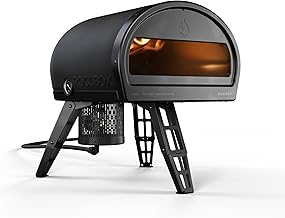 Most portable · Gozney Roccbox — Check price on Amazon →
 Best for beginners · Ooni Koda 16 — Check price on Amazon →
 Best overall · Gozney Arc XL — Check price on Amazon →
Resale and moving
This is the part that flips a lot of decisions. A built-in pizza oven is a fixture: you leave it behind. Appraisers rarely assign it a line-item value; it contributes as part of a broader outdoor-kitchen impression, which is highly regional. In a warm-climate market with outdoor-living expectations, that's real. In a short-season northern market, it's mostly a nice photo.
Freestanding ovens hold value remarkably well on the secondhand market because the brands are recognizable and the designs change slowly. If your situation is uncertain — renting, job that moves, a patio you're not sure about — a portable oven is the low-regret choice. You can always graduate.
Which freestanding oven, specifically
If you want one oven that does everything well, Gozney Arc XL is the current benchmark: a 16in stone, a rolling flame that reaches across the deck, and enough retained heat that the second and third pizzas bake as well as the first. It's the closest a portable gets to built-in behavior.
Ooni Koda 16 remains the most forgiving entry point. The L-shaped burner spreads flame along the back and one side instead of a single hot stripe, which means fewer scorched crusts while you learn to turn pies. Pure propane, no fuss, nothing to learn about fire management.
Gozney Roccbox is the one to buy if portability is the actual requirement — retractable legs, a built-in carry strap, and a dense insulated body that survives being thrown in a car. Smaller cooking surface, but it's the only oven here you'd genuinely take to a campsite.
For live fire, Ooni Karu 16 burns wood or charcoal and accepts a gas burner attachment, with a hinged glass door and a digital thermometer that take a lot of guesswork out of wood-fired cooking. It's the best hedge if you suspect you want the wood experience but don't want to be locked into it.
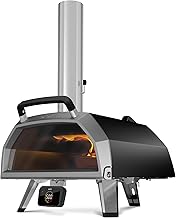 Best wood-fired option · Ooni Karu 16 — Check price on Amazon →
And if you feed a crowd, Ooni Koda 2 Max has dual independently controlled zones and a cooking surface big enough for two pizzas side by side — or a sheet-pan-sized roast, which is where these ovens start justifying themselves beyond pizza night.
The build-it decision, honestly
Go built-in when the oven is part of a project you're doing anyway. Retrofitting a masonry oven into a finished patio — cutting a slab, running gas, re-tiling — is expensive work for a marginal improvement in pizza over a $600 portable. If you're already pouring concrete and running utilities, the incremental cost is far more defensible, and a well-built oven with real thermal mass genuinely does something portables can't: hold 600°F for hours and bake bread the next morning on residual heat.
If you're not pouring concrete, buy the portable, cook 200 pizzas, and then decide whether you want the permanent one.
FAQ
Does a built-in pizza oven make better pizza? Not meaningfully, at the single-pizza level. Modern portable gas ovens hit the same stone temperatures. Built-ins win on sustained output — pie ten tastes like pie one — and on what you can do after the pizza, thanks to stored heat.
Can I convert a portable oven to natural gas? Usually no. A few brands offer natural gas variants or official conversion kits; most portables are propane-only. Never modify a regulator or orifice yourself — buy the model configured for the fuel you have.
Do I need a permit? Often yes for a gas line and sometimes for the structure, depending on your jurisdiction. Freestanding propane ovens generally need no permit, but check HOA and local rules on open-flame appliances near structures and on balconies.
Can a pizza oven live under a covered patio? Only if the manufacturer's clearance and flue-termination requirements are met. Many ovens require substantial vertical clearance above the chimney. Read the installation manual before you commit to the location.
What's the real running cost difference? Natural gas is cheaper per hour than bottled propane, which is the ongoing argument for built-in. Wood is the most variable — seasoned kiln-dried hardwood for pizza isn't cheap, and damp wood ruins bakes.
Our picks
Gozney Arc XL Propane Outdoor Pizza Oven, Heats up to 950F - Off Black
Restaurant-style 16in gas oven with a rolling flame and stored heat that handles back-to-back pies.
ooni Koda 16 Propane Gas Pizza Oven – 16" Gas Powered Outdoor Oven with 28 mBar Regulator and Gas Hose, Gas Powered Portable Pizza Oven - Foundry Black
Wide L-shaped burner and a 16in stone make it the most forgiving propane oven to learn on.
Gozney Roccbox Outdoor Pizza Oven, Portable, Gas & Wood Fired - Black
Retractable legs, a carry strap and a dense insulated body — the easiest oven to actually move.
ooni Karu 2 Pro Multi-Fuel Pizza Oven - Wood and Gas Outdoor Pizza Oven with Pizza Stone & Integrated Thermometer, Pizza Oven Outdoor, Dual Fuel 16 Inch Pizza Maker, Outdoor Cooking Grill
Multi-fuel: burn wood or swap in a gas burner, with a hinged glass door for live-fire control.
ooni Koda 2 Propane Gas Pizza Oven
Dual-zone burners and a huge stone for two pizzas at once or large-format roasting trays.
Get the best kitchen gear deals in your inbox
Join the PrepDeck newsletter for hand-picked kitchen gear deals and new buying guides. No spam, unsubscribe anytime.
Related reads
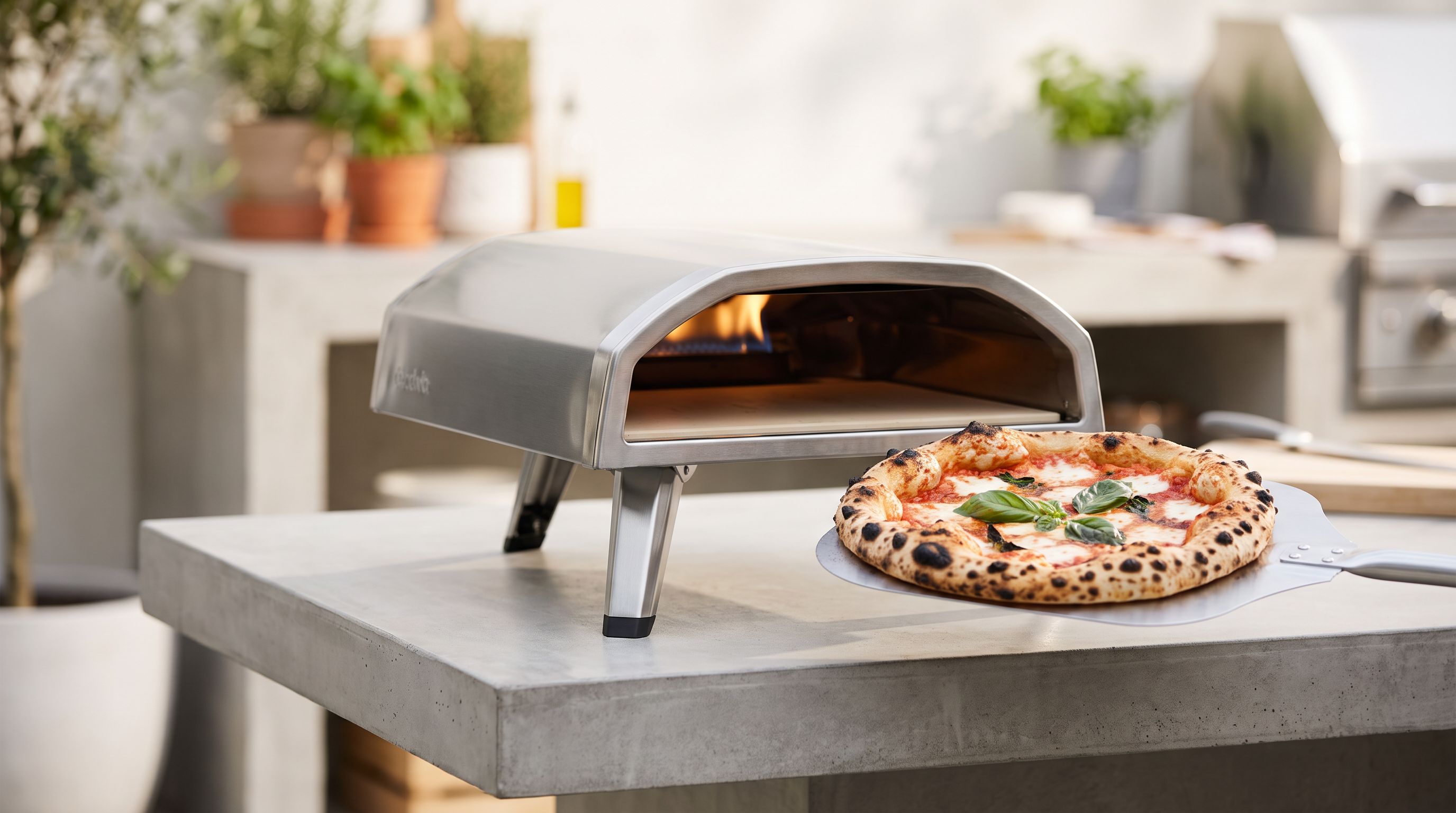
Portable Pizza Ovens 2026: Pick Your Stone Size First
The best portable pizza oven 2026 picks compared by stone diameter, fuel type, preheat time and packed weight — so your oven matches the pie you actually bake.
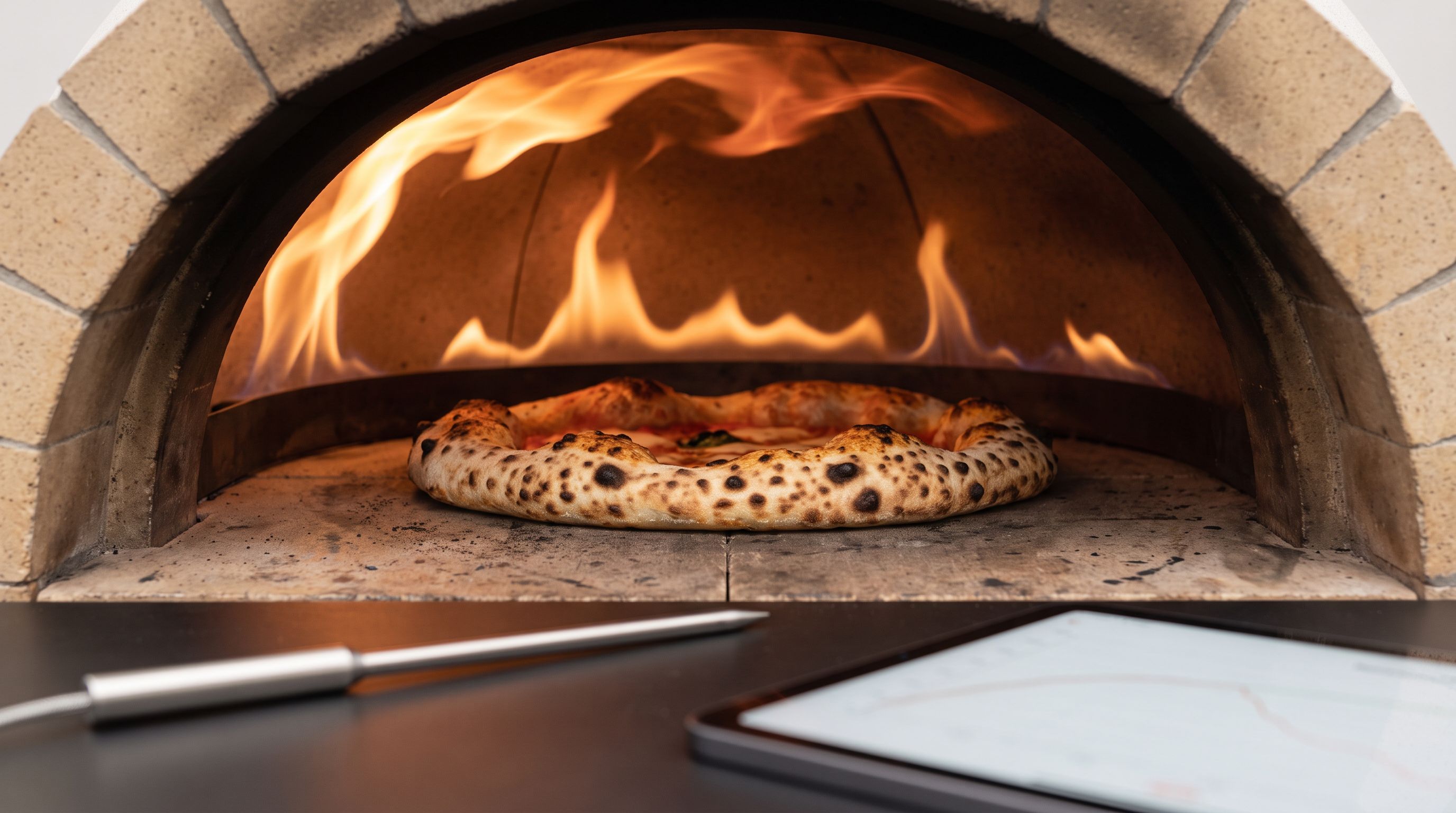
Pizza Oven Temperature, Explained: Why 900°F Matters
What actually changes between 700°F and 950°F in a pizza oven, why Neapolitan dough needs the top end, and which fuel — gas, wood or pellets — reliably gets there.
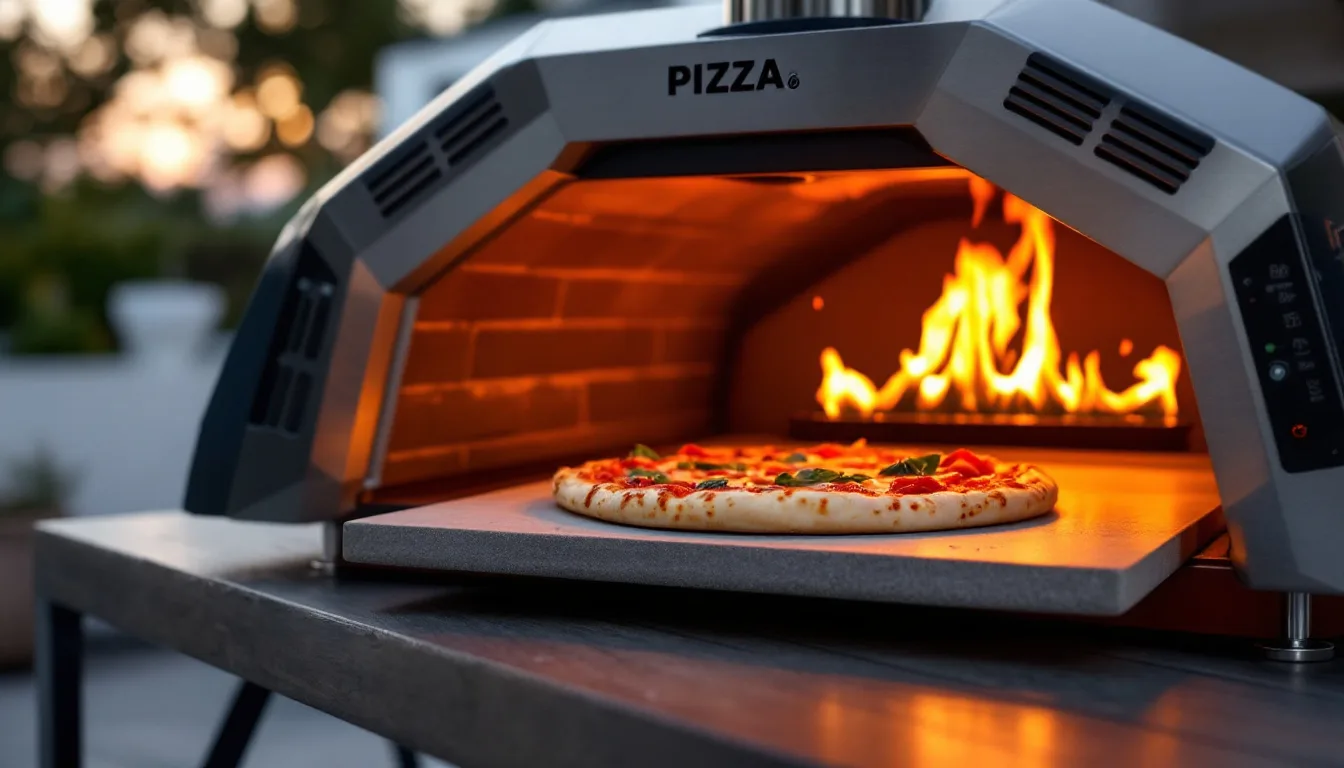
Gas vs Wood: Which Outdoor Pizza Oven to Buy in 2026
Gas, wood or dual-fuel? We compare the best outdoor pizza ovens of 2026 on peak temperature, stone size, recovery time and real-world durability.